Zhou Liangji, Li Qingwu, Huo Guanying, Zhou Yan
College of IOT Engineering, Hohai University, Changzhou 213022, China.
College of IOT Engineering, Hohai University, Changzhou 213022, China; Key Laboratory of Sensor Networks and Environmental Sensing, Hohai University, Changzhou 213022, China.
Comput Intell Neurosci. 2017;2017:3792805. doi: 10.1155/2017/3792805. Epub 2017 Feb 16.
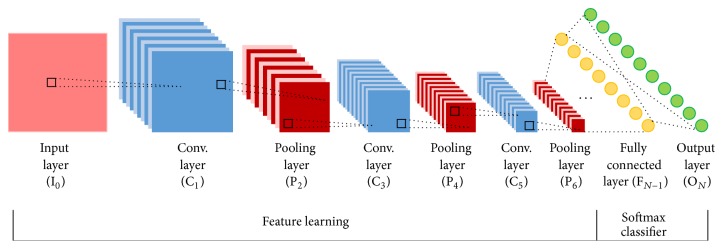
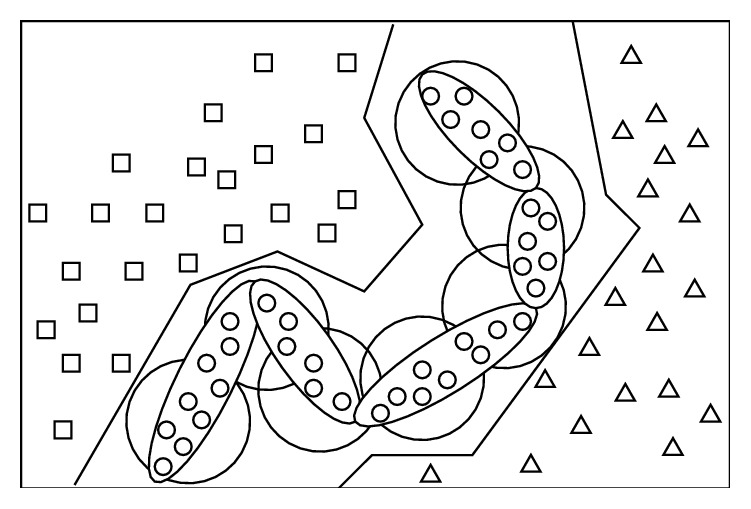
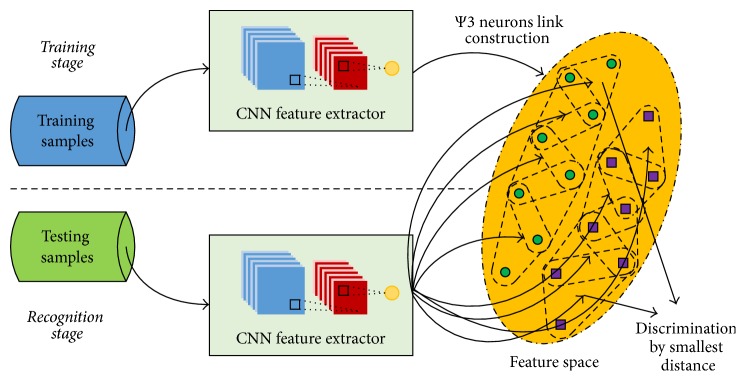
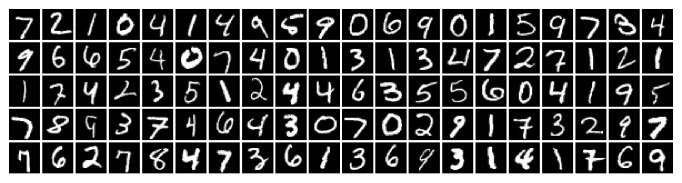
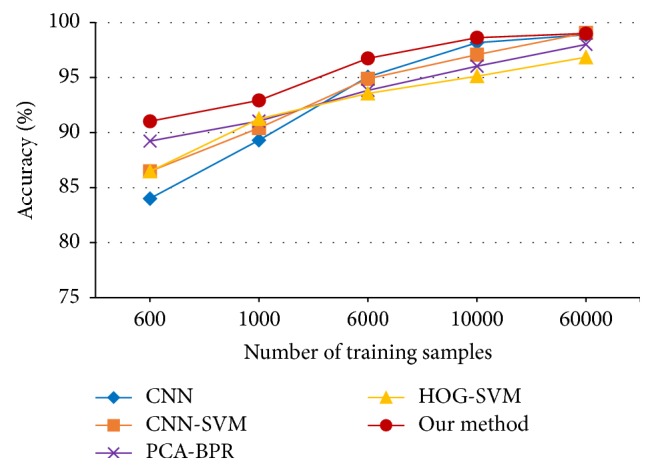
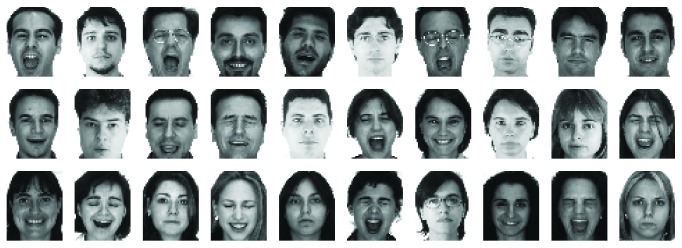
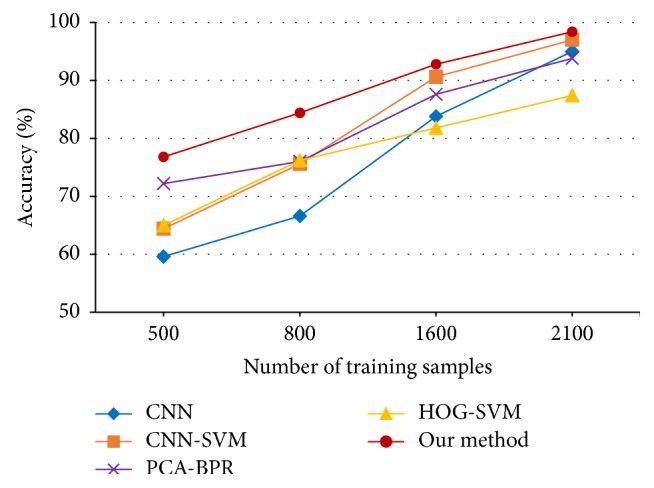
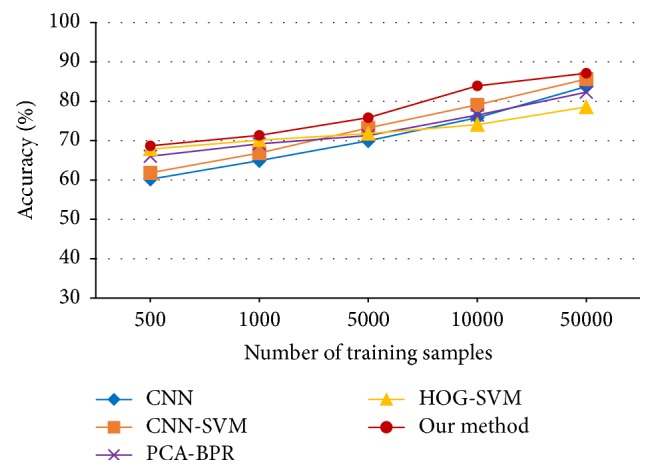
As a typical deep-learning model, Convolutional Neural Networks (CNNs) can be exploited to automatically extract features from images using the hierarchical structure inspired by mammalian visual system. For image classification tasks, traditional CNN models employ the softmax function for classification. However, owing to the limited capacity of the softmax function, there are some shortcomings of traditional CNN models in image classification. To deal with this problem, a new method combining Biomimetic Pattern Recognition (BPR) with CNNs is proposed for image classification. BPR performs class recognition by a union of geometrical cover sets in a high-dimensional feature space and therefore can overcome some disadvantages of traditional pattern recognition. The proposed method is evaluated on three famous image classification benchmarks, that is, MNIST, AR, and CIFAR-10. The classification accuracies of the proposed method for the three datasets are 99.01%, 98.40%, and 87.11%, respectively, which are much higher in comparison with the other four methods in most cases.
作为一种典型的深度学习模型,卷积神经网络(CNN)可以利用受哺乳动物视觉系统启发的层次结构从图像中自动提取特征。对于图像分类任务,传统的CNN模型使用softmax函数进行分类。然而,由于softmax函数的能力有限,传统的CNN模型在图像分类中存在一些缺点。为了解决这个问题,提出了一种将仿生模式识别(BPR)与CNN相结合的新方法用于图像分类。BPR通过在高维特征空间中联合几何覆盖集来执行类别识别,因此可以克服传统模式识别的一些缺点。该方法在三个著名的图像分类基准数据集上进行了评估,即MNIST、AR和CIFAR-10。该方法在这三个数据集上的分类准确率分别为99.01%、98.40%和87.11%,在大多数情况下,与其他四种方法相比要高得多。