Heras Francisco J H, Laughlin Simon B
Department of Zoology, University of Cambridge, Cambridge, United Kingdom; Current affiliation: Champalimaud Neuroscience Programme (CNP), Champalimaud Centre for the Unknown, Lisboa, Portugal.
Department of Zoology, University of Cambridge , Cambridge , United Kingdom.
PeerJ. 2017 Jan 12;5:e2772. doi: 10.7717/peerj.2772. eCollection 2017.
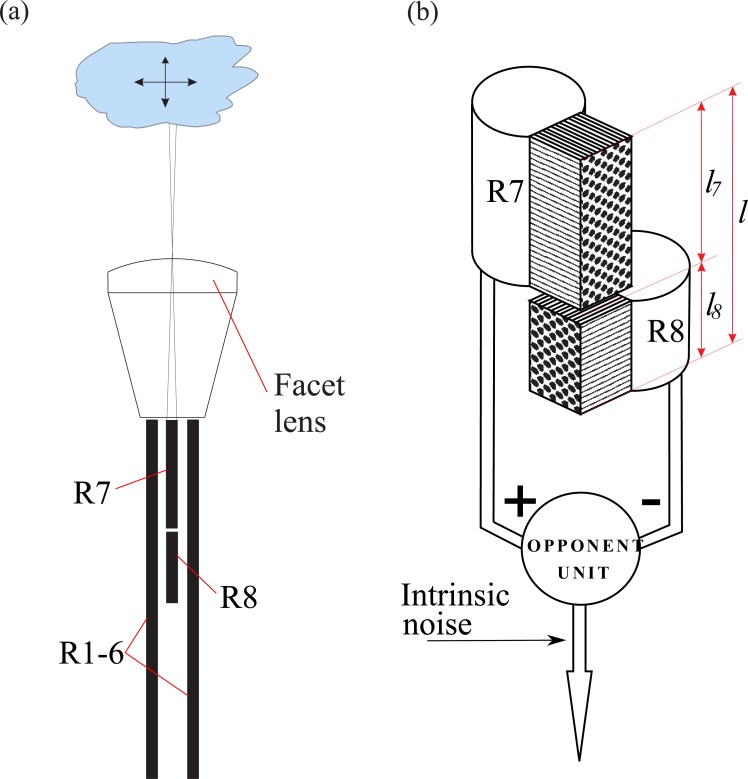
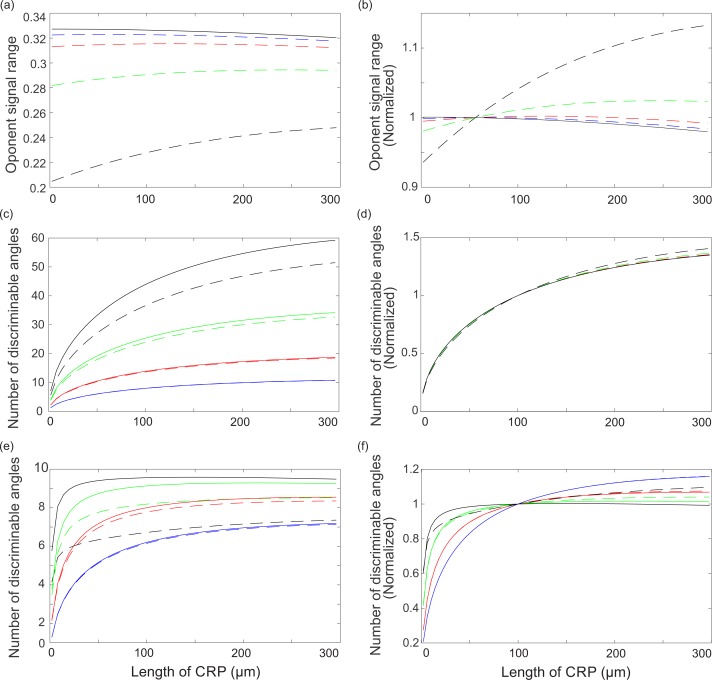
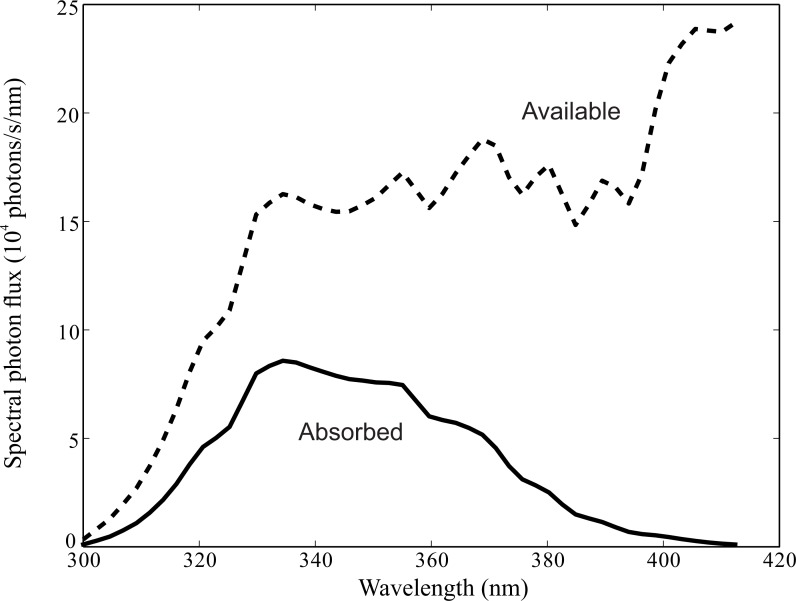
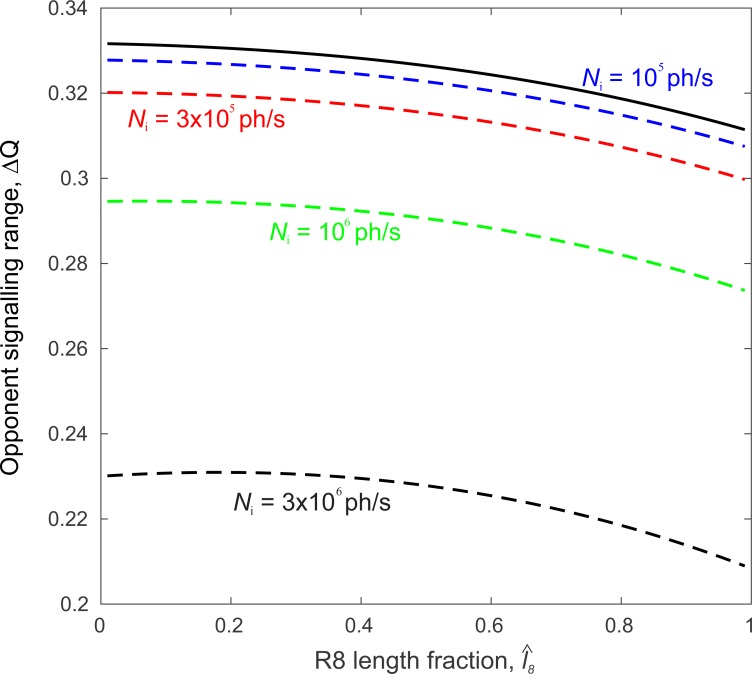
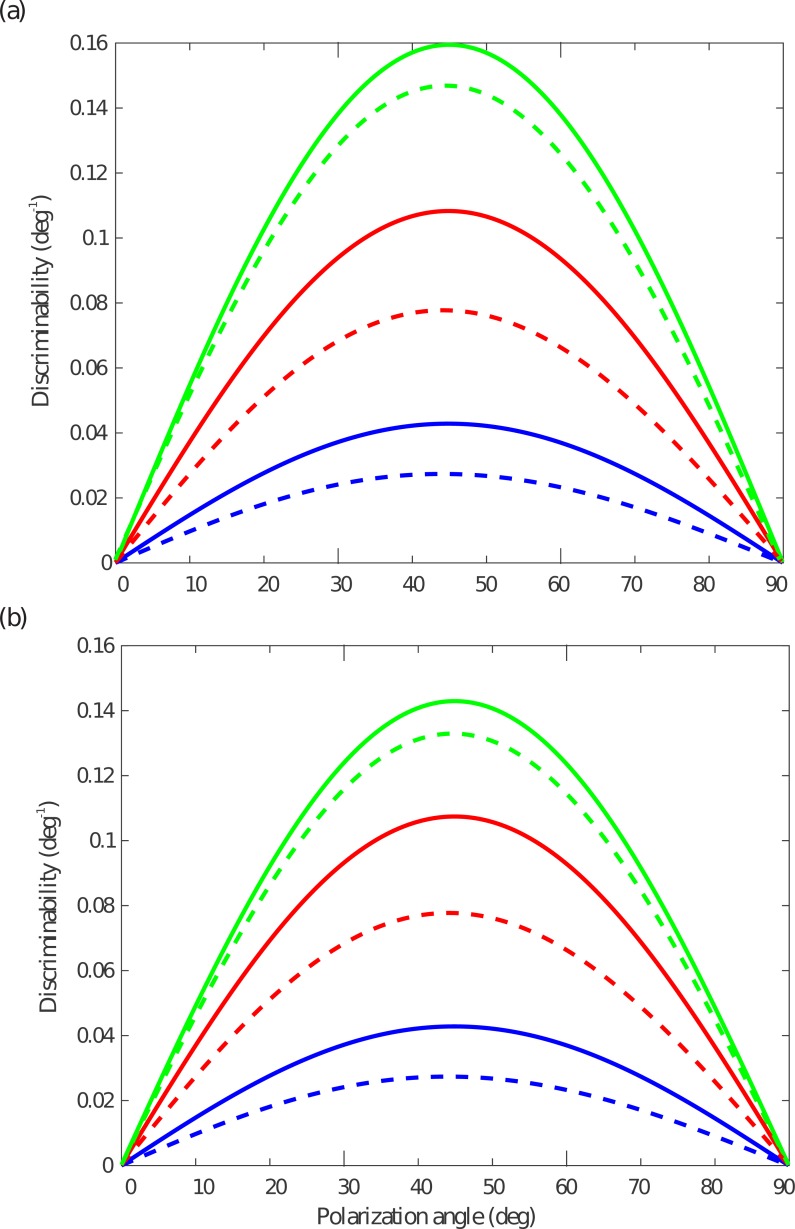
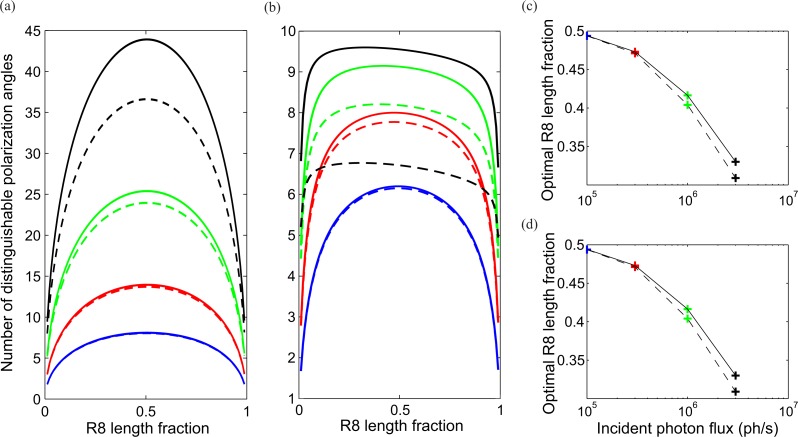
Flies use specialized photoreceptors R7 and R8 in the dorsal rim area (DRA) to detect skylight polarization. R7 and R8 form a tiered waveguide (central rhabdomere pair, CRP) with R7 on top, filtering light delivered to R8. We examine how the division of a given resource, CRP length, between R7 and R8 affects their ability to code polarization angle. We model optical absorption to show how the length fractions allotted to R7 and R8 determine the rates at which they transduce photons, and correct these rates for transduction unit saturation. The rates give polarization signal and photon noise in R7, and in R8. Their signals are combined in an opponent unit, intrinsic noise added, and the unit's output analysed to extract two measures of coding ability, number of discriminable polarization angles and mutual information. A very long R7 maximizes opponent signal amplitude, but codes inefficiently due to photon noise in the very short R8. Discriminability and mutual information are optimized by maximizing signal to noise ratio, SNR. At lower light levels approximately equal lengths of R7 and R8 are optimal because photon noise dominates. At higher light levels intrinsic noise comes to dominate and a shorter R8 is optimum. The optimum R8 length fractions falls to one third. This intensity dependent range of optimal length fractions corresponds to the range observed in different fly species and is not affected by transduction unit saturation. We conclude that a limited resource, rhabdom length, can be divided between two polarization sensors, R7 and R8, to optimize opponent coding. We also find that coding ability increases sub-linearly with total rhabdom length, according to the law of diminishing returns. Consequently, the specialized shorter central rhabdom in the DRA codes polarization twice as efficiently with respect to rhabdom length than the longer rhabdom used in the rest of the eye.
苍蝇利用背缘区(DRA)中的特殊光感受器R7和R8来检测天空光的偏振。R7和R8形成一个分层波导(中央视杆对,CRP),R7在顶部,对传递给R8的光进行过滤。我们研究了给定资源(CRP长度)在R7和R8之间的分配如何影响它们对偏振角进行编码的能力。我们建立了光吸收模型,以展示分配给R7和R8的长度分数如何决定它们转导光子的速率,并针对转导单元饱和情况对这些速率进行校正。这些速率给出了R7和R8中的偏振信号和光子噪声。它们的信号在一个拮抗单元中合并,加上固有噪声,然后分析该单元的输出,以提取编码能力的两个指标:可分辨的偏振角数量和互信息。非常长的R7能使拮抗信号幅度最大化,但由于非常短的R8中的光子噪声,编码效率低下。通过最大化信噪比(SNR)来优化可分辨性和互信息。在较低光照水平下,R7和R8的长度大致相等是最优的,因为光子噪声占主导。在较高光照水平下,固有噪声开始占主导,较短的R8是最优的。最优的R8长度分数降至三分之一。这种与强度相关的最优长度分数范围与在不同蝇类物种中观察到的范围相对应,并且不受转导单元饱和的影响。我们得出结论,有限的资源——视杆长度,可以在两个偏振传感器R7和R8之间进行分配,以优化拮抗编码。我们还发现,根据收益递减规律,编码能力随视杆总长度呈亚线性增加。因此,DRA中专门的较短中央视杆在视杆长度方面对偏振进行编码的效率是眼睛其他部分使用的较长视杆的两倍。