Zamay Galina S, Ivanchenko Tatiana I, Zamay Tatiana N, Grigorieva Valentina L, Glazyrin Yury E, Kolovskaya Olga S, Garanzha Irina V, Barinov Andrey A, Krat Alexey V, Mironov Gleb G, Gargaun Ana, Veprintsev Dmitry V, Bekuzarov Sergey S, Kirichenko Andrey K, Zukov Ruslan A, Petrova Marina M, Modestov Andrey A, Berezovski Maxim V, Zamay Anna S
Laboratory for Biomolecular and Medical Technologies, Krasnoyarsk State Medical University, Krasnoyarsk 660022, Russia; Institute of Chemistry and Chemical Technology of the Siberian Branch of the Russian Academy of Science, Krasnoyarsk 660036, Russia.
Laboratory for Biomolecular and Medical Technologies, Krasnoyarsk State Medical University, Krasnoyarsk 660022, Russia.
Mol Ther Nucleic Acids. 2017 Mar 17;6:150-162. doi: 10.1016/j.omtn.2016.12.004. Epub 2016 Dec 31.
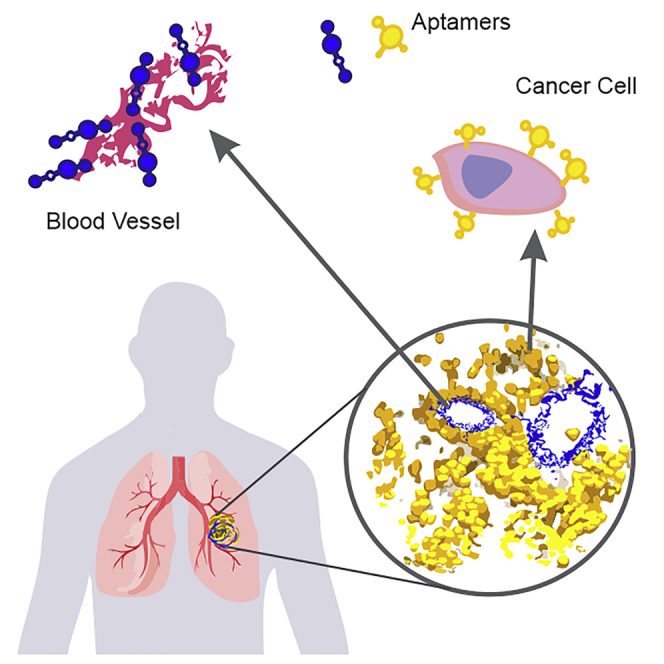
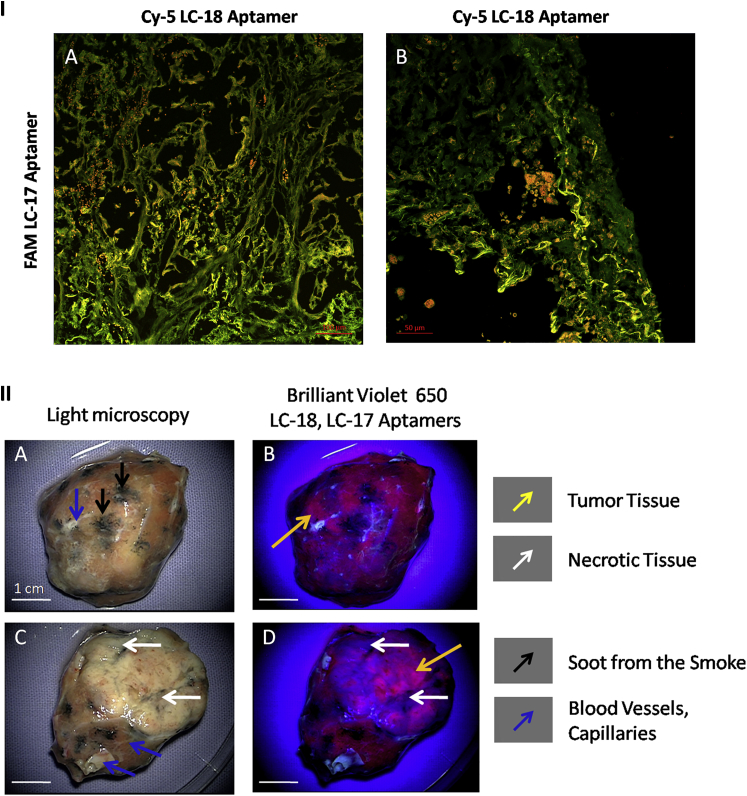
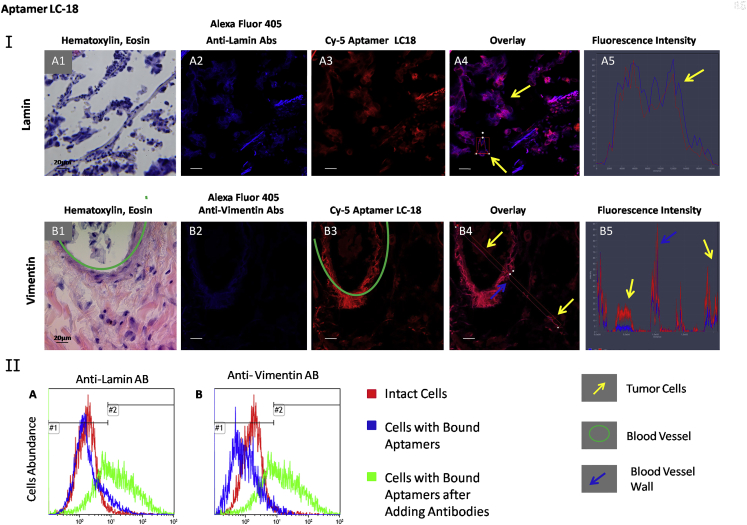
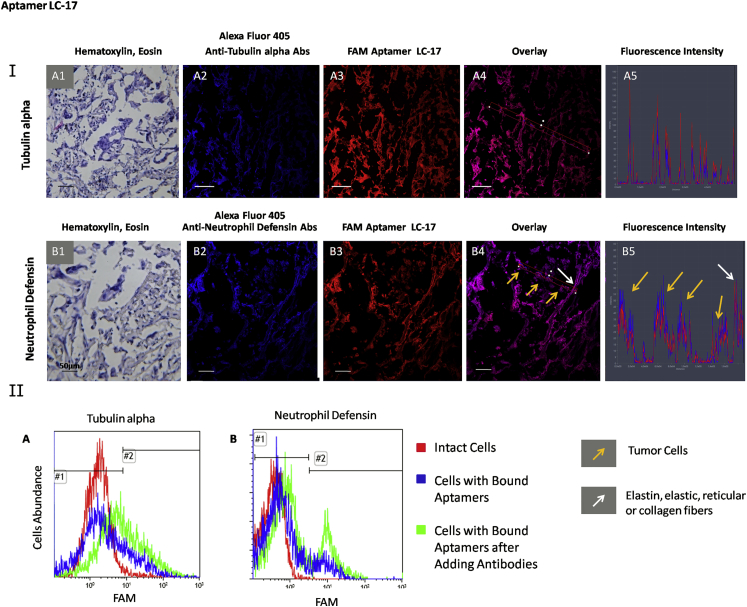
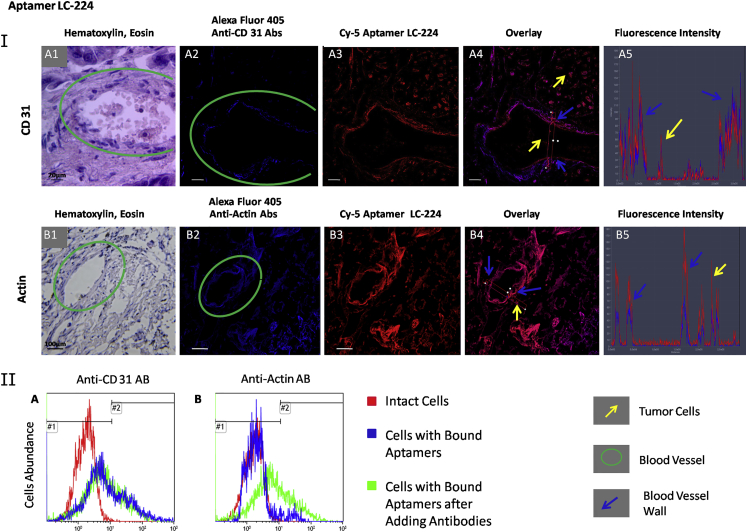
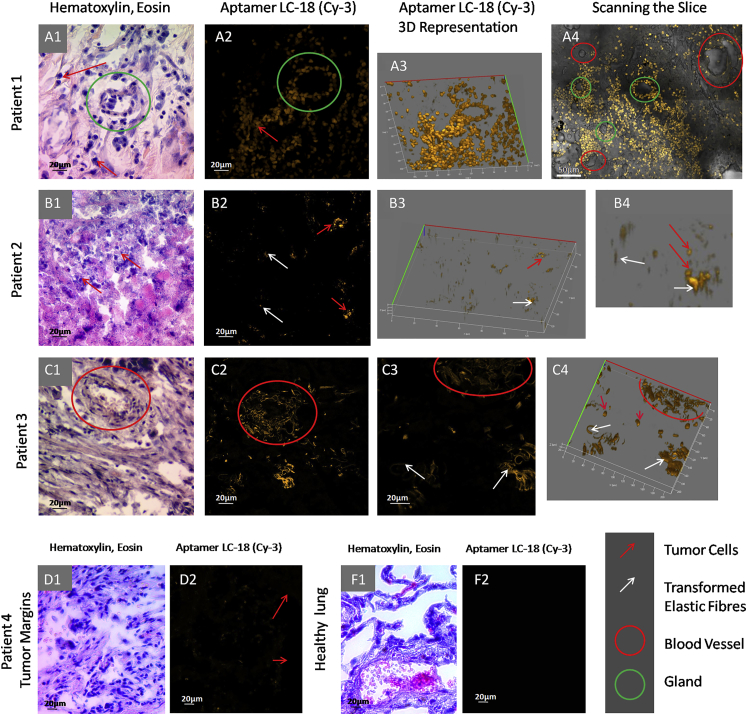
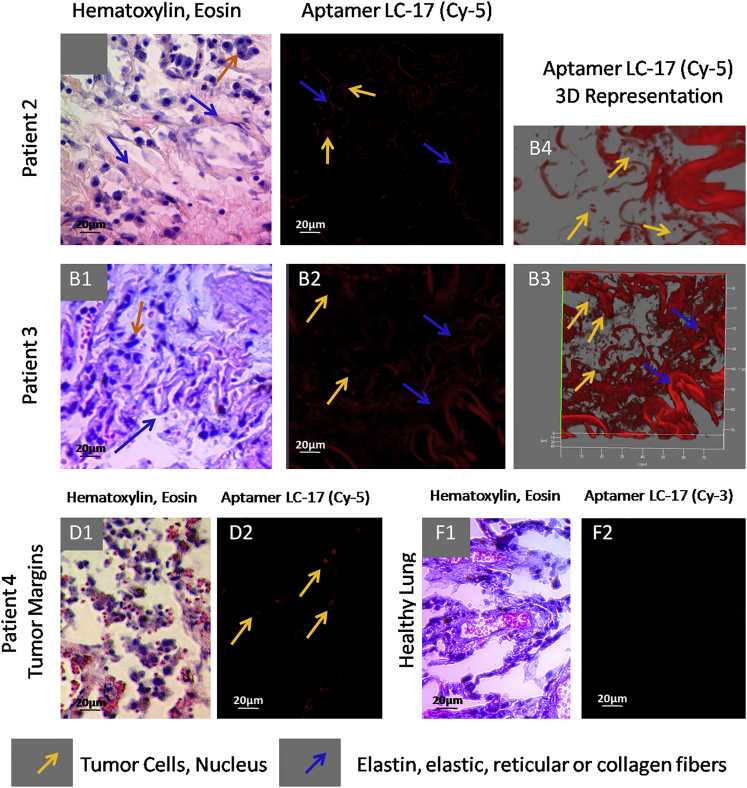
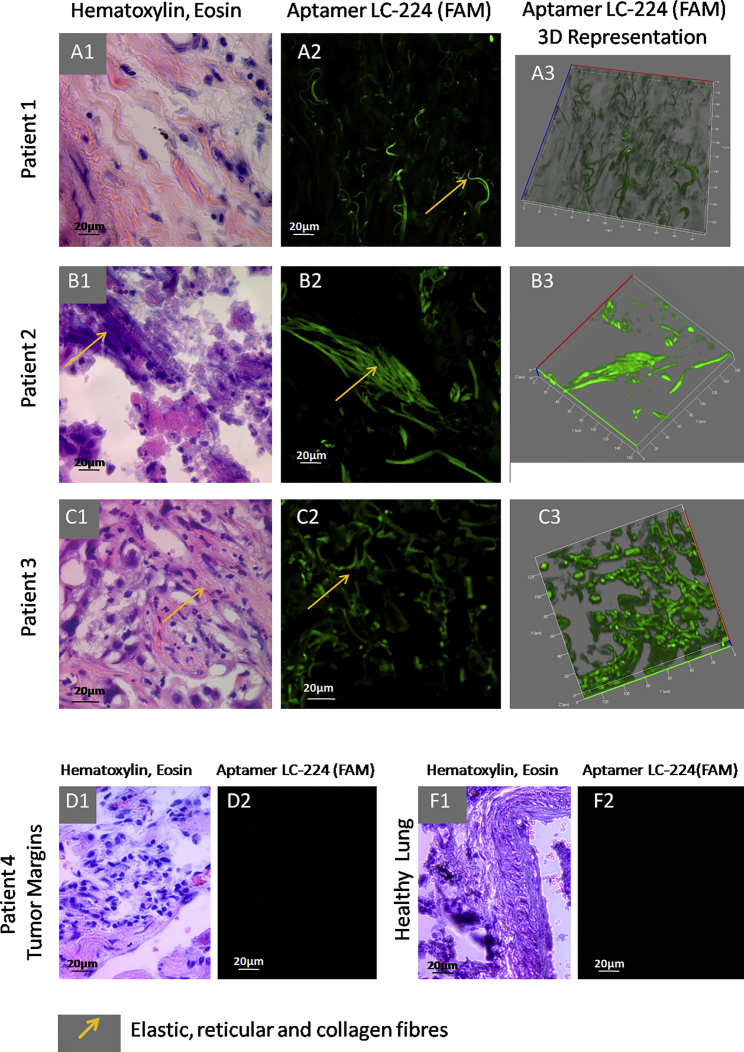
Nucleic acid aptamers are becoming popular as molecular probes for identification and imaging pathology and, at the same time, as a convenient platform for targeted therapy. Recent studies have shown that aptamers may be effectively used for tumor characterization and as commercially available monoclonal antibodies. Here we present three DNA aptamers binding to whole transformed lung cancer tissues, including tumor cells, connective tissues, and blood vessels. Protein targets have been revealed using affinity purification followed by mass spectrometry analyses, and they have been validated using a panel of correspondent antibodies and 3D imaging of tumor tissues. Each of the proteins targeted by the aptamers is involved in cancer progression and most of them are crucial for lung adenocarcinoma. We propose the use of these aptamers in aptahistochemistry for the characterization of the histological structure of lung adenocarcinoma. The value of the presented aptamers is their application together or separately for indicating the spread of neoplastic transformation, for complex differential diagnostics, and for targeted therapy of the tumor itself as well as all transformed structures of the adjacent tissues. Moreover, it has been demonstrated that these aptamers could be used for intraoperative tumor visualization and margin assessment.
核酸适配体正逐渐成为用于识别和成像病理学的分子探针,同时也是一种用于靶向治疗的便捷平台。最近的研究表明,适配体可有效地用于肿瘤表征,并且可作为市售单克隆抗体使用。在此,我们展示了三种与整个转化型肺癌组织(包括肿瘤细胞、结缔组织和血管)结合的DNA适配体。通过亲和纯化和质谱分析揭示了蛋白质靶点,并使用一组相应抗体和肿瘤组织的三维成像对其进行了验证。适配体靶向的每种蛋白质都参与癌症进展,其中大多数对肺腺癌至关重要。我们建议在适配体组织化学中使用这些适配体来表征肺腺癌的组织结构。所展示的适配体的价值在于它们可一起或单独用于指示肿瘤转化的扩散、进行复杂的鉴别诊断以及对肿瘤本身以及相邻组织的所有转化结构进行靶向治疗。此外,已经证明这些适配体可用于术中肿瘤可视化和切缘评估。