Ziarek Joshua J, Kleist Andrew B, London Nir, Raveh Barak, Montpas Nicolas, Bonneterre Julien, St-Onge Geneviève, DiCosmo-Ponticello Crystal J, Koplinski Chad A, Roy Ishan, Stephens Bryan, Thelen Sylvia, Veldkamp Christopher T, Coffman Frederick D, Cohen Marion C, Dwinell Michael B, Thelen Marcus, Peterson Francis C, Heveker Nikolaus, Volkman Brian F
Department of Biochemistry, Medical College of Wisconsin, Milwaukee, WI 53226, USA.
Department of Organic Chemistry, Weizmann Institute of Science, Rehovot 76100, Israel.
Sci Signal. 2017 Mar 21;10(471):eaah5756. doi: 10.1126/scisignal.aah5756.
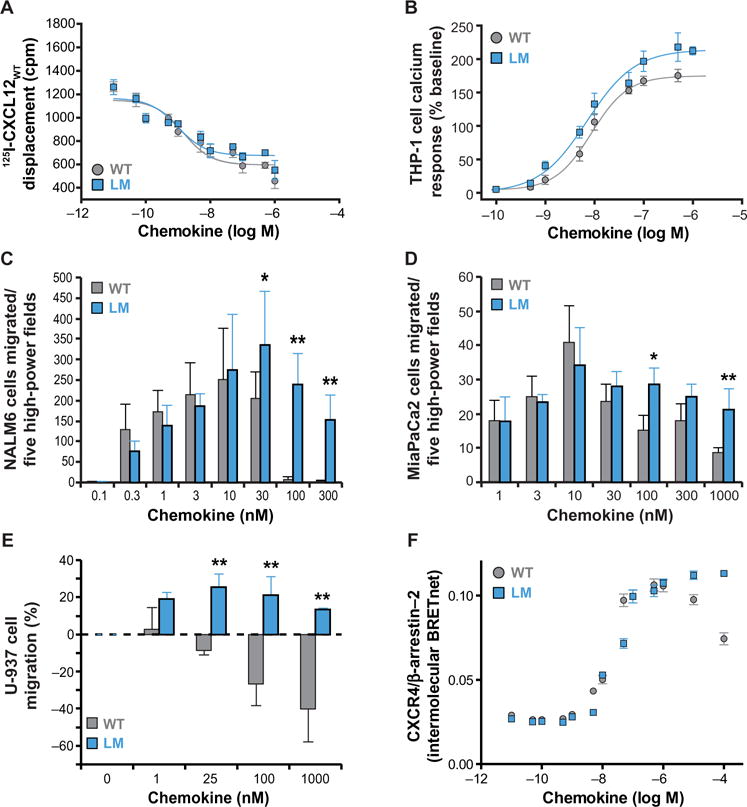
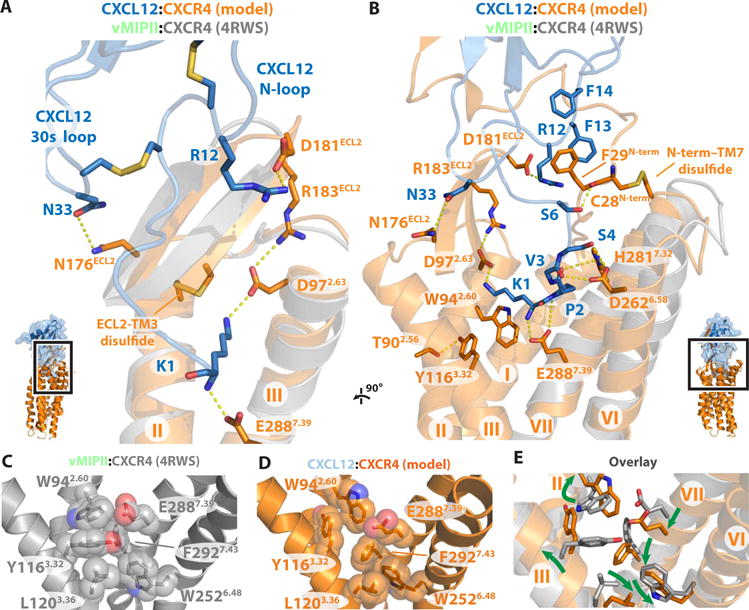
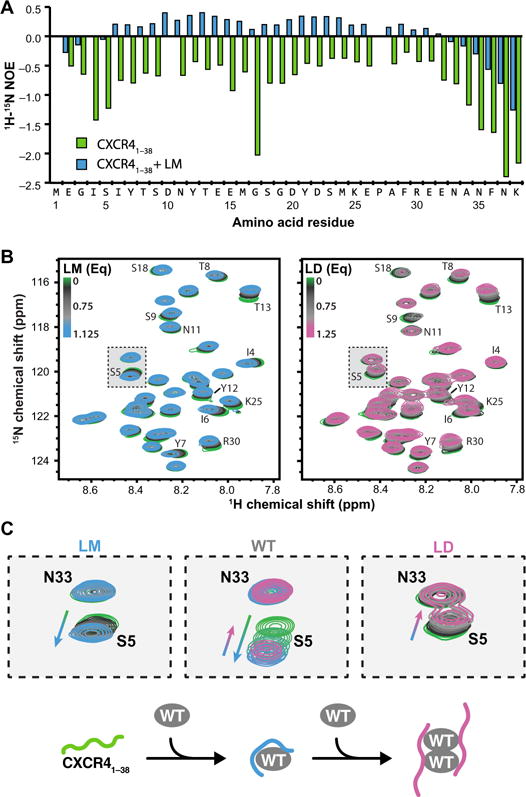
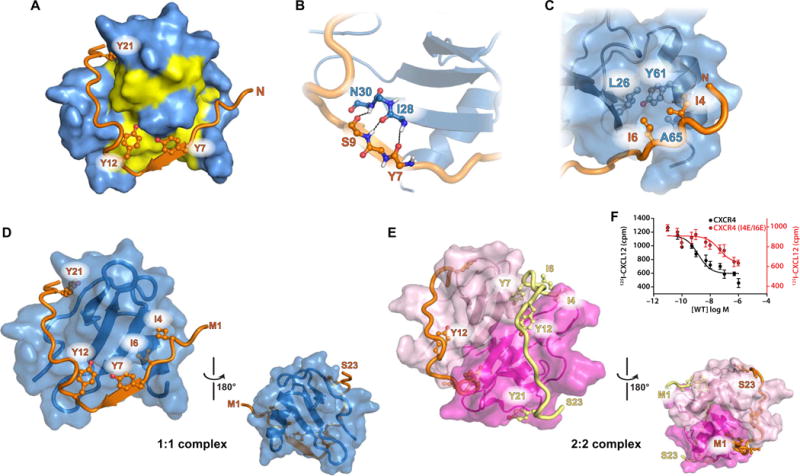
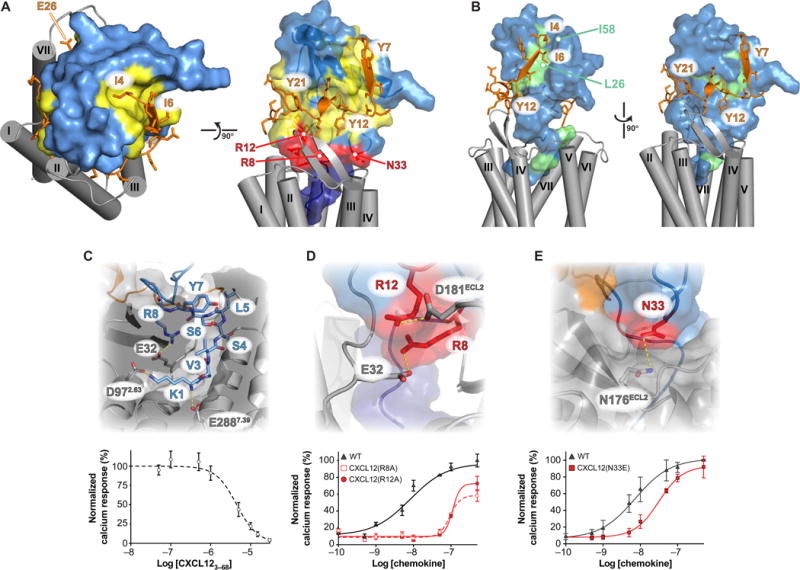
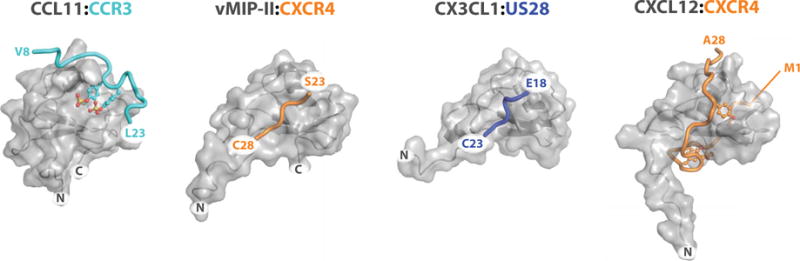
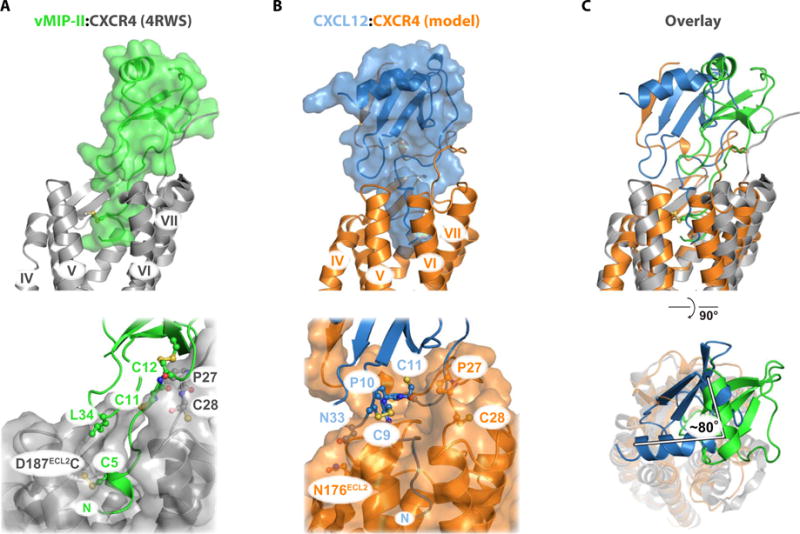
Chemokines orchestrate cell migration for development, immune surveillance, and disease by binding to cell surface heterotrimeric guanine nucleotide-binding protein (G protein)-coupled receptors (GPCRs). The array of interactions between the nearly 50 chemokines and their 20 GPCR targets generates an extensive signaling network to which promiscuity and biased agonism add further complexity. The receptor CXCR4 recognizes both monomeric and dimeric forms of the chemokine CXCL12, which is a distinct example of ligand bias in the chemokine family. We demonstrated that a constitutively monomeric CXCL12 variant reproduced the G protein-dependent and β-arrestin-dependent responses that are associated with normal CXCR4 signaling and lead to cell migration. In addition, monomeric CXCL12 made specific contacts with CXCR4 that are not present in the structure of the receptor in complex with a dimeric form of CXCL12, a biased agonist that stimulates only G protein-dependent signaling. We produced an experimentally validated model of an agonist-bound chemokine receptor that merged a nuclear magnetic resonance-based structure of monomeric CXCL12 bound to the amino terminus of CXCR4 with a crystal structure of the transmembrane domains of CXCR4. The large CXCL12:CXCR4 protein-protein interface revealed by this structure identified previously uncharacterized functional interactions that fall outside of the classical "two-site model" for chemokine-receptor recognition. Our model suggests a mechanistic hypothesis for how interactions on the extracellular face of the receptor may stimulate the conformational changes required for chemokine receptor-mediated signal transduction.
趋化因子通过与细胞表面异源三聚体鸟嘌呤核苷酸结合蛋白(G蛋白)偶联受体(GPCR)结合,协调细胞迁移以促进发育、免疫监视和疾病发生。近50种趋化因子与其20种GPCR靶点之间的相互作用阵列形成了一个广泛的信号网络,而混杂性和偏向性激动作用进一步增加了该网络的复杂性。受体CXCR4可识别趋化因子CXCL12的单体和二聚体形式,这是趋化因子家族中配体偏向性的一个独特例子。我们证明,一种组成型单体CXCL12变体重现了与正常CXCR4信号传导相关并导致细胞迁移的G蛋白依赖性和β-抑制蛋白依赖性反应。此外,单体CXCL12与CXCR4形成了特定的接触,而在与二聚体形式的CXCL12(一种仅刺激G蛋白依赖性信号传导的偏向性激动剂)结合的受体结构中不存在这些接触。我们构建了一个经过实验验证的激动剂结合趋化因子受体模型,该模型将基于核磁共振的单体CXCL12与CXCR4氨基末端结合的结构与CXCR4跨膜结构域的晶体结构合并。该结构揭示的CXCL12与CXCR4之间大的蛋白质-蛋白质界面确定了以前未表征的功能相互作用,这些相互作用不属于趋化因子-受体识别的经典“双位点模型”。我们的模型提出了一个机制假说,即受体细胞外表面的相互作用如何刺激趋化因子受体介导的信号转导所需的构象变化。