Leung Patrick, Kudrna James C
Department of Orthopedic Surgery, University of Chicago, Chicago, IL, USA.
Department of Orthopedic Surgery, NorthShore Medical Group, University of Chicago Pritzker School of Medicine, Glenview, IL, USA.
Arthroplast Today. 2016 Aug 21;2(3):105-109. doi: 10.1016/j.artd.2016.07.001. eCollection 2016 Sep.
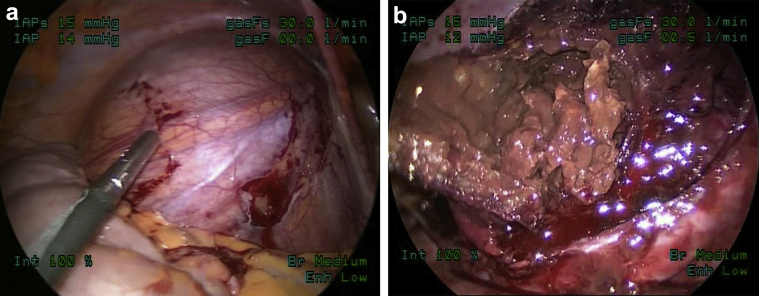
The development of pseudotumors is not uncommon with metal-on-metal total hip arthroplasty. Pseudotumors that dissect into the retroperitoneal space can cause symptoms of nerve compression. We describe a case of a 53-year-old male with a metal-on-metal total hip arthroplasty who developed mild symptoms of a femoral nerve neuropathy 6 years postoperatively. Revision arthroplasty to a ceramic-on-polyethylene articulation and debridement of the pseudotumor was performed. Postoperatively, the patient's femoral neuropathy progressed and a repeat magnetic resonance imaging showed an increase in size of the pseudotumor despite the removal of the offending metal-on-metal articulation. The patient subsequently underwent a laparoscopic excision of the retroperitoneal pseudotumor. By 17 months post laparoscopic excision of the pseudotumor, the patient's motor deficits resolved, however, sensory deficits persisted in the anteromedial thigh.
金属对金属全髋关节置换术后发生假瘤并不罕见。向腹膜后间隙蔓延的假瘤可引起神经受压症状。我们报告一例53岁男性,接受金属对金属全髋关节置换术,术后6年出现股神经病变的轻微症状。进行了翻修手术,更换为陶瓷对聚乙烯关节,并对假瘤进行清创。术后,患者的股神经病变进展,尽管移除了有问题的金属对金属关节,但重复磁共振成像显示假瘤大小增加。患者随后接受了腹腔镜下腹膜后假瘤切除术。在腹腔镜切除假瘤后17个月,患者的运动功能障碍得到解决,然而,大腿前内侧的感觉功能障碍仍然存在。