Notartomaso Serena, Mascio Giada, Bernabucci Matteo, Zappulla Cristina, Scarselli Pamela, Cannella Milena, Imbriglio Tiziana, Gradini Roberto, Battaglia Giuseppe, Bruno Valeria, Nicoletti Ferdinando
1 I.R.C.C.S. Neuromed, Pozzilli, Italy.
2 Department of Experimental Medicine, Sapienza University, Rome, Italy.
Mol Pain. 2017 Jan;13:1744806917697009. doi: 10.1177/1744806917697009.
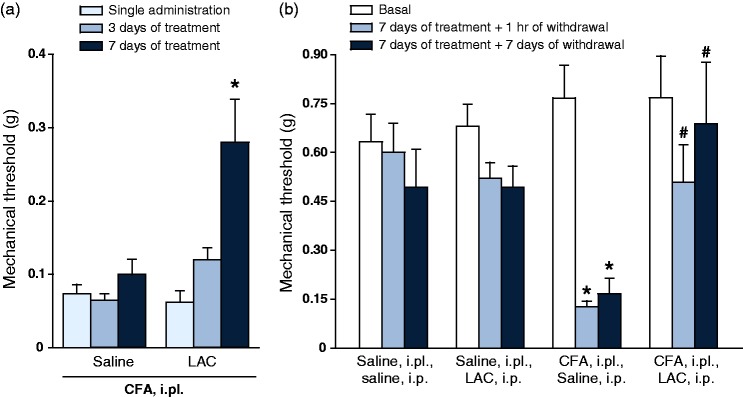
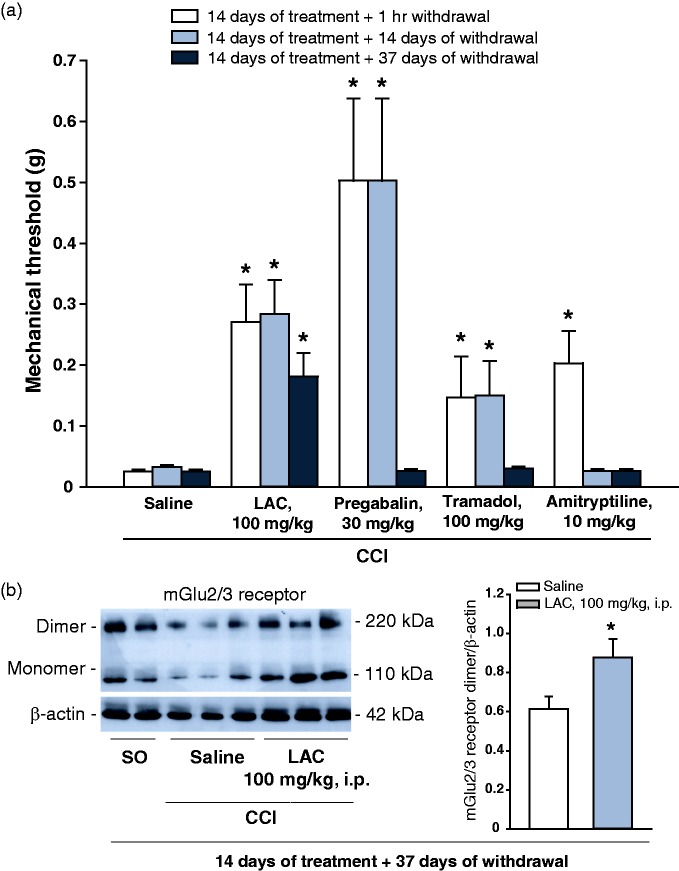
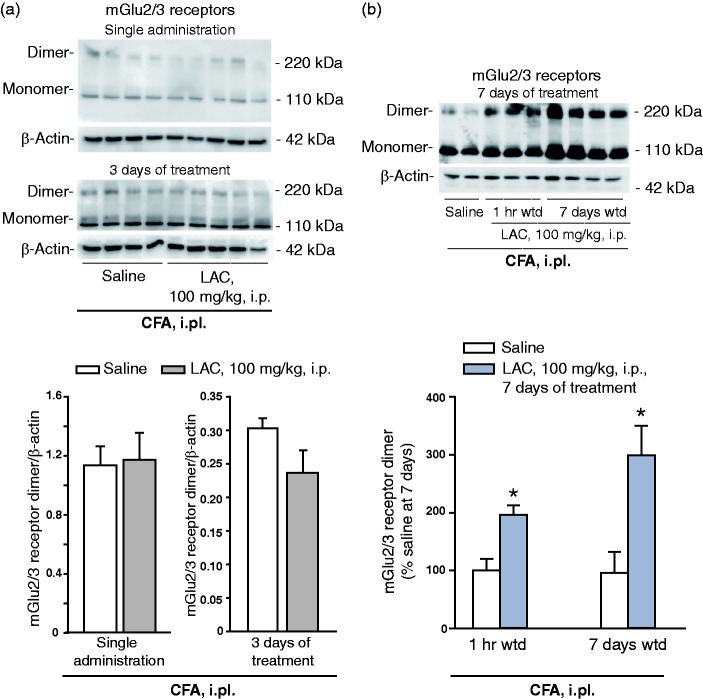
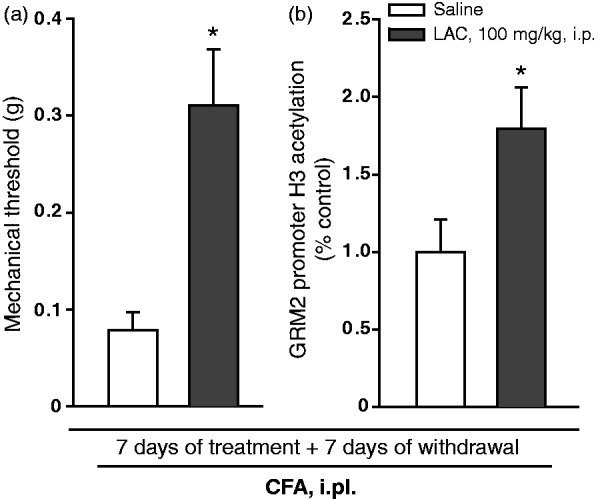
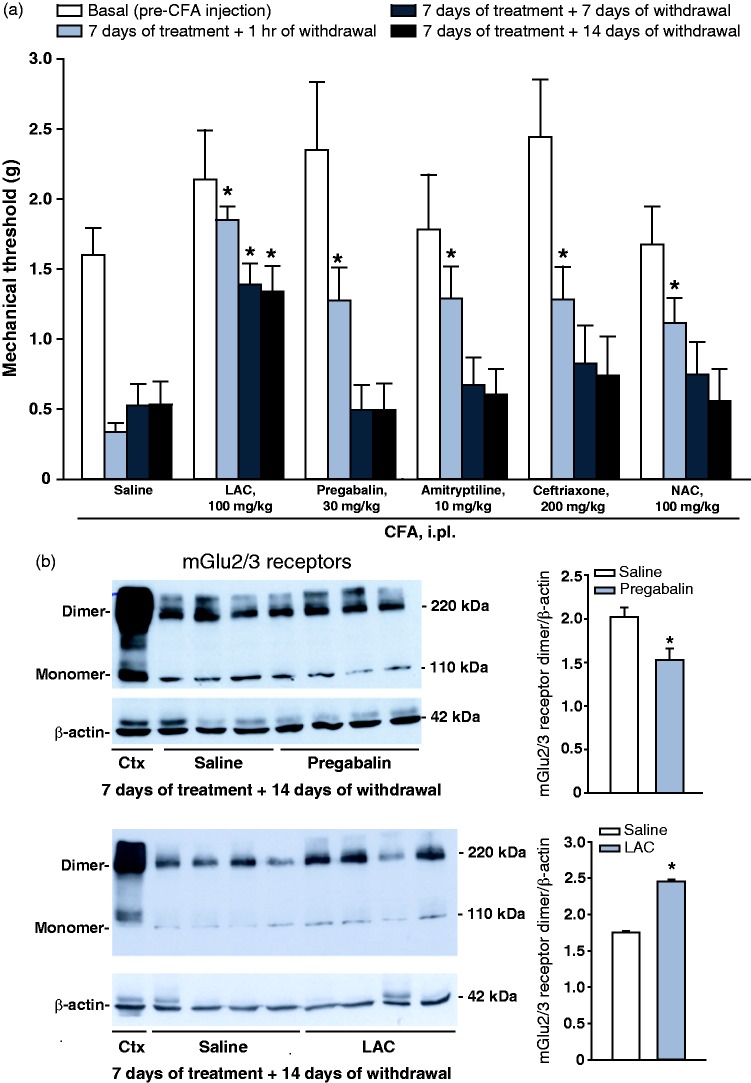
Background L-acetylcarnitine, a drug marketed for the treatment of chronic pain, causes analgesia by epigenetically up-regulating type-2 metabotropic glutamate (mGlu2) receptors in the spinal cord. Because the epigenetic mechanisms are typically long-lasting, we hypothesized that analgesia could outlast the duration of L-acetylcarnitine treatment in models of inflammatory and neuropathic pain. Results A seven-day treatment with L-acetylcarnitine (100 mg/kg, once a day, i.p.) produced an antiallodynic effect in the complete Freund adjuvant mouse model of chronic inflammatory pain. L-Acetylcarnitine-induced analgesia persisted for at least 14 days after drug withdrawal. In contrast, the analgesic effect of pregabalin, amitryptiline, ceftriaxone, and N-acetylcysteine disappeared seven days after drug withdrawal. L-acetylcarnitine treatment enhanced mGlu2/3 receptor protein levels in the dorsal region of the spinal cord. This effect also persisted for two weeks after drug withdrawal and was associated with increased levels of acetylated histone H3 bound to the Grm2 gene promoter in the dorsal root ganglia. A long-lasting analgesic effect of L-acetylcarnitine was also observed in mice subjected to chronic constriction injury of the sciatic nerve. In these animals, a 14-day treatment with pregabalin, amitryptiline, tramadol, or L-acetylcarnitine produced a significant antiallodynic effect, with pregabalin displaying the greatest efficacy. In mice treated with pregabalin, tramadol or L-acetylcarnitine the analgesic effect was still visible 15 days after the end of drug treatment. However, only in mice treated with L-acetylcarnitine analgesia persisted 37 days after drug withdrawal. This effect was associated with an increase in mGlu2/3 receptor protein levels in the dorsal horns of the spinal cord. Conclusions Our findings suggest that L-acetylcarnitine has the unique property to cause a long-lasting analgesic effect that might reduce relapses in patients suffering from chronic pain.
L-乙酰肉碱是一种用于治疗慢性疼痛的药物,它通过表观遗传方式上调脊髓中的2型代谢型谷氨酸(mGlu2)受体来产生镇痛作用。由于表观遗传机制通常具有持久性,我们推测在炎症性和神经性疼痛模型中,镇痛作用可能会在L-乙酰肉碱治疗期结束后持续存在。结果:在完全弗氏佐剂诱导的慢性炎症性疼痛小鼠模型中,连续7天给予L-乙酰肉碱(100mg/kg,每天一次,腹腔注射)可产生抗痛觉过敏作用。停药后,L-乙酰肉碱诱导的镇痛作用至少持续14天。相比之下,普瑞巴林、阿米替林、头孢曲松和N-乙酰半胱氨酸的镇痛作用在停药7天后消失。L-乙酰肉碱治疗可提高脊髓背侧区域的mGlu2/3受体蛋白水平。这种作用在停药后也持续了两周,并且与背根神经节中与Grm2基因启动子结合的乙酰化组蛋白H3水平升高有关。在坐骨神经慢性压迫损伤的小鼠中也观察到了L-乙酰肉碱的持久镇痛作用。在这些动物中,连续14天给予普瑞巴林、阿米替林、曲马多或L-乙酰肉碱可产生显著的抗痛觉过敏作用,其中普瑞巴林的疗效最佳。在用普瑞巴林、曲马多或L-乙酰肉碱治疗的小鼠中,停药15天后仍可见镇痛作用。然而,只有在用L-乙酰肉碱治疗的小鼠中,停药后镇痛作用持续了37天。这种作用与脊髓背角中mGlu2/3受体蛋白水平的增加有关。结论:我们的研究结果表明,L-乙酰肉碱具有产生持久镇痛作用的独特特性,这可能会减少慢性疼痛患者的复发。