Sethi Bijay Kumar, Nanda Prativa Kumari, Sahoo Santilata
Microbiology Research Laboratory, P. G. Department of Botany, Utkal University, Vani Vihar, Bhubaneswar, Odisha, 751004, India.
MITS School of Biotechnology, 2 (P), Infocity, Patia, Chandaka Industrial Estate, Bhubaneswar, Odisha, 751024, India.
3 Biotech. 2016 Jun;6(1):36. doi: 10.1007/s13205-015-0353-y. Epub 2016 Jan 23.
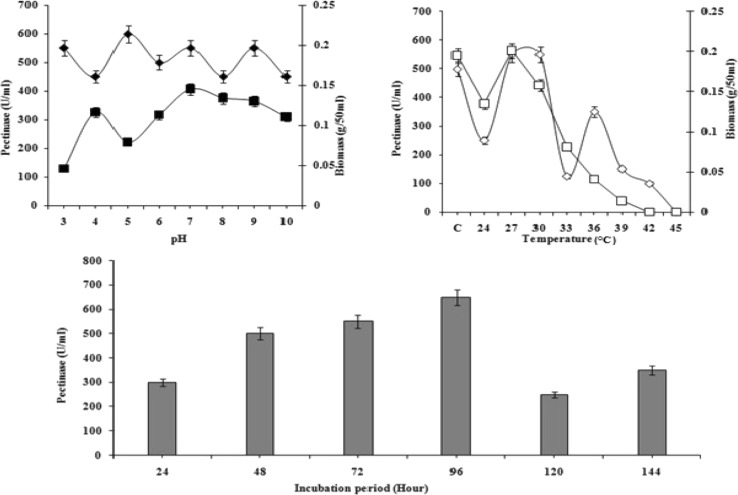
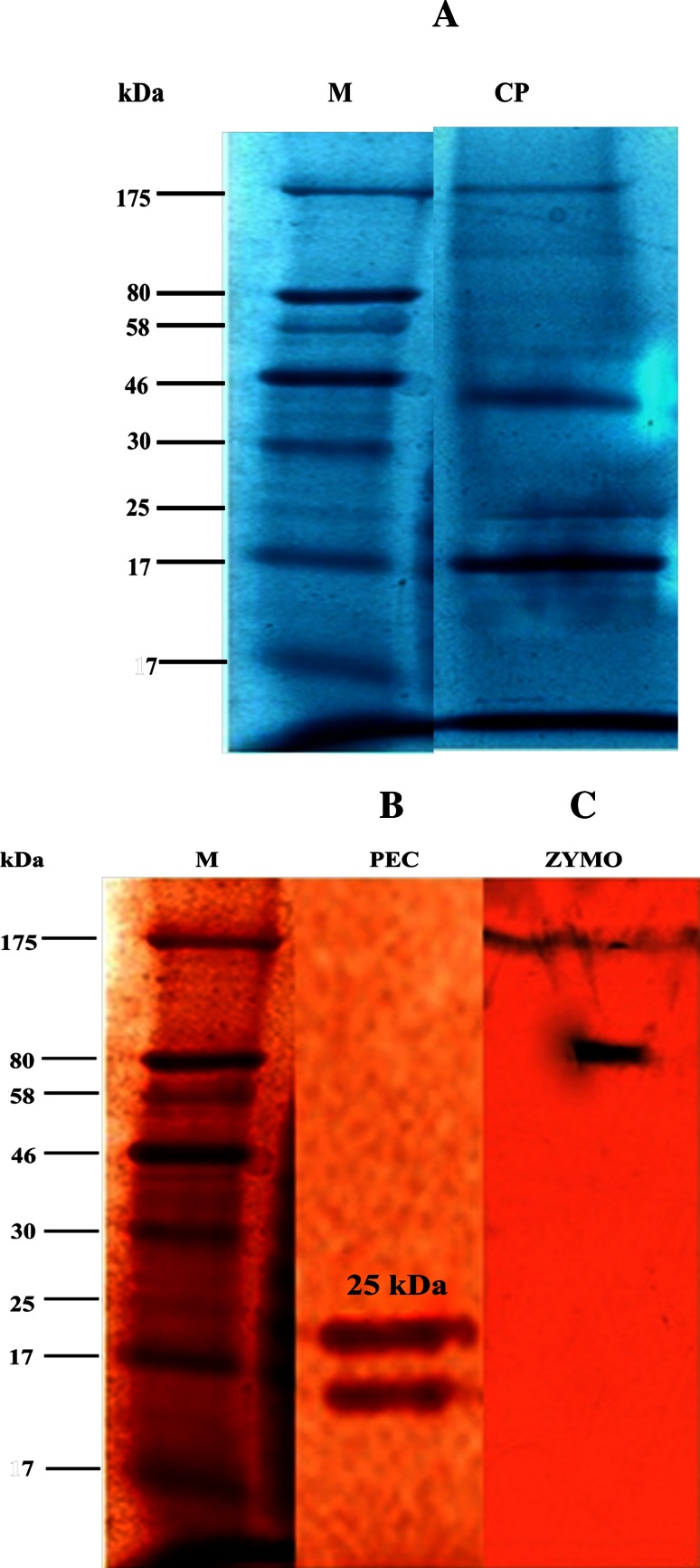
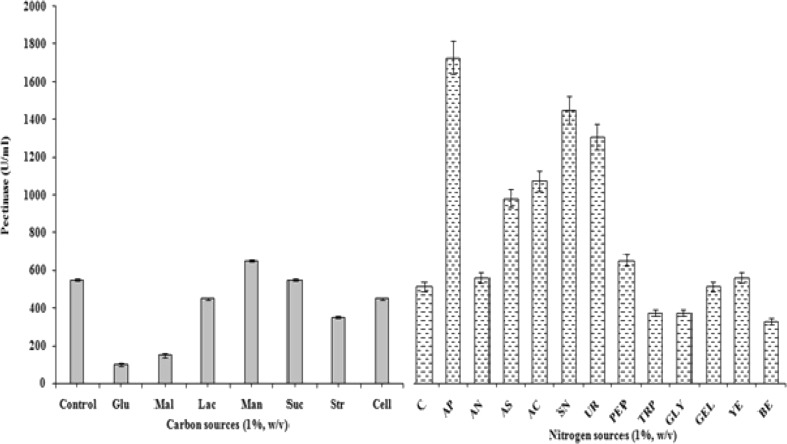
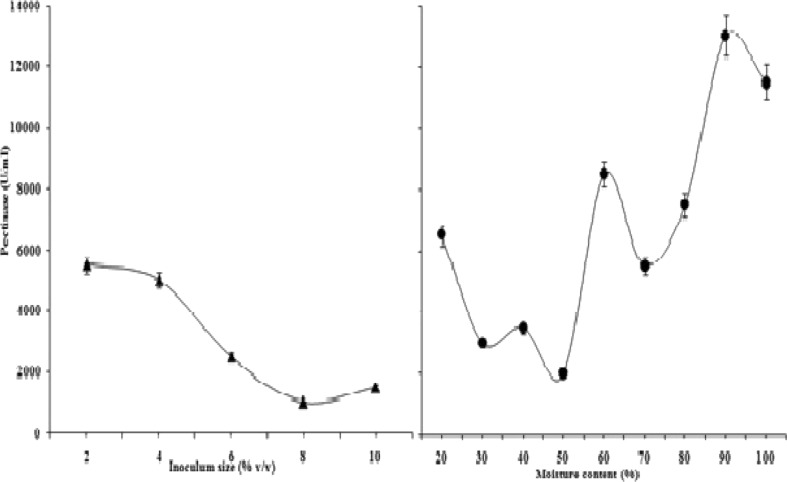
Aspergillus terreus NCFT4269.10 was implemented in solid-state (SSF) and liquid static surface fermentation (LSSF) for biosynthesis of pectinase. Amongst various substrates, like, mustard oil cake, neem oil cake, groundnut oil cake, black gram peels, green gram peels, chickling vetch peels/grass pea peels wheat bran, pearl millet residues, finger millet waste, broken rice, banana peels (BP), apple pomace (AP) and orange peels, banana peel (Musa paradisiaca L.; Family: Musaceae) was most suitable for pectinase biosynthesis (LSSF: 400 ± 21.45 Uml; SSF: 6500 ± 1116.21 Ug). Optimization of process parameters using one-variable-at-a-time method revealed that an initial medium pH of 5.0 at 30 °C and 96 h of incubation along with mannitol, urea, ammonium persulfate and isoleucine have positive influence on pectinase production. Further, K (1 mM), Riboflavin (10 mg 100 ml) and gibberellic acid (0.025 %, w/v) supported in enhanced pectinase production. Banana peels and AP at a ratio of 9:1, moisture content of 90 % with 2 % inoculum size were suitable combinations for production of pectinase. Similarly, 96 h of soaking time with 0.1 M phosphate buffer (pH 6.5) is essential for pectinase recovery. Purification to electrophoretic homogeneity revealed 1.42 fold purification with 8.08 % yield and a molecular weight of 24.6 kDa. Scaling up of various fermentation parameters and supplementing BP as the substrate for pectinase production with better recovery could make it promising for different industrial exploitation.
将土曲霉NCFT4269.10用于固态发酵(SSF)和液体静置表面发酵(LSSF)以生物合成果胶酶。在各种底物中,如芥子油饼、印楝油饼、花生油饼、黑豆皮、绿豆皮、鸡豆/草豆皮、麦麸、珍珠粟残渣、龙爪稷废料、碎米、香蕉皮(BP)、苹果渣(AP)和橙皮,香蕉皮(大蕉;芭蕉科)最适合用于果胶酶的生物合成(LSSF:400±21.45 U/ml;SSF:6500±1116.21 U/g)。采用一次单因素法对工艺参数进行优化,结果表明,在30℃下初始培养基pH值为5.0、培养96小时,同时添加甘露醇、尿素、过硫酸铵和异亮氨酸对果胶酶的产生有积极影响。此外,1 mM的K、10 mg/100 ml的核黄素和0.025%(w/v)的赤霉素有助于提高果胶酶的产量。香蕉皮与苹果渣比例为9:1、含水量为90%、接种量为2%是生产果胶酶的合适组合。同样,用0.1 M磷酸盐缓冲液(pH 6.5)浸泡96小时对于果胶酶的回收至关重要。纯化至电泳纯显示纯化倍数为1.42倍,产率为8.08%,分子量为24.6 kDa。扩大各种发酵参数并补充香蕉皮作为果胶酶生产的底物,同时实现更好的回收,这可能使其在不同的工业应用中具有广阔前景。