Institute for Biotechnology in Plant Production (IFA-Tulln), BOKU - University of Natural Resources and Life Sciences, Tulln, Austria.
Plant Genome and Systems Biology, Helmholtz Zentrum München, Neuherberg, Germany.
Plant Biotechnol J. 2017 Nov;15(11):1453-1464. doi: 10.1111/pbi.12729. Epub 2017 Apr 21.
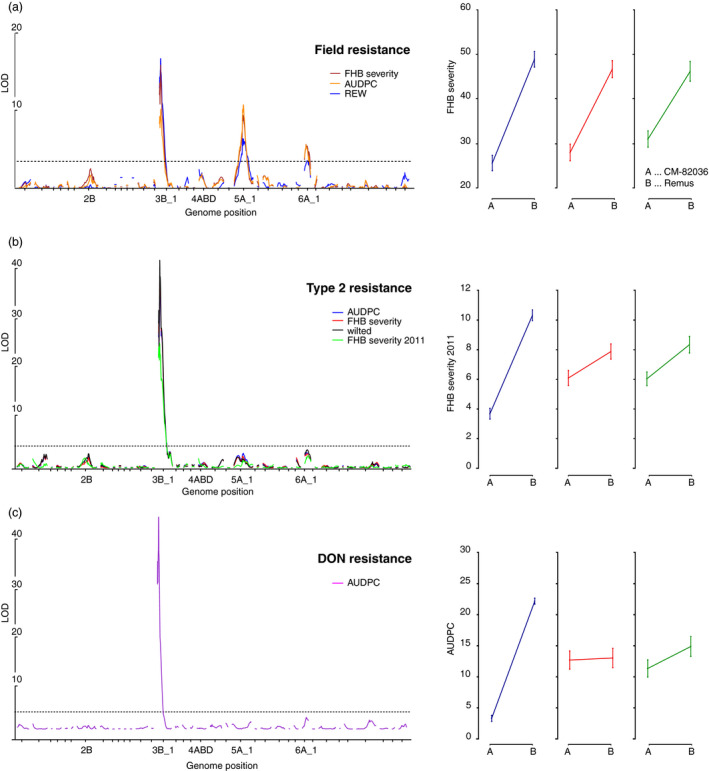
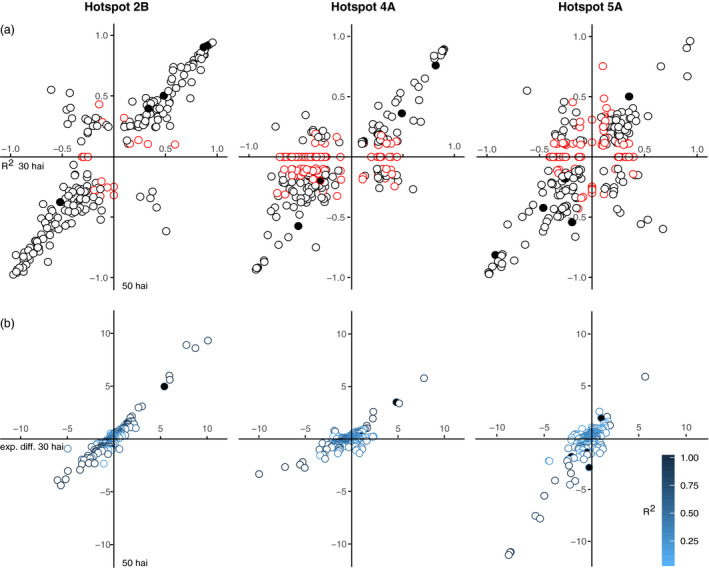
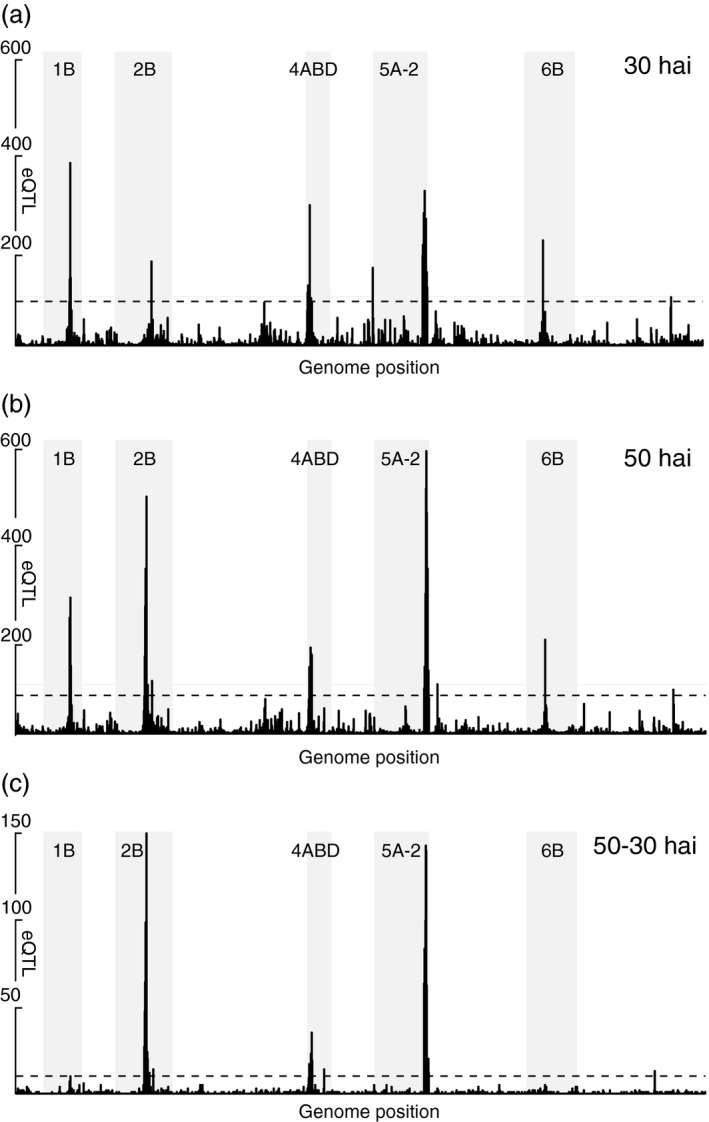
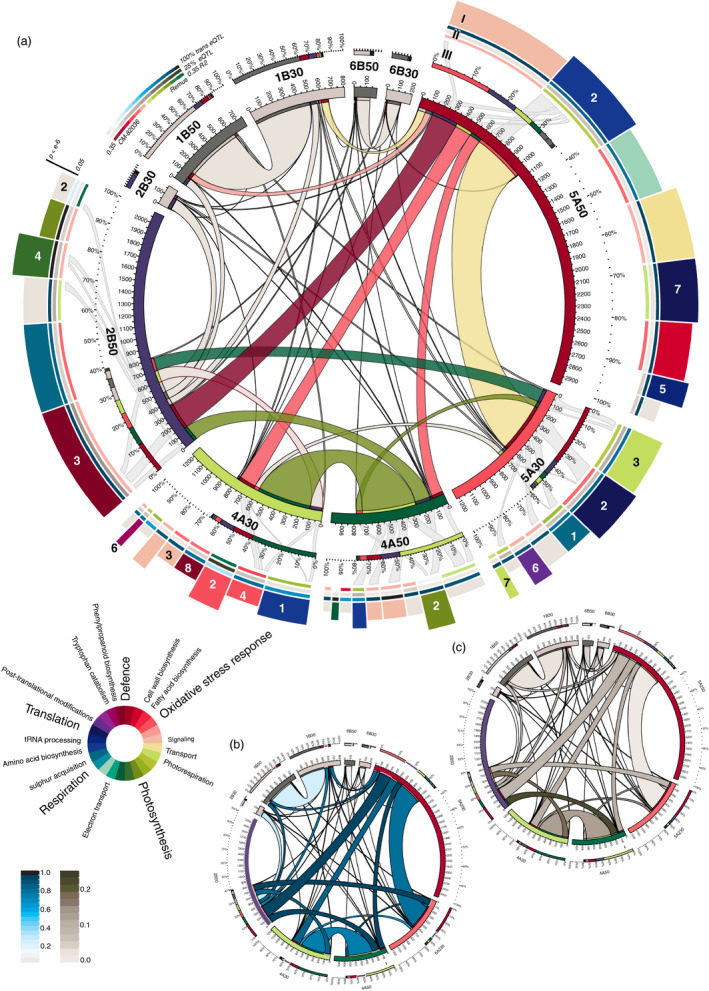
Fusarium head blight is a devastating disease of small grain cereals such as bread wheat (Triticum aestivum). The pathogen switches from a biotrophic to a nectrotrophic lifestyle in course of disease development forcing its host to adapt its defence strategies. Using a genetical genomics approach, we illustrate genome-wide reconfigurations of genetic control over transcript abundances between two decisive time points after inoculation with the causative pathogen Fusarium graminearum. Whole transcriptome measurements have been recorded for 163 lines of a wheat doubled haploid population segregating for several resistance genes yielding 15 552 at 30 h and 15 888 eQTL at 50 h after inoculation. The genetic map saturated with transcript abundance-derived markers identified of a novel QTL on chromosome 6A, besides the previously reported QTL Fhb1 and Qfhs.ifa-5A. We find a highly different distribution of eQTL between time points with about 40% of eQTL being unique for the respective assessed time points. But also for more than 20% of genes governed by eQTL at either time point, genetic control changes in time. These changes are reflected in the dynamic compositions of three major regulatory hotspots on chromosomes 2B, 4A and 5A. In particular, control of defence-related biological mechanisms concentrated in the hotspot at 4A shift to hotspot 2B as the disease progresses. Hotspots do not colocalize with phenotypic QTL, and within their intervals no higher than expected number of eQTL was detected. Thus, resistance conferred by either QTL is mediated by few or single genes.
镰刀菌穗枯病是一种毁灭性的小谷物疾病,如面包小麦(Triticum aestivum)。病原体在疾病发展过程中从生物营养型转变为坏死营养型,迫使宿主适应防御策略。我们采用遗传基因组学方法,说明了在接种致病病原体禾谷镰刀菌后两个决定性时间点之间,遗传控制转录丰度的全基因组重配置。为一个小麦双单倍体群体的 163 条系进行了全转录组测量,这些系分离出了几个抗性基因,在接种后 30 小时和 50 小时分别记录了 15552 个和 15888 个 eQTL。遗传图谱饱和了转录丰度衍生标记,除了先前报道的 QTL Fhb1 和 Qfhs.ifa-5A 外,还在 6A 染色体上确定了一个新的 QTL。我们发现,eQTL 在时间点之间的分布非常不同,大约 40%的 eQTL 是各自评估时间点特有的。但是,对于在任何时间点都受 eQTL 控制的基因,遗传控制也会随时间发生变化。这些变化反映在染色体 2B、4A 和 5A 上三个主要调控热点的动态组成上。特别是,4A 热点上集中的防御相关生物学机制的控制随着疾病的进展而转移到 2B 热点。热点不与表型 QTL 共定位,并且在它们的区间内,检测到的 eQTL 数量不高于预期。因此,任何一个 QTL 赋予的抗性都是由少数或单个基因介导的。