Nussbaumer Thomas, Warth Benedikt, Sharma Sapna, Ametz Christian, Bueschl Christoph, Parich Alexandra, Pfeifer Matthias, Siegwart Gerald, Steiner Barbara, Lemmens Marc, Schuhmacher Rainer, Buerstmayr Hermann, Mayer Klaus F X, Kugler Karl G, Schweiger Wolfgang
Plant Genome and Systems Biology, Helmholtz Zentrum München, Neuherberg, D-85764, Germany.
Center for Analytical Chemistry (IFA-Tulln), BOKU - University of Natural Resources and Life Sciences, Tulln, A- 3430, Austria.
G3 (Bethesda). 2015 Oct 4;5(12):2579-92. doi: 10.1534/g3.115.021550.
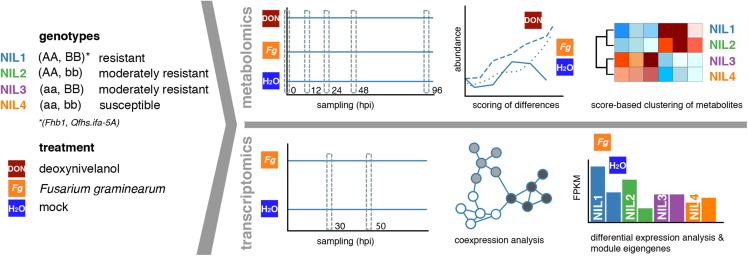
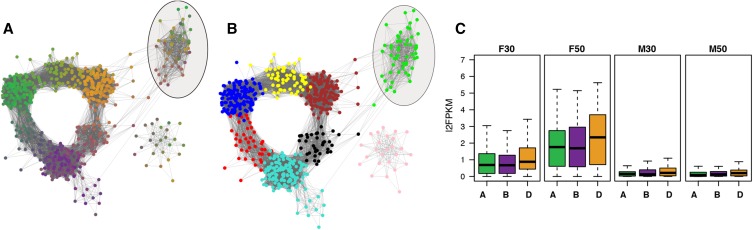
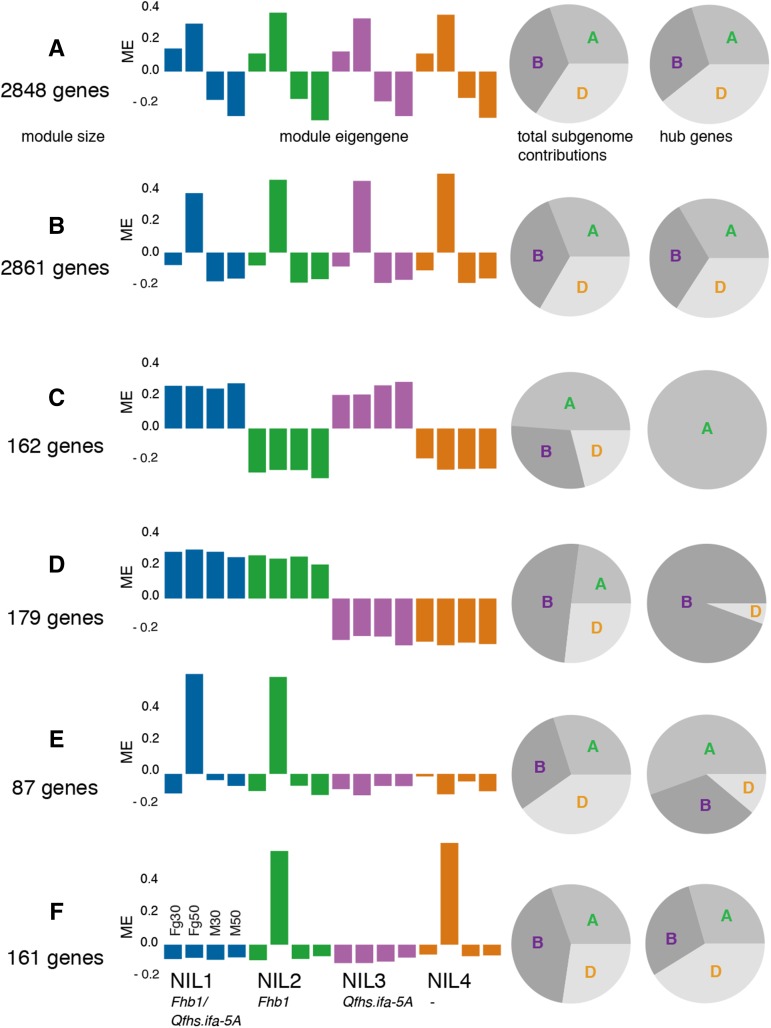
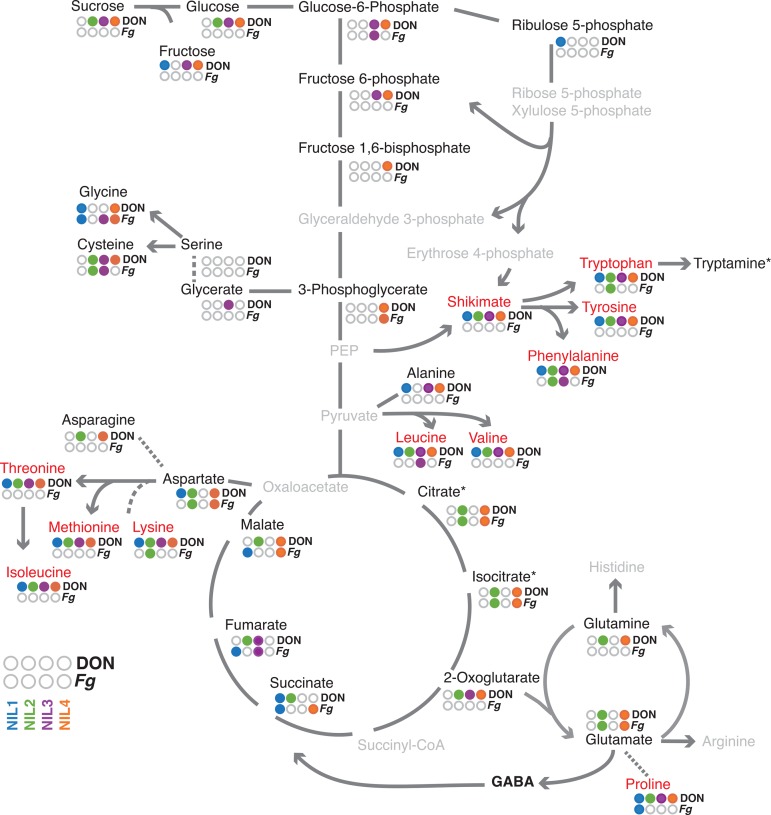
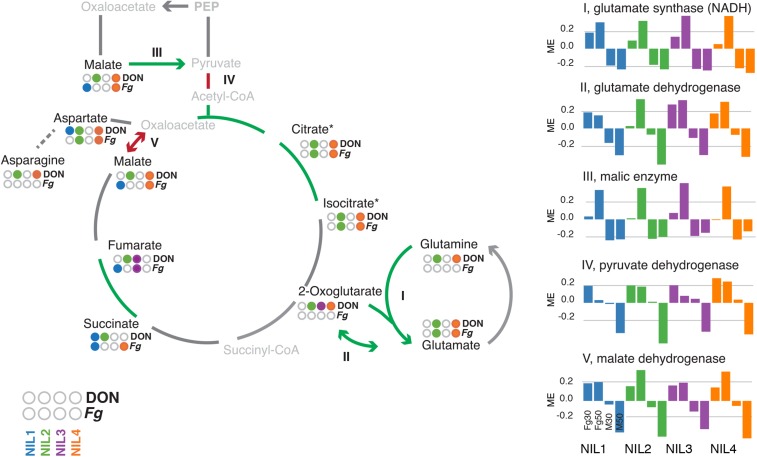
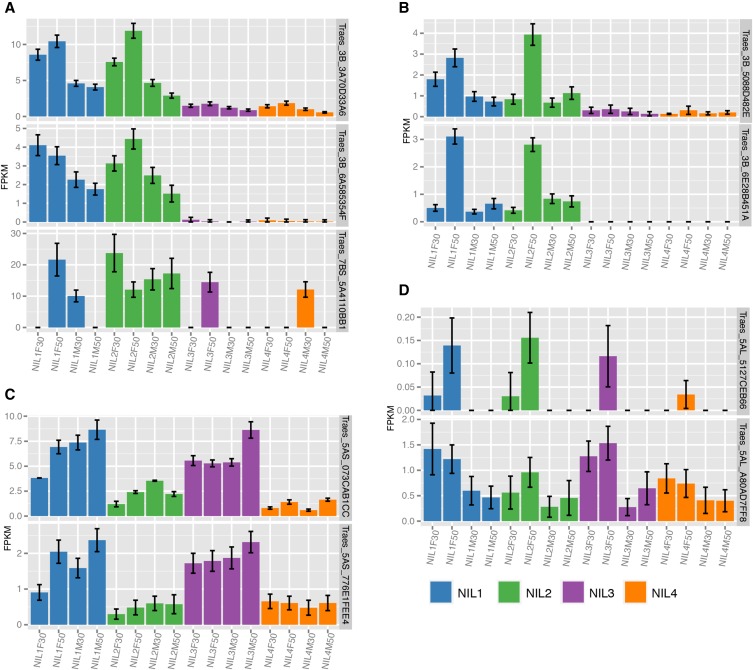
Fusarium head blight is a prevalent disease of bread wheat (Triticum aestivum L.), which leads to considerable losses in yield and quality. Quantitative resistance to the causative fungus Fusarium graminearum is poorly understood. We integrated transcriptomics and metabolomics data to dissect the molecular response to the fungus and its main virulence factor, the toxin deoxynivalenol in near-isogenic lines segregating for two resistance quantitative trait loci, Fhb1 and Qfhs.ifa-5A. The data sets portrait rearrangements in the primary metabolism and the translational machinery to counter the fungus and the effects of the toxin and highlight distinct changes in the metabolism of glutamate in lines carrying Qfhs.ifa-5A. These observations are possibly due to the activity of two amino acid permeases located in the quantitative trait locus confidence interval, which may contribute to increased pathogen endurance. Mapping to the highly resolved region of Fhb1 reduced the list of candidates to few genes that are specifically expressed in presence of the quantitative trait loci and in response to the pathogen, which include a receptor-like protein kinase, a protein kinase, and an E3 ubiquitin-protein ligase. On a genome-scale level, the individual subgenomes of hexaploid wheat contribute differentially to defense. In particular, the D subgenome exhibited a pronounced response to the pathogen and contributed significantly to the overall defense response.
小麦赤霉病是面包小麦(Triticum aestivum L.)的一种常见病害,会导致产量和品质大幅损失。人们对小麦对致病真菌禾谷镰刀菌的数量抗性了解甚少。我们整合了转录组学和代谢组学数据,以剖析近等基因系对该真菌及其主要毒力因子毒素脱氧雪腐镰刀菌烯醇的分子反应,这些近等基因系在两个抗性数量性状位点Fhb1和Qfhs.ifa - 5A上进行分离。数据集描绘了初级代谢和翻译机制中的重排,以对抗真菌和毒素的影响,并突出了携带Qfhs.ifa - 5A的品系中谷氨酸代谢的明显变化。这些观察结果可能是由于位于数量性状位点置信区间内的两种氨基酸通透酶的活性,这可能有助于提高对病原体的耐受性。定位到Fhb1的高分辨率区域后,候选基因列表减少到少数几个在数量性状位点存在时并响应病原体而特异性表达的基因,其中包括一个类受体蛋白激酶、一个蛋白激酶和一个E3泛素蛋白连接酶。在全基因组水平上,六倍体小麦的各个亚基因组对防御的贡献不同。特别是,D亚基因组对病原体表现出明显的反应,并对整体防御反应做出了重大贡献。