Hunsaker Michael R, Smith Genevieve K, Kesner Raymond P
Department of Psychology, University of Utah.
J Comp Psychol. 2017 Aug;131(3):189-206. doi: 10.1037/com0000069. Epub 2017 Mar 23.
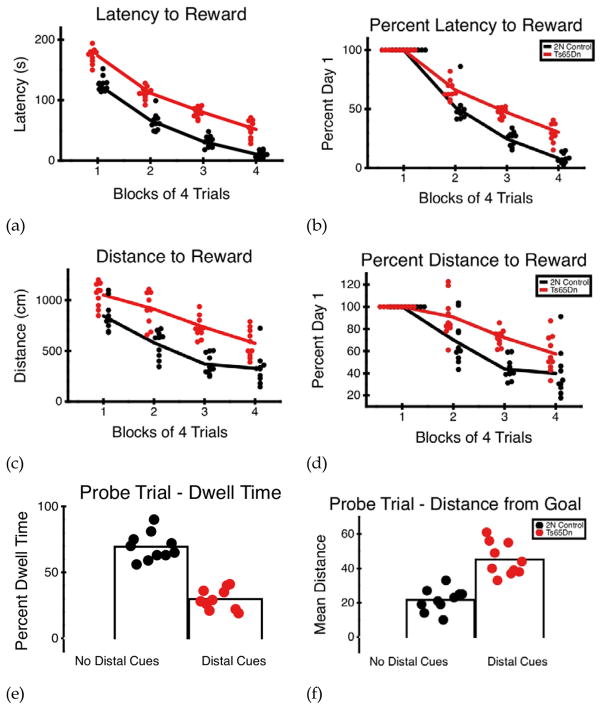
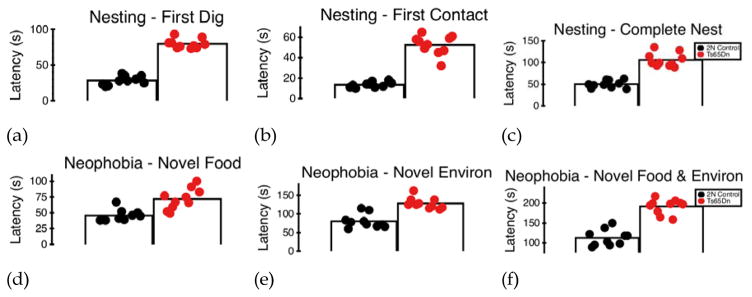
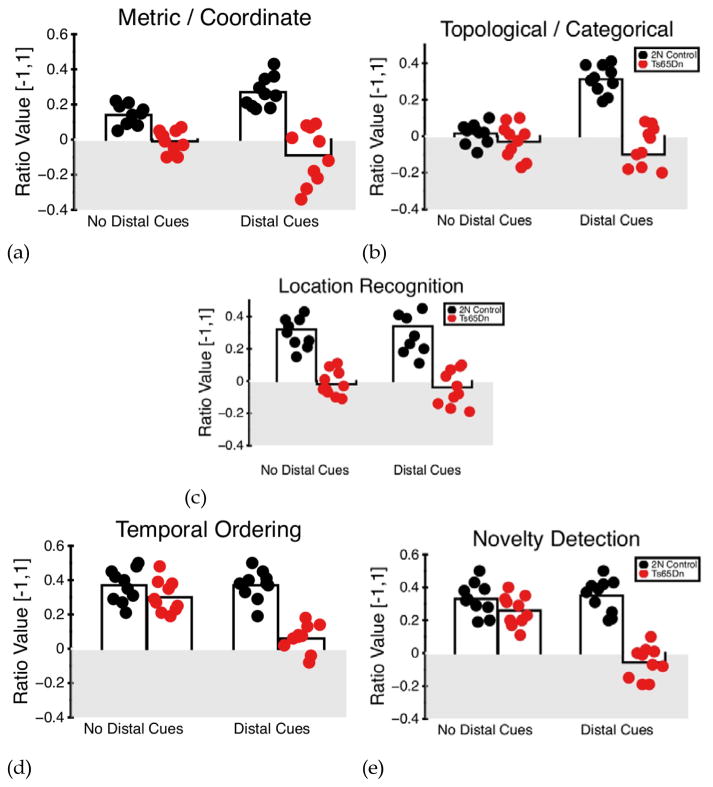
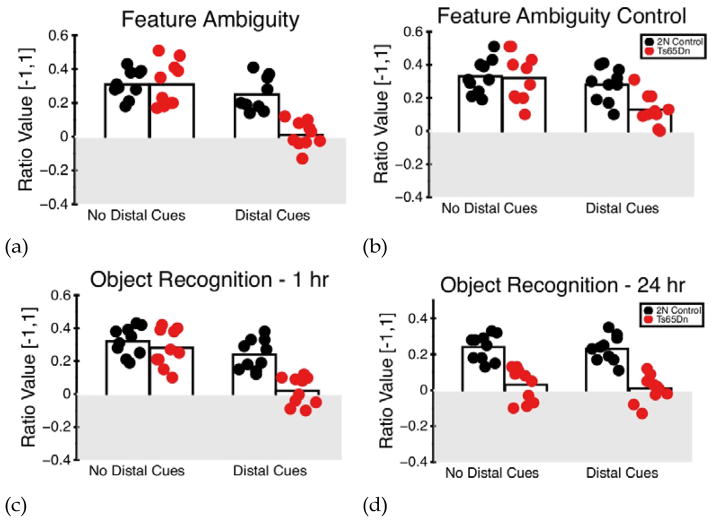
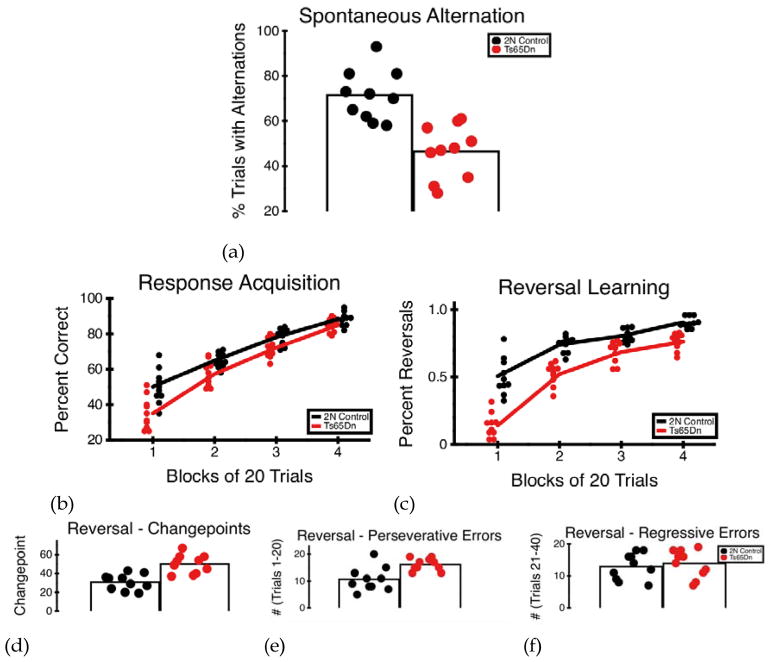
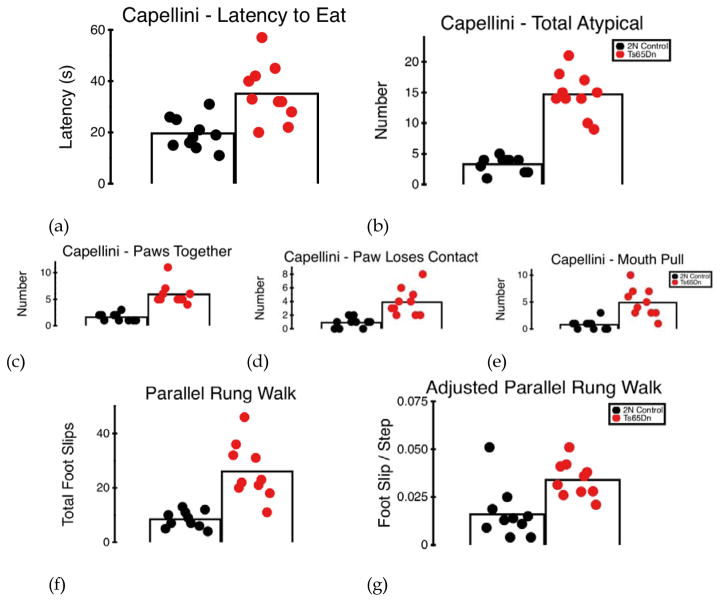
We propose and validate a clear strategy to efficiently and comprehensively characterize neurobehavioral deficits in the Ts65Dn mouse model of Down syndrome. This novel approach uses neurocognitive theory to design and select behavioral tasks that test specific hypotheses concerning the results of Down syndrome. In this article, we model the Arizona Cognitive Task Battery, used to study human populations with Down syndrome, in Ts65Dn mice. We observed specific deficits for spatial memory, impaired long-term memory for visual objects, acquisition and reversal of motor responses, reduced motor dexterity, and impaired adaptive function as measured by nesting and anxiety tasks. The Ts65Dn mice showed intact temporal ordering, novelty detection, and visual object recognition with short delays. These results phenocopy the performance of participants with Down syndrome on the Arizona Cognitive Task Battery. This approach extends the utility of mouse models of Down syndrome by integrating the expertise of clinical neurology and cognitive neuroscience into the mouse behavioral laboratory. Further, by directly emphasizing the reciprocal translation of research between human disease states and the associated mouse models, we demonstrate that it is possible for both groups to mutually inform each other's research to more efficiently generate hypotheses and elucidate treatment strategies. (PsycINFO Database Record
我们提出并验证了一种清晰的策略,以高效、全面地表征唐氏综合征 Ts65Dn 小鼠模型中的神经行为缺陷。这种新方法利用神经认知理论来设计和选择行为任务,以检验有关唐氏综合征结果的特定假设。在本文中,我们在 Ts65Dn 小鼠中模拟了用于研究唐氏综合征人群的亚利桑那认知任务组。我们观察到空间记忆存在特定缺陷、视觉物体的长期记忆受损、运动反应的习得和逆转能力下降、运动灵活性降低,以及通过筑巢和焦虑任务测量的适应功能受损。Ts65Dn 小鼠在时间排序、新奇性检测和短延迟视觉物体识别方面表现正常。这些结果模拟了唐氏综合征参与者在亚利桑那认知任务组上的表现。这种方法通过将临床神经学和认知神经科学的专业知识整合到小鼠行为实验室中,扩展了唐氏综合征小鼠模型的效用。此外,通过直接强调人类疾病状态与相关小鼠模型之间研究的相互转化,我们证明两组研究有可能相互启发,从而更有效地生成假设并阐明治疗策略。(PsycINFO 数据库记录)