
孟加拉国达卡的登革热血清流行率、血清转化及危险因素
Dengue seroprevalence, seroconversion and risk factors in Dhaka, Bangladesh.
作者信息
Dhar-Chowdhury Parnali, Paul Kishor Kumar, Haque C Emdad, Hossain Shakhawat, Lindsay L Robbin, Dibernardo Antonia, Brooks W Abdullah, Drebot Michael A
机构信息
Zoonotic Diseases and Special Pathogens, Public Health Agency of Canada, National Microbiology Laboratory, Winnipeg, Manitoba, Canada.
Natural Resources Institute, University of Manitoba, Winnipeg, Manitoba, Canada.
出版信息
PLoS Negl Trop Dis. 2017 Mar 23;11(3):e0005475. doi: 10.1371/journal.pntd.0005475. eCollection 2017 Mar.
BACKGROUND
Dengue virus (DENV) activity has been reported in Dhaka, Bangladesh since the early 1960s with the greatest burden of dengue fever and dengue hemorrhagic fever cases observed in 2000. Since this time, the intensity of dengue activity has varied from year to year, and its determining factors remained relatively unknown. In light of such gaps in knowledge, the main objectives of this study were to determine the magnitude of seroprevalence and seroconversion among the surveyed population, and establish the individual/household level risk factors for the presence of DENV antibodies among all age groups of target populations in the city of Dhaka.
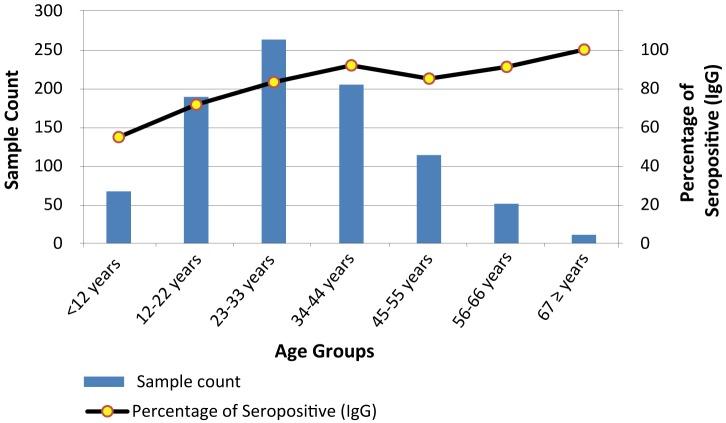
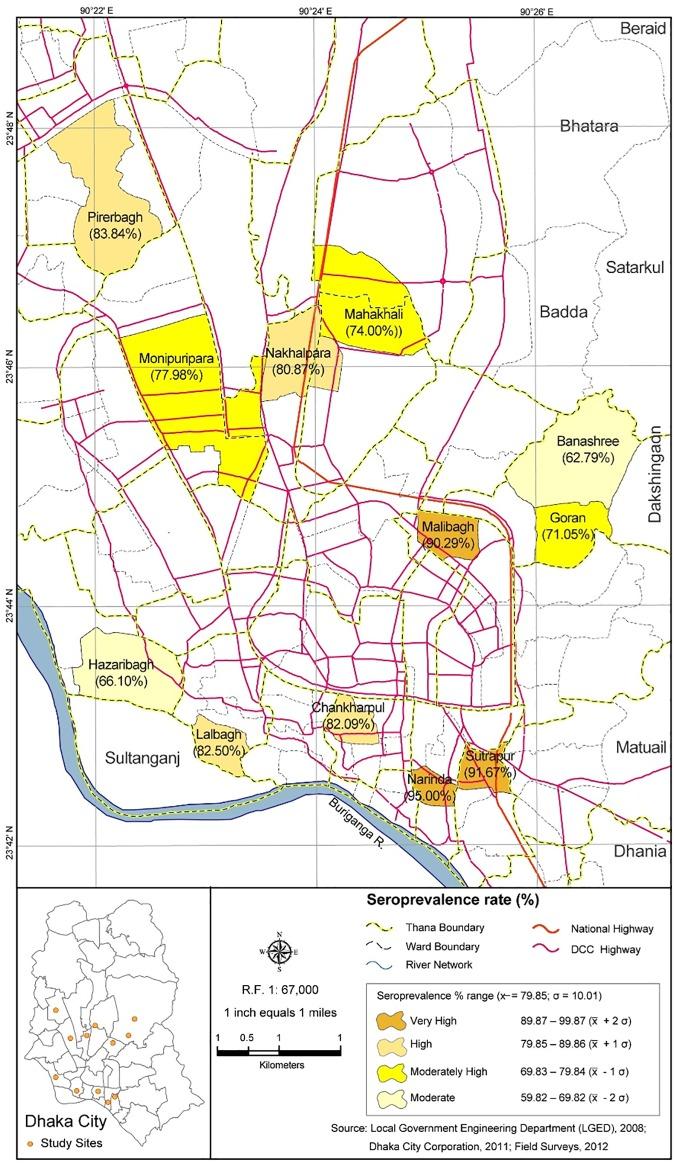
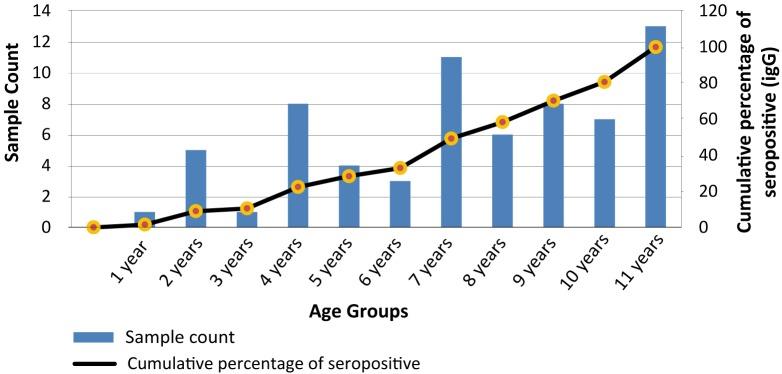
METHODOLOGY/PRINCIPAL FINDINGS: Considering the lack of fine scale investigations on the factors driving dengue activity in Bangladesh, a prospective cohort study involving serological surveys was undertaken with participant interviews and blood donation across the city of Dhaka in 2012. Study participants were recruited from 12 of 90 wards and blood samples were collected during both the pre-monsoon (n = 1125) and post-monsoon (n = 600) seasons of 2012. The findings revealed that the seroprevalence in all pre-monsoon samples was 80.0% (900/1125) while the seropositivity in the pre-monsoon samples that had paired post-monsoon samples was 83.3% (503/600). Of the 97 paired samples that were negative at the pre-monsoon time point, 56 were positive at the post-monsoon time point. This resulted in a seroprevalence of 93.2% (559/600) among individuals tested during the post-monsoon period. Seroprevalence trended higher with age with children exhibiting a lower seropositivity as compared to adults. Results from this study also indicated that DENV strains were the only flaviviruses circulating in Dhaka in 2012. A multivariate analysis revealed that age, possession of indoor potted plants, and types of mosquito control measures were significant factors associated with DENV seroprevalence; while attendance in public/mass gatherings, and use of mosquito control measures were significantly associated with DENV seroconversion after adjusting for all other variables.
CONCLUSIONS/SIGNIFICANCE: Our study suggests that there is a high level of endemic dengue virus circulation in the city of Dhaka which has resulted in significant DENV seroprevalence among its residents. Seropositivity increased with age, however, a substantial proportion of children are at risk for DENV infections. Our serological analysis also documents considerable DENV seroconversion among study participants which indicates that a large proportion of the population in the city of Dhaka were newly exposed to DENV during the study period (pre-and post-monsoon 2012). High levels of seroconversion suggest that there was an intense circulation of DENV in 2012 and this may have resulted in a significant risk for viral associated illness. Findings of our study further indicated that home-based interventions, such as removing indoor potted plants and increased bed net use, in addition to vector control measures in public parks, would reduce exposure to DENV and further decrease risk of viral associated disease.
背景
自20世纪60年代初以来,孟加拉国达卡已报告有登革热病毒(DENV)活动,2000年观察到登革热和登革出血热病例的负担最重。从那时起,登革热活动的强度逐年变化,其决定因素仍然相对不明。鉴于知识上的这些差距,本研究的主要目的是确定被调查人群中的血清阳性率和血清转化程度,并确定达卡市目标人群所有年龄组中存在DENV抗体的个体/家庭层面风险因素。
方法/主要发现:鉴于缺乏对孟加拉国登革热活动驱动因素的精细规模调查,2012年在达卡市进行了一项涉及血清学调查的前瞻性队列研究,并对参与者进行访谈和采血。研究参与者从90个病房中的12个招募,在2012年季风前(n = 1125)和季风后(n = 600)季节采集血样。结果显示,所有季风前样本的血清阳性率为80.0%(900/1125),而有配对季风后样本的季风前样本中的血清阳性率为83.3%(503/600)。在季风前时间点为阴性的97对样本中,56对在季风后时间点为阳性。这导致季风后时期接受检测的个体中血清阳性率为93.2%(559/600)。血清阳性率随年龄增长呈上升趋势,儿童的血清阳性率低于成年人。本研究结果还表明,DENV毒株是2012年在达卡传播的唯一黄病毒。多变量分析显示,年龄、室内盆栽植物的拥有情况以及蚊虫控制措施类型是与DENV血清阳性率相关的重要因素;而在调整所有其他变量后,参加公共/群众集会以及使用蚊虫控制措施与DENV血清转化显著相关。
结论/意义:我们的研究表明,达卡市存在高水平的地方性登革热病毒传播,导致其居民中DENV血清阳性率很高。血清阳性率随年龄增长而增加,然而,相当一部分儿童有感染DENV的风险。我们的血清学分析还记录了研究参与者中相当数量的DENV血清转化,这表明在研究期间(2012年季风前和季风后),达卡市很大一部分人口新接触了DENV。高水平的血清转化表明2012年DENV传播强烈,这可能导致病毒相关疾病的重大风险。我们研究的结果进一步表明,除了在公园采取病媒控制措施外,家庭层面的干预措施,如移除室内盆栽植物和增加蚊帐使用,将减少接触DENV的机会,并进一步降低病毒相关疾病的风险。


 Zotero 插件