de Felippes Felipe Fenselau, Marchais Antonin, Sarazin Alexis, Oberlin Stefan, Voinnet Olivier
Department of Biology, Chair of RNA biology, Swiss Federal Institute of Technology Zurich (ETH-Z), Zürich CH-8092, Switzerland.
Nucleic Acids Res. 2017 May 19;45(9):5539-5554. doi: 10.1093/nar/gkx119.
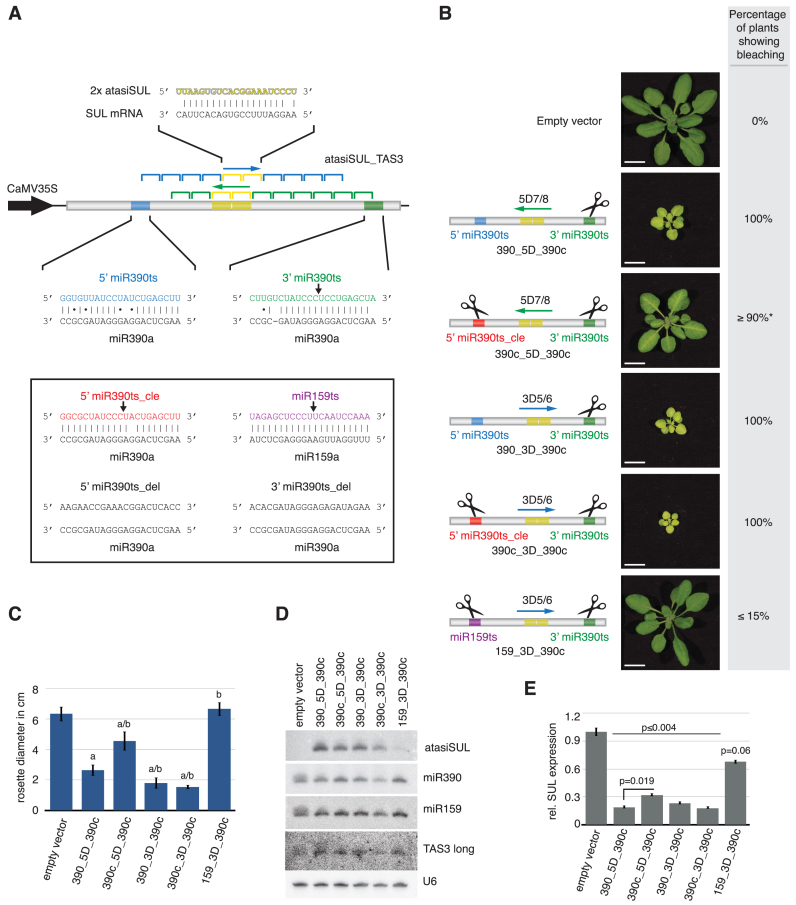
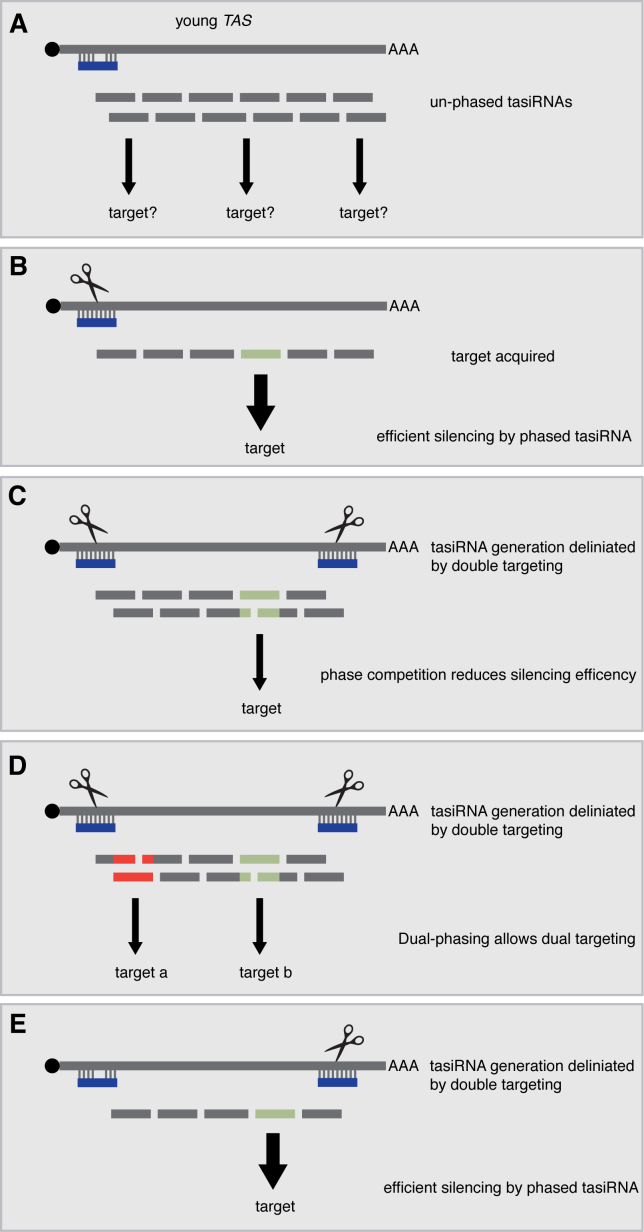
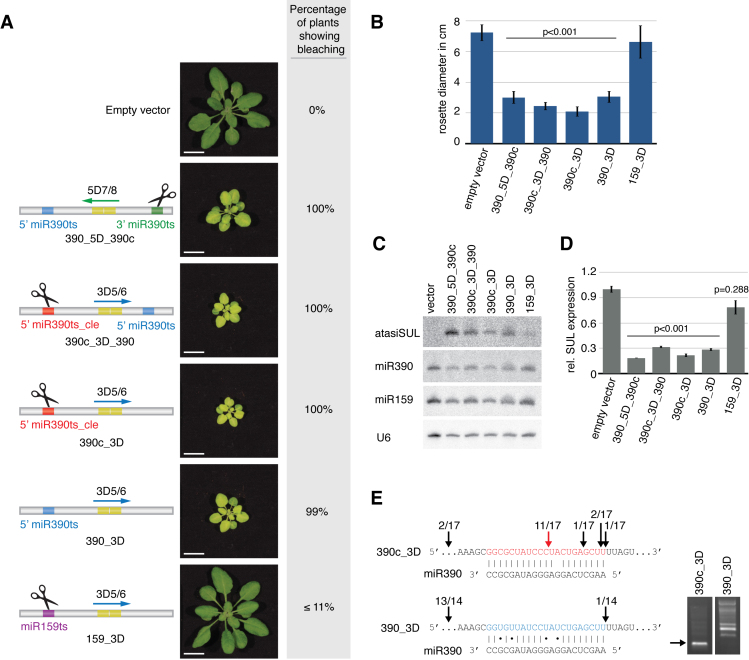
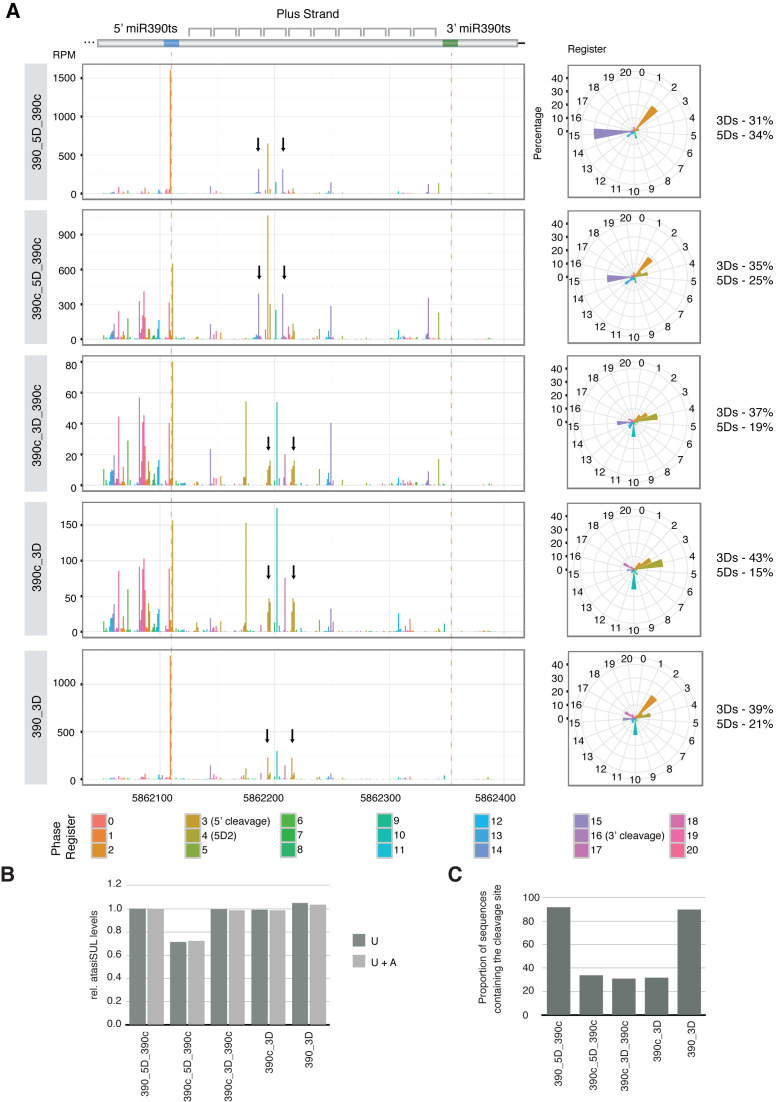
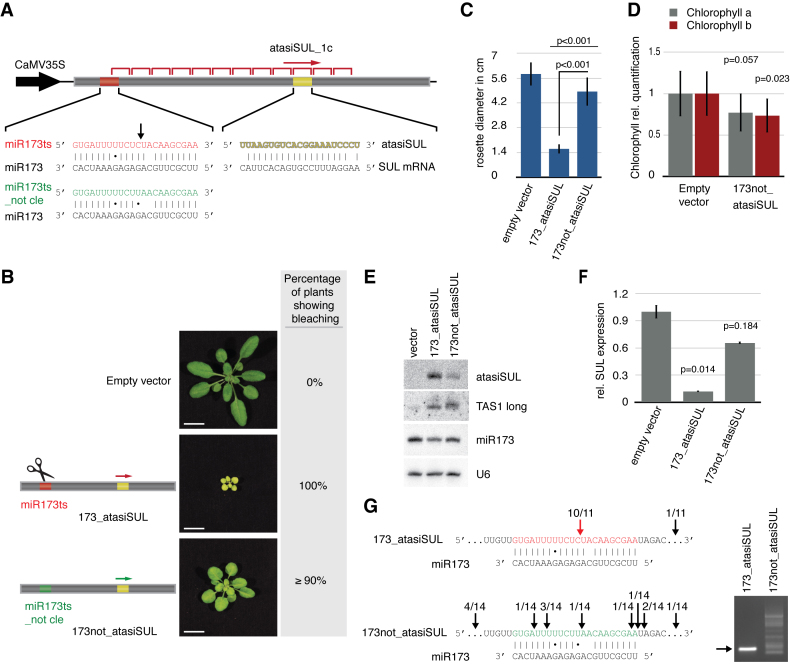
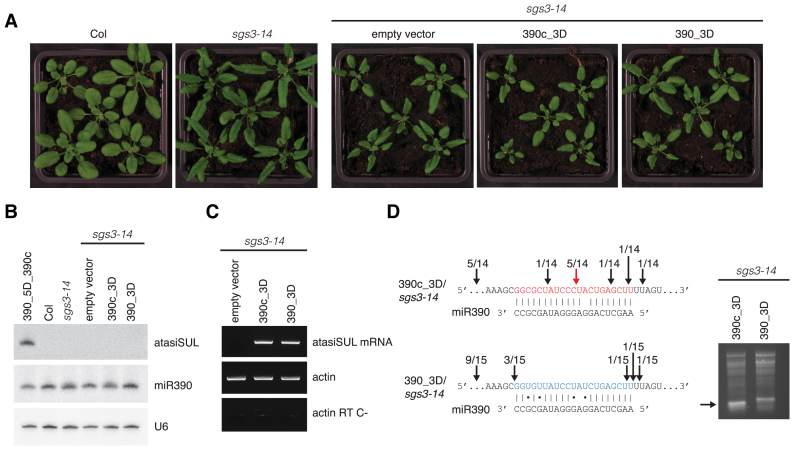
In plants, tasiRNAs form a class of endogenous secondary siRNAs produced through the action of RNA-DEPENDENT-RNA-POLYMERASE-6 (RDR6) upon microRNA-mediated cleavage of non-coding TAS RNAs. In Arabidopsis thaliana, TAS1, TAS2 and TAS4 tasiRNA production proceeds via a single cleavage event mediated by 22nt-long or/and asymmetric miRNAs in an ARGONAUTE-1 (AGO1)-dependent manner. By contrast, tasiRNA production from TAS3 seems to follow the so-called 'two-hit' process, where dual targeting of TAS3, specifically mediated by the 21nt-long, symmetric miR390, initiates AGO7-dependent tasiRNA production. Interestingly, features for TAS3 tasiRNA production differ in other plant species and we show here that such features also enable TAS3 tasiRNA biogenesis in Arabidopsis, and that a single miR390 targeting event is, in fact, sufficient for this process, suggesting that the 'one-hit' model underpins all the necessary rudiments of secondary siRNA biogenesis from plant TAS transcripts. Further results suggest that the two-hit configuration likely enhances the fidelity of tasiRNA production and, hence, the accuracy of downstream gene regulation. Finally, we show that a 'non-cleavable one-hit' process allows tasiRNA production from both TAS1 and TAS3 transcripts, indicating that RDR6 recruitment does not require miRNA cleavage, nor does the recruitment, as we further show, of SUPRRESSOR-OF-GENE-SILENCING-3, indispensable for tasiRNA generation.
在植物中,反式作用小干扰RNA(tasiRNAs)是一类内源性二级小干扰RNA,通过RNA依赖的RNA聚合酶6(RDR6)作用于非编码TAS RNA的微小RNA介导的切割而产生。在拟南芥中,TAS1、TAS2和TAS4的tasiRNA产生是通过由22nt长或/和不对称微小RNA介导的单个切割事件,以AGO1依赖的方式进行的。相比之下,TAS3的tasiRNA产生似乎遵循所谓的“双打击”过程,其中由21nt长的对称miR390特异性介导的TAS3的双重靶向启动了AGO7依赖的tasiRNA产生。有趣的是,TAS3的tasiRNA产生特征在其他植物物种中有所不同,我们在此表明这些特征也能在拟南芥中实现TAS3的tasiRNA生物合成,并且事实上单个miR390靶向事件对于这个过程就足够了,这表明“单打击”模型支撑了植物TAS转录本产生二级小干扰RNA的所有必要基础。进一步的结果表明,双打击结构可能提高了tasiRNA产生的保真度,从而提高了下游基因调控的准确性。最后,我们表明“不可切割的单打击”过程允许从TAS1和TAS3转录本产生tasiRNA,这表明RDR6的招募不需要微小RNA切割,正如我们进一步表明的,对于tasiRNA产生不可或缺的基因沉默抑制因子3的招募也不需要。