Tanaka Manabu, Sato Yoshinori, Zhang Mei, Haniu Hisao, Okamoto Masanori, Aoki Kaoru, Takizawa Takashi, Yoshida Kazushige, Sobajima Atsushi, Kamanaka Takayuki, Kato Hiroyuki, Saito Naoto
Department of Orthopaedic Surgery, School of Medicine, Shinshu University, Asahi 3-1-1, Matsumoto, Nagano 390-8621, Japan.
Graduate School of Environmental Studies, Tohoku University, Aoba 6-6-20, Aramaki, Aoba-ku, Sendai 980-8579, Japan.
Nanomaterials (Basel). 2017 Feb 17;7(2):46. doi: 10.3390/nano7020046.
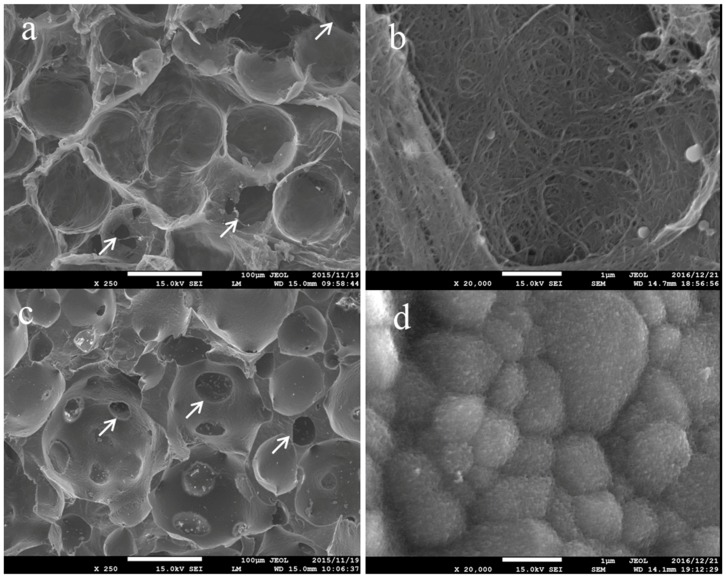
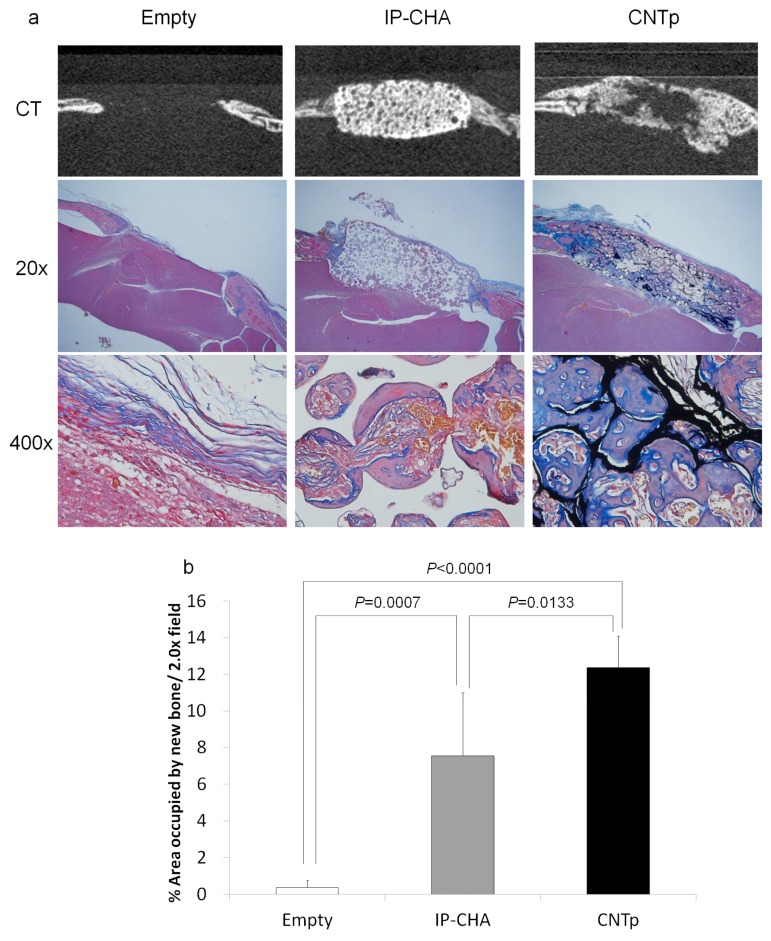
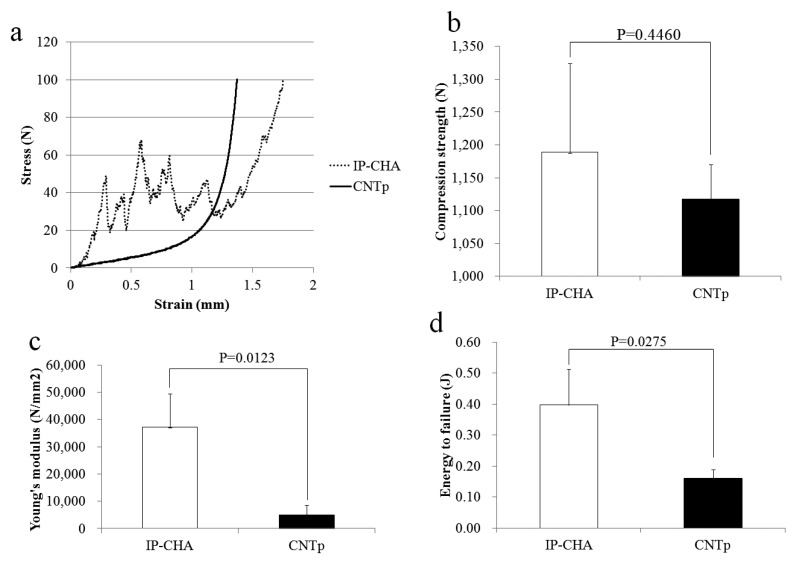
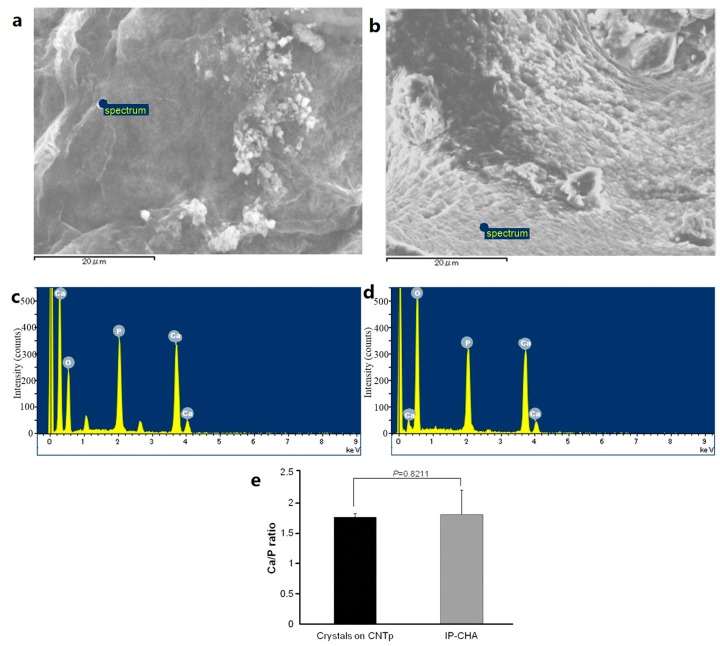
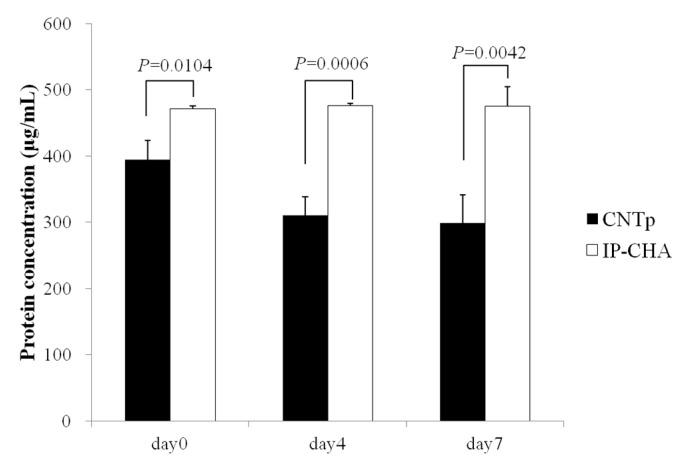
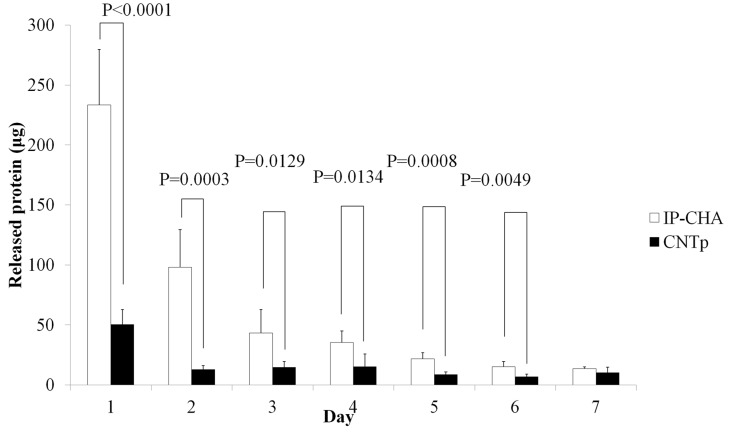
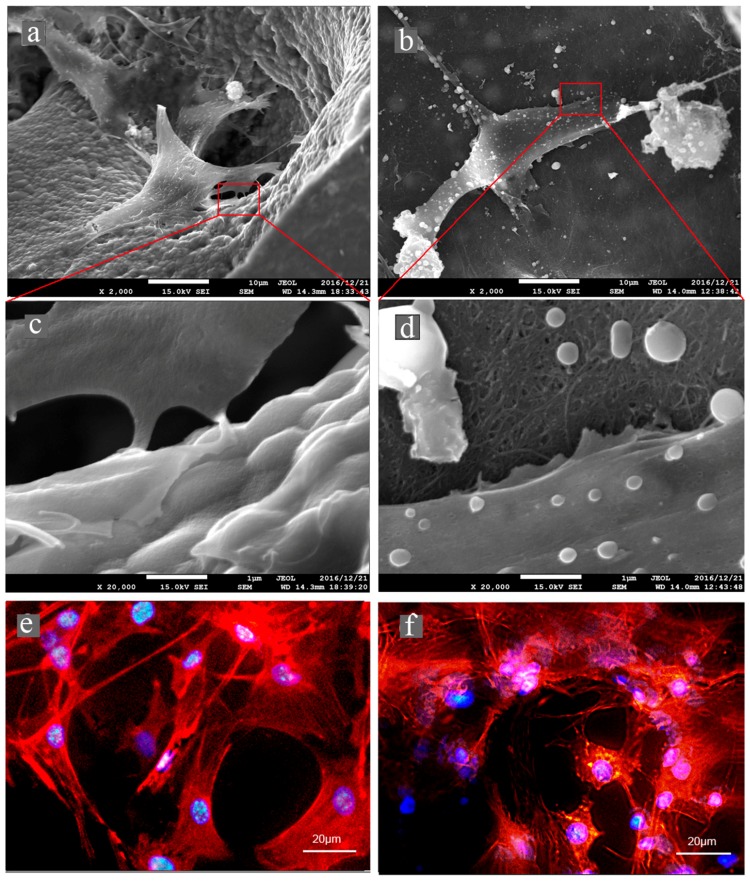
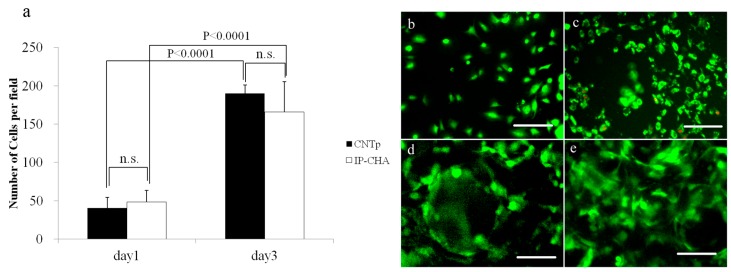
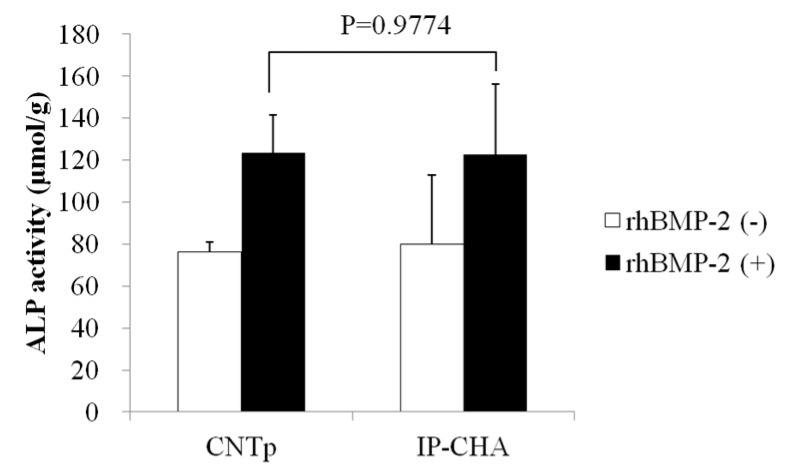
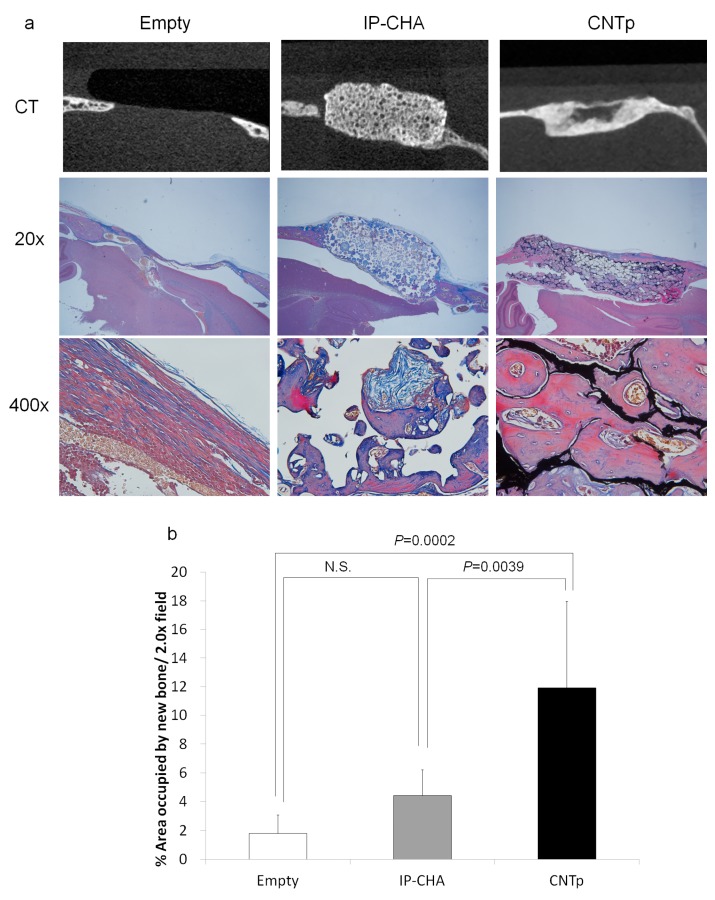
Carbon nanotubes (CNTs) have attracted a great deal of attention for the biological and medical science fields because of their characteristic physical and biological properties. In this study, we investigated the capacity of the 3D porous CNT scaffold (CNT porous block; CNTp) for bone regenerative medicine. Surface observations using a scanning electron microscope (SEM), crystal depositions on the surface of CNTps immersed in simulated body fluid (SBF), and evaluations of protein adsorption and controlled releasing were conducted to assess physical properties. The cell proliferation and cell morphology were observed using SEM and fluorescent microscopy. CNTps were implanted into critical-size mouse calvarial defects and evaluated for their osteoconductive ability and in vivo controlled release of recombinant human BMP-2 (rhBMP-2). Interconnected porous HA ceramics (IP-CHAs) were used for comparison. CNTps have multiporous structures with interporous connections with networks of multiwalled CNTs. Crystals containing calcium and phosphate were deposited in CNTps and on the surface of the CNT networks by immersing CNTps in SBF. CNTps adsorbed more significantly and released protein more gradually than IP-CHAs. Preosteoblasts seeded onto CNTps filled pores with stretched actin filaments and filopodia. Compared with IP-CHAs, CNTps showed significantly higher cell proliferation, better osteoconduction, and more bone generation with rhBMP-2. In this study, CNTps demonstrated good osteoconductive ability, cell attachment and proliferation capacity, and growth factor retaining ability. CNTps have the potential not only as artificial bones for the treatment of bone defects, but also as scaffolds for regenerative medicine using tissue engineering approaches.
碳纳米管(CNTs)因其独特的物理和生物学特性而在生物和医学科学领域备受关注。在本研究中,我们研究了三维多孔碳纳米管支架(碳纳米管多孔块;CNTp)在骨再生医学中的应用能力。使用扫描电子显微镜(SEM)进行表面观察,对浸入模拟体液(SBF)中的CNTp表面的晶体沉积进行观察,并对蛋白质吸附和控释进行评估,以评估其物理性质。使用SEM和荧光显微镜观察细胞增殖和细胞形态。将CNTp植入临界尺寸的小鼠颅骨缺损处,评估其骨传导能力和重组人骨形态发生蛋白-2(rhBMP-2)的体内控释情况。使用相互连接的多孔HA陶瓷(IP-CHAs)作为对照。CNTp具有多孔隙结构,孔隙之间通过多壁碳纳米管网络相互连接。将CNTp浸入SBF中后,含有钙和磷的晶体沉积在CNTp和碳纳米管网络表面。与IP-CHAs相比,CNTp对蛋白质的吸附更显著,蛋白质释放更缓慢。接种到CNTp上的前成骨细胞填充孔隙,肌动蛋白丝和丝状伪足伸展。与IP-CHAs相比,CNTp显示出显著更高的细胞增殖、更好的骨传导性以及在rhBMP-2作用下更多的骨生成。在本研究中,CNTp表现出良好的骨传导能力、细胞附着和增殖能力以及生长因子保留能力。CNTp不仅有潜力作为治疗骨缺损的人工骨,还可作为采用组织工程方法的再生医学支架。