Grassmann André Alex, Souza Jéssica Dias, McBride Alan John Alexander
Biotechnology Unit, Technological Development Centre, Federal University of Pelotas , Pelotas , Brazil.
Biotechnology Unit, Technological Development Centre, Federal University of Pelotas, Pelotas, Brazil; Gonçalo Moniz Institute, Oswaldo Cruz Foundation, Ministry of Health, Salvador, Brazil.
Front Immunol. 2017 Mar 9;8:256. doi: 10.3389/fimmu.2017.00256. eCollection 2017.
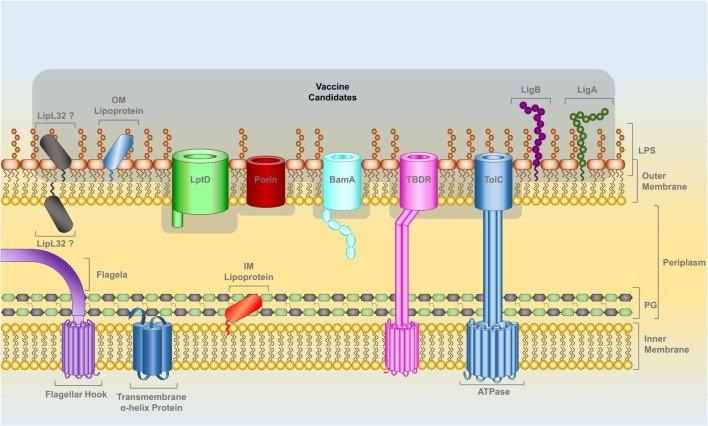
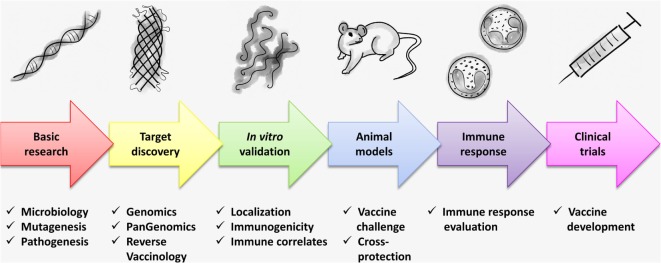
Leptospirosis is the most widespread zoonosis in the world and a neglected tropical disease estimated to cause severe infection in more than one million people worldwide every year that can be combated by effective immunization. However, no significant progress has been made on the leptospirosis vaccine since the advent of bacterins over 100 years. Although protective against lethal infection, particularly in animals, bacterin-induced immunity is considered short term, serovar restricted, and the vaccine can cause serious side effects. The urgent need for a new vaccine has motivated several research groups to evaluate the protective immune response induced by recombinant vaccines. Significant protection has been reported with several promising outer membrane proteins, including LipL32 and the leptospiral immunoglobulin-like proteins. However, efficacy was variable and failed to induce a cross-protective response or sterile immunity among vaccinated animals. As hundreds of draft genomes of all known species are now available, this should aid novel target discovery through reverse vaccinology (RV) and pangenomic studies. The identification of surface-exposed vaccine candidates that are highly conserved among infectious spp. is a requirement for the development of a cross-protective universal vaccine. However, the lack of immune correlates is a major drawback to the application of RV to genomes. In addition, as the protective immune response against leptospirosis is not fully understood, the rational use of adjuvants tends to be a process of trial and error. In this perspective, we discuss current advances, the pitfalls, and possible solutions for the development of a universal leptospirosis vaccine.
钩端螺旋体病是世界上分布最广的人畜共患病,也是一种被忽视的热带疾病,据估计每年在全球导致超过100万人发生严重感染,可通过有效的免疫接种加以防治。然而,自100多年前出现菌苗以来,钩端螺旋体病疫苗一直没有取得显著进展。尽管菌苗可预防致死性感染,尤其是在动物中,但菌苗诱导的免疫被认为是短期的、血清型受限的,并且该疫苗可引起严重的副作用。对新型疫苗的迫切需求促使多个研究小组评估重组疫苗诱导的保护性免疫反应。已有报道称,几种有前景的外膜蛋白,包括LipL32和钩端螺旋体免疫球蛋白样蛋白,具有显著的保护作用。然而,其疗效存在差异,并且未能在接种动物中诱导交叉保护反应或无菌免疫。由于现在已有所有已知物种的数百个基因组草图,这应有助于通过反向疫苗学(RV)和泛基因组研究发现新的靶点。鉴定在感染性钩端螺旋体物种中高度保守的表面暴露候选疫苗是开发交叉保护通用疫苗的必要条件。然而,缺乏免疫相关性是RV应用于钩端螺旋体基因组的一个主要缺点。此外,由于针对钩端螺旋体病的保护性免疫反应尚未完全了解,合理使用佐剂往往是一个反复试验的过程。从这个角度出发,我们讨论了通用钩端螺旋体病疫苗开发的当前进展、陷阱和可能的解决方案。