Biernacka-Wawrzonek Dorota, Stępka Michał, Tomaszewska Alicja, Ehrmann-Jóśko Agnieszka, Chojnowska Natalia, Zemlak Magdalena, Muszyński Jacek
Department of Pathology, Medical University of Warsaw, Warsaw, Poland.
Department of Internal Medicine, Railway Hospital, Pruszkow, Poland.
Prz Gastroenterol. 2017;12(1):22-27. doi: 10.5114/pg.2016.64844. Epub 2016 Dec 29.
Melanosis coli is a benign lesion affecting the mucosa of the large intestine. There is a relationship between the presence of melanosis and anthraquinone laxative use. Melanosis coli is also observed in patients with colon cancer, but there is doubt whether these two conditions are related.
To analyze the correlation between melanosis and colon cancer.
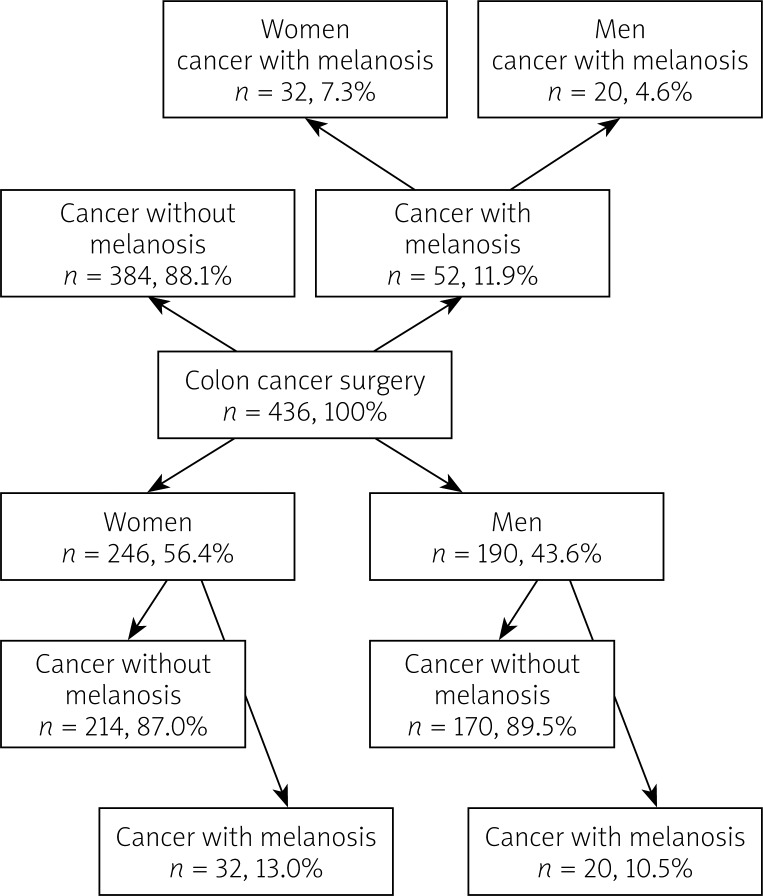
We analyzed retrospectively 436 patients undergoing colon cancer surgery. There were 246 women and 190 men. Patients were divided into three age groups: under 50 years, between 51 and 65 years, and over 66 years. We analyzed sections of the cancer and intestinal mucosa from the tumor's proximal (2-5 cm) and distal (8-10 cm) zone.
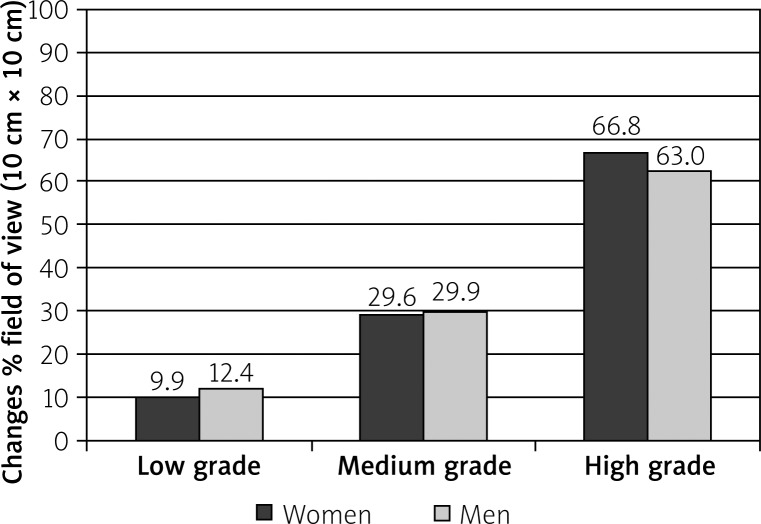
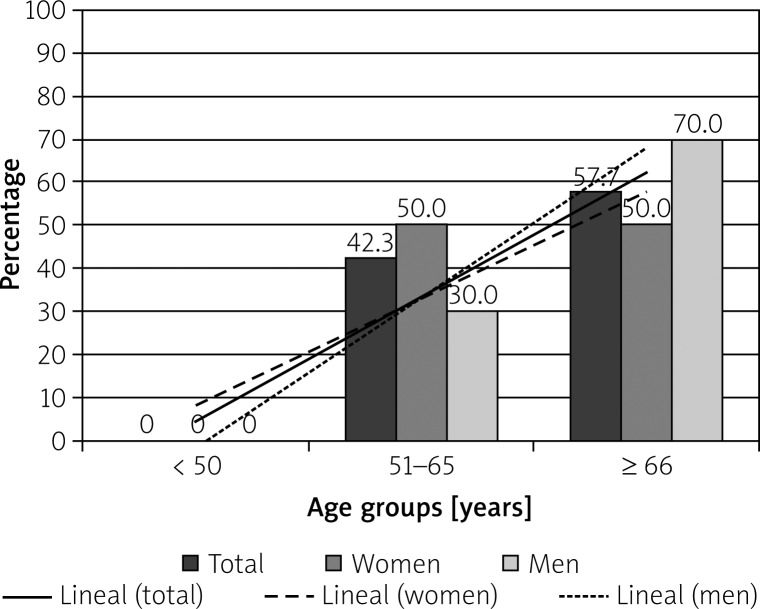
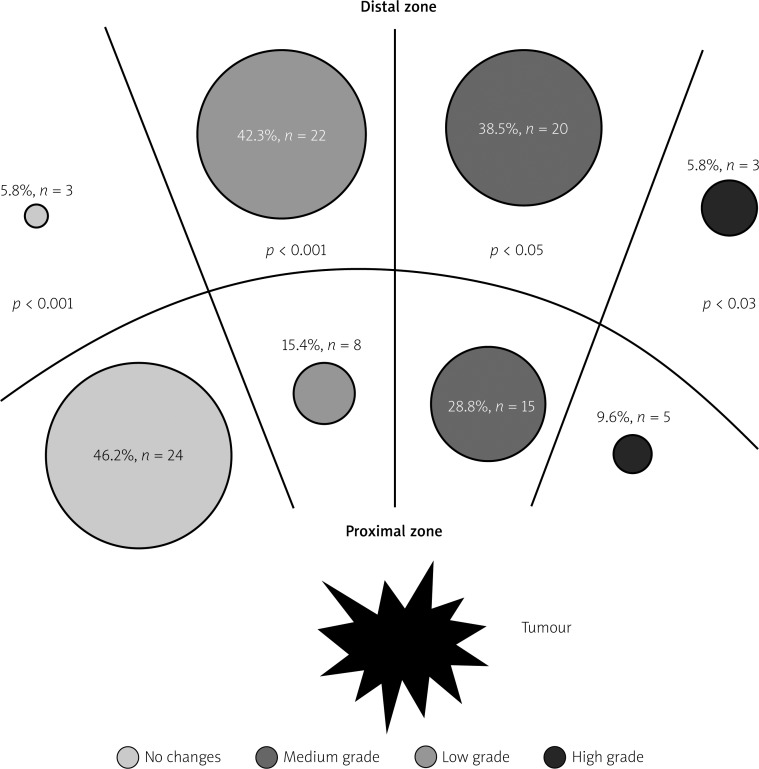
Melanosis coli was present in 52 patients, which represents 11.9% of patients with colon cancer. More often it was present in women. The most common location of melanosis and colon cancer was the terminal part of the large intestine. In patients below 50 years of age in both sexes melanosis coli did not occur. In men, melanosis was more common in the age group over 66 years. Intensity of pigmentation was higher in the tumor's distal zone.
The incidence of melanosis coli increases with age, similar to that of colon cancer. Melanosis was not present inside tumors, in almost half of the cases it was not present in the proximal zone, and the degree of pigmentation increased in distal zone. The cause-effect relationship between melanosis coli and colon cancer remains uncertain.
结肠黑变病是一种影响大肠黏膜的良性病变。黑变病的存在与蒽醌类泻药的使用之间存在关联。在结肠癌患者中也观察到结肠黑变病,但这两种情况是否相关仍存在疑问。
分析黑变病与结肠癌之间的相关性。
我们回顾性分析了436例接受结肠癌手术的患者。其中女性246例,男性190例。患者分为三个年龄组:50岁以下、51至65岁以及66岁以上。我们分析了肿瘤近端(2 - 5厘米)和远端(8 - 10厘米)区域的癌组织和肠黏膜切片。
52例患者存在结肠黑变病,占结肠癌患者的11.9%。在女性中更常见。黑变病和结肠癌最常见的部位是大肠末端。在50岁以下的男女患者中均未发生结肠黑变病。在男性中,黑变病在66岁以上年龄组更常见。肿瘤远端区域的色素沉着强度更高。
结肠黑变病的发病率与结肠癌一样随年龄增加。肿瘤内部不存在黑变病,几乎一半的病例中近端区域不存在黑变病,且远端区域色素沉着程度增加。结肠黑变病与结肠癌之间的因果关系仍不确定。