Ciesiółka Sylwia, Budna Joanna, Jopek Karol, Bryja Artur, Kranc Wiesława, Borys Sylwia, Jeseta Michal, Chachuła Adrian, Ziółkowska Agnieszka, Antosik Paweł, Bukowska Dorota, Brüssow Klaus P, Bruska Małgorzata, Nowicki Michał, Zabel Maciej, Kempisty Bartosz
Department of Histology and Embryology, Poznan University of Medical Sciences, 6 Święcickiego St., 60-781 Poznań, Poland.
Department of Anatomy, Poznan University of Medical Sciences, 6 Święcickiego St., 60-781 Poznań, Poland.
Biomed Res Int. 2017;2017:9738640. doi: 10.1155/2017/9738640. Epub 2017 Feb 27.
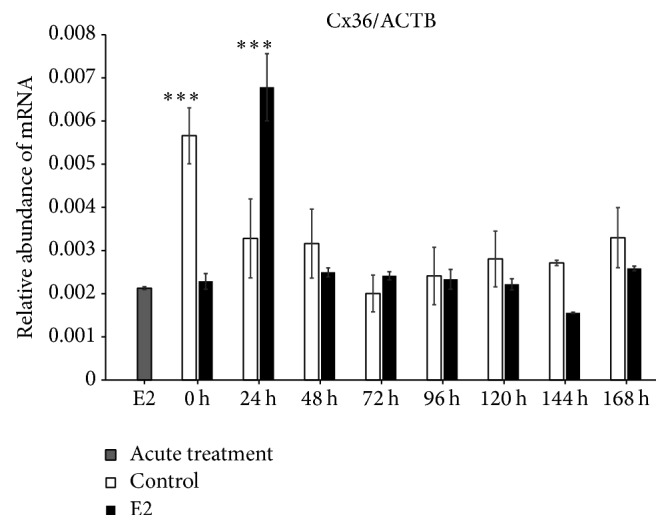
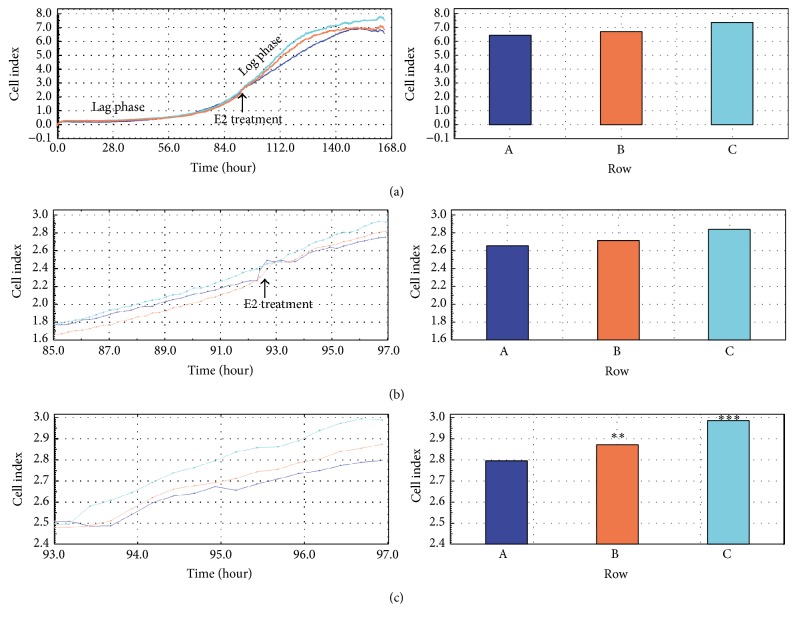
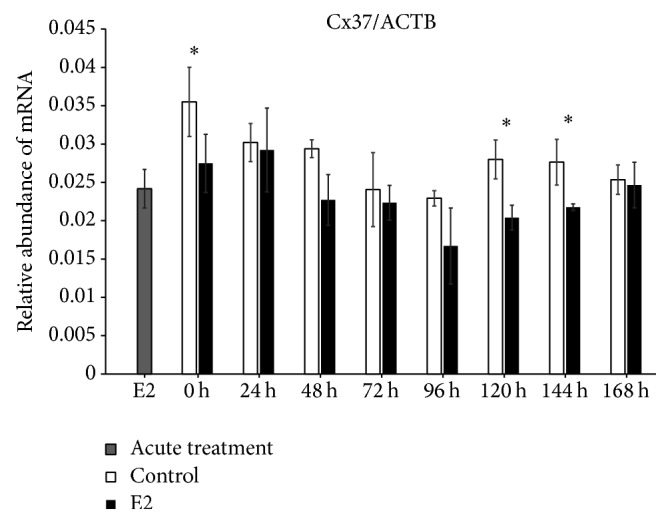
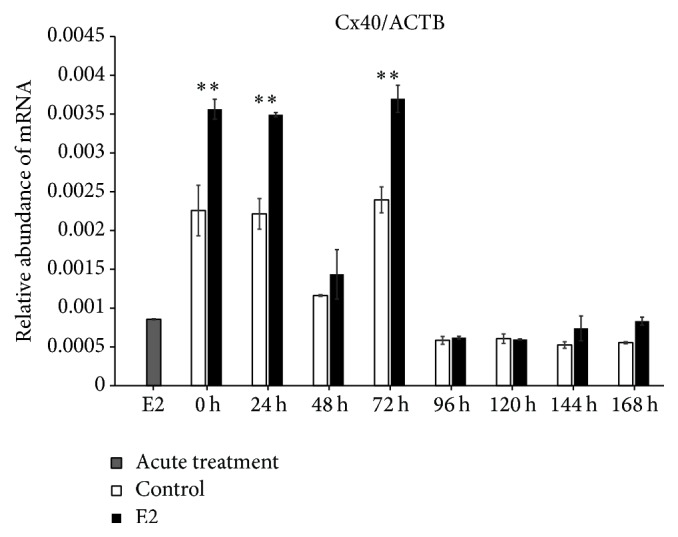
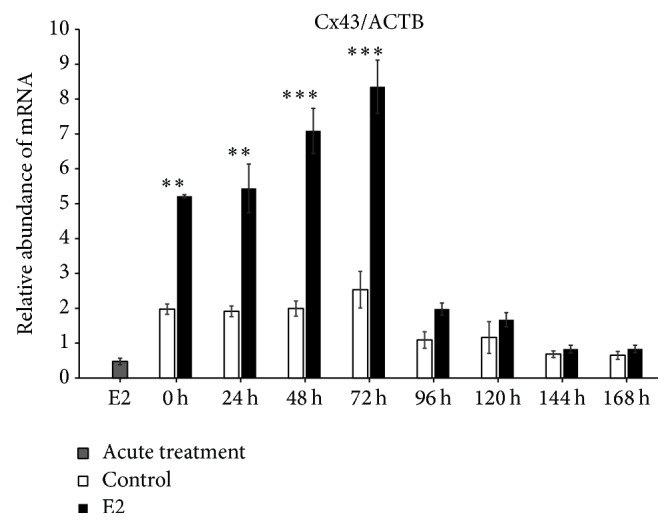
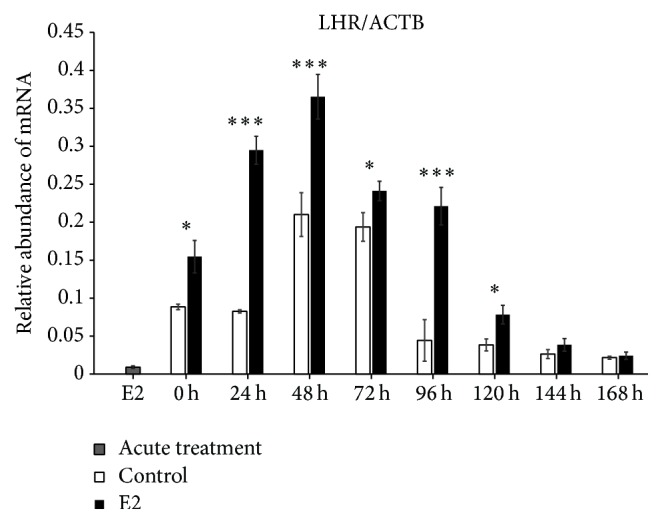
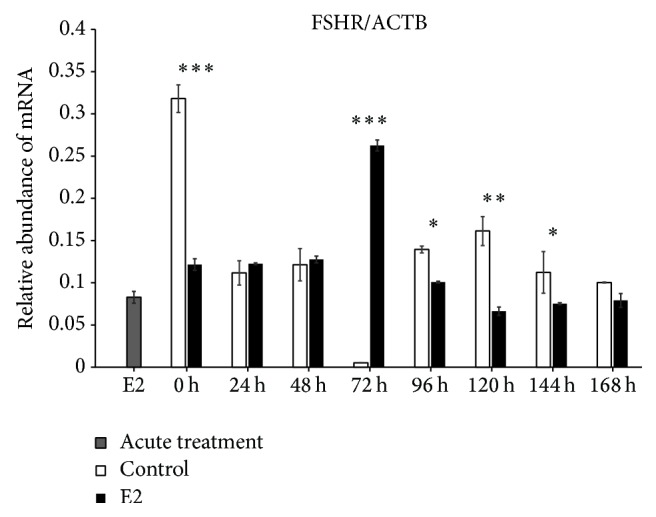
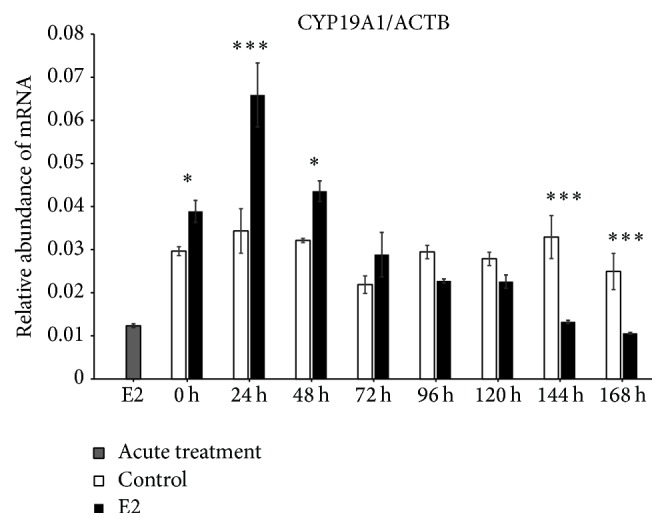
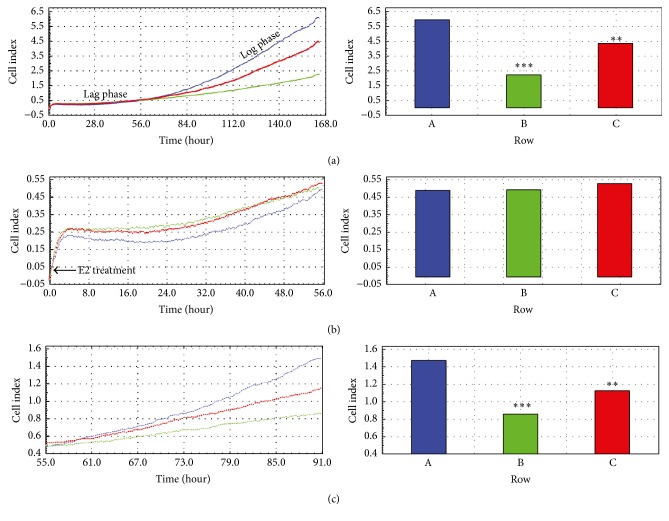
The key mechanisms responsible for achievement of full reproductive and developmental capability in mammals are the differentiation and transformation of granulosa cells (GCs) during folliculogenesis, oogenesis, and oocyte maturation. Although the role of 17 beta-estradiol (E2) in ovarian activity is widely known, its effect on proliferative capacity, gap junction connection (GJC) formation, and GCs-luteal cells transformation requires further research. Therefore, the goal of this study was to assess the real-time proliferative activity of porcine GCs in vitro in relation to connexin (Cx), luteinizing hormone receptor (LHR), follicle stimulating hormone receptor (FSHR), and aromatase (CYP19A1) expression during short-term (168 h) primary culture. The cultured GCs were exposed to acute (at 96 h of culture) and/or prolonged (between 0 and 168 h of culture) administration of 1.8 and 3.6 M E2. The relative abundance of Cx36, Cx37, Cx40, Cx43, LHR, FSHR, and CYP19A1 mRNA was measured. We conclude that the proliferation capability of GCs in vitro is substantially associated with expression of Cxs, LHR, FSHR, and CYP19A1. Furthermore, the GC-luteal cell transformation in vitro may be significantly accompanied by the proliferative activity of GCs in pigs.
在哺乳动物中,实现完全生殖和发育能力的关键机制是卵泡发生、卵子发生和卵母细胞成熟过程中颗粒细胞(GCs)的分化和转化。尽管17β-雌二醇(E2)在卵巢活动中的作用广为人知,但其对增殖能力、缝隙连接连接(GJC)形成以及GCs-黄体细胞转化的影响仍需进一步研究。因此,本研究的目的是评估猪GCs在体外短期(168小时)原代培养过程中与连接蛋白(Cx)、促黄体生成素受体(LHR)、促卵泡激素受体(FSHR)和芳香化酶(CYP19A1)表达相关的实时增殖活性。将培养的GCs暴露于1.8和3.6μM E2的急性(培养96小时时)和/或延长(培养0至168小时之间)给药。测量了Cx36、Cx37、Cx40、Cx43、LHR、FSHR和CYP19A1 mRNA的相对丰度。我们得出结论,GCs在体外的增殖能力与Cxs、LHR、FSHR和CYP19A1的表达密切相关。此外,猪体外GCs-黄体细胞的转化可能与GCs的增殖活性显著相关。