College of Animal Science and Technology, Anhui Agricultural University, Hefei 230036, China.
Poult Sci. 2017 Jul 1;96(7):2219-2225. doi: 10.3382/ps/pex004.
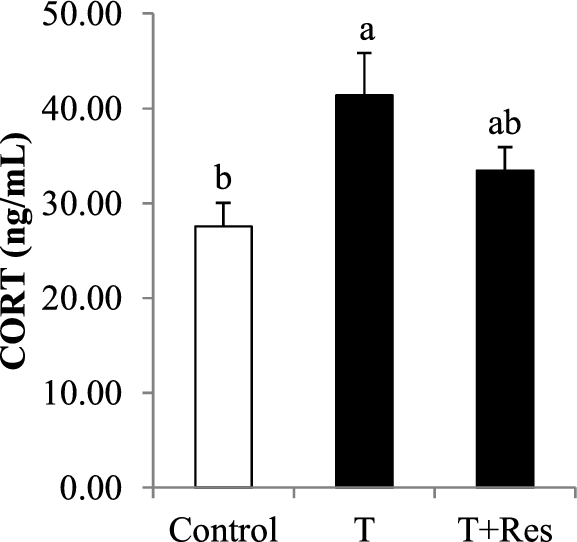
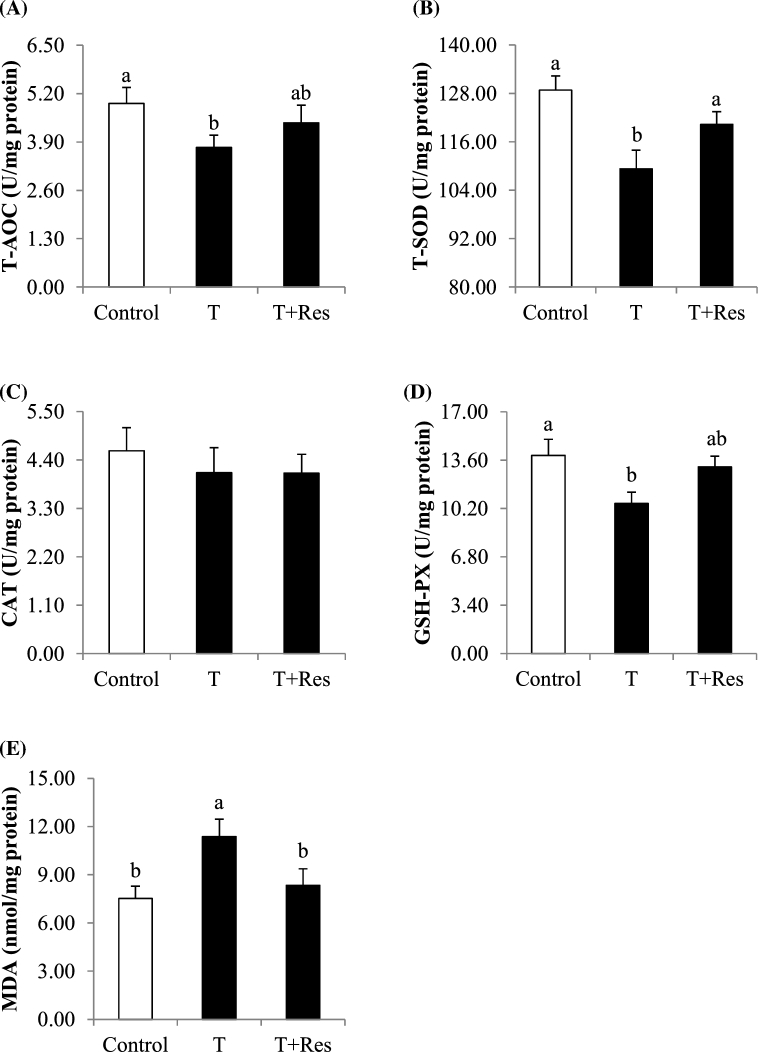
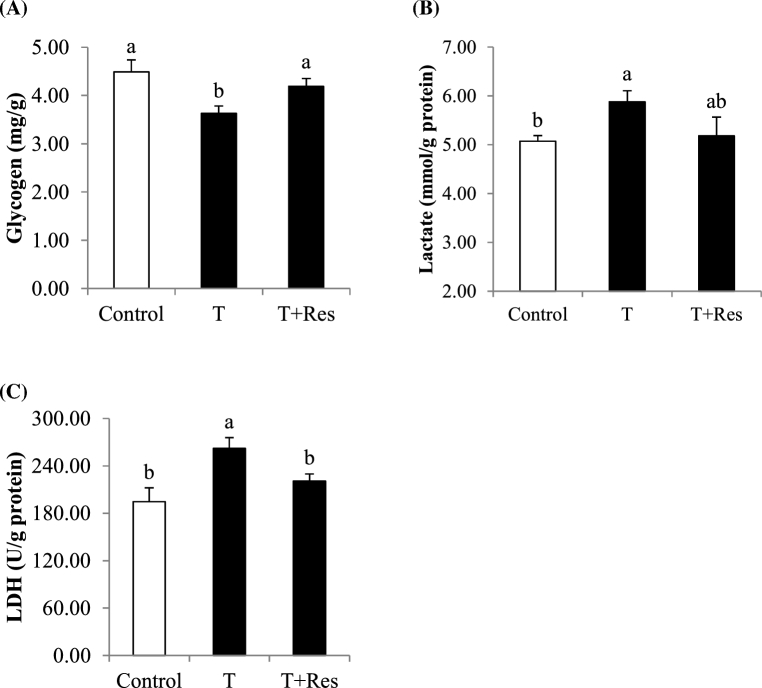
This experiment was to evaluate the effect of dietary resveratrol (Res) supplementation (0, 400 mg/kg) on growth performance, meat quality, and muscle anaerobic glycolysis and antioxidant capacity of transported broilers. A total of 360 21-day-old male Cobb broilers was randomly allotted to 2 dietary treatments (Res-free group and Res group) with 12 replicates of 15 birds each. On the morning of d 42, after a 9-hour fast, 24 birds (2 birds of each replicate) were selected from the Res-free group and then equally placed into 2 crates, and the other 12 birds (one bird of each replicate) were selected from the Res group and then placed into the other crate. All birds in the 3 crates were transported according to the following protocols: 0-hour transport of birds in the Res-free group (control group), 3-hour transport of birds in the Res-free group (T group), and 3-hour transport of birds in the Res group (T + Res group). The results showed that Res not only improved feed conversion ratio (P < 0.05) but also tended to improve birds' final body weight (P < 0.10). In the Res-free group, a 3-hour transport increased serum corticosterone concentration, muscle malondialdehyde (MDA) and lactate contents, and muscle lactate dehydrogenase (LDH) activity, while it decreased muscle glycogen content, total superoxide dismutase (T-SOD), and glutathione peroxidase (GSH-PX) activities (P < 0.05), which induced decreased breast meat quality (lower pH24h and higher drip loss and L24 h, P < 0.05). Nevertheless, compared with the T group, Res increased muscle glycogen content and T-SOD and GSH-PX activities (P < 0.05 or P < 0.10), while it decreased muscle MDA content and LDH activity (P < 0.05), which is beneficial to the meat quality maintenance of transported broilers (lower drip loss, L24 h, and higher pH24h, P < 0.05 or P < 0.10). This study provides the first evidence that dietary resveratrol supplementation prevents transport-stress-impaired meat quality of broilers, possibly through decreasing the muscle anaerobic glycolysis metabolism and improving the muscle antioxidant capacity.
本试验旨在评估日粮白藜芦醇(Res)补充(0、400mg/kg)对运输肉鸡生长性能、肉品质、肌肉无氧糖酵解和抗氧化能力的影响。选用 360 只 21 日龄雄性科宝肉鸡,随机分为 2 个日粮处理组(无 Res 组和 Res 组),每组 12 个重复,每个重复 15 只鸡。在第 42 天的上午,禁食 9 小时后,从无 Res 组中选择 24 只鸡(每个重复 2 只鸡),然后均匀地放入 2 个笼中,从 Res 组中选择另外 12 只鸡(每个重复 1 只鸡),然后放入另一个笼中。3 个笼中的所有鸡均按照以下方案进行运输:无 Res 组鸡的 0 小时运输(对照组)、无 Res 组鸡的 3 小时运输(T 组)和 Res 组鸡的 3 小时运输(T+Res 组)。结果表明,Res 不仅提高了饲料转化率(P<0.05),而且还提高了鸡的最终体重(P<0.10)。在无 Res 组中,3 小时的运输增加了血清皮质酮浓度、肌肉丙二醛(MDA)和乳酸含量以及肌肉乳酸脱氢酶(LDH)活性,同时降低了肌肉糖原含量、总超氧化物歧化酶(T-SOD)和谷胱甘肽过氧化物酶(GSH-PX)活性(P<0.05),导致胸肉品质下降(24h 的 pH 值降低,滴水损失和 L24h 升高,P<0.05)。然而,与 T 组相比,Res 增加了肌肉糖原含量和 T-SOD 和 GSH-PX 活性(P<0.05 或 P<0.10),同时降低了肌肉 MDA 含量和 LDH 活性(P<0.05),有利于运输肉鸡的肉质保持(滴水损失、L24h 和 pH 值升高,P<0.05 或 P<0.10)。本研究首次提供证据表明,日粮白藜芦醇补充可防止运输应激引起的肉鸡肉质下降,这可能是通过降低肌肉无氧糖酵解代谢和提高肌肉抗氧化能力实现的。