Khaja Fatima, Jayawardena Dulari, Kuzmis Antonina, Önyüksel Hayat
Department of Biopharmaceutical Sciences (M/C 865), College of Pharmacy, University of Illinois at Chicago, 833 South Wood St., Chicago, IL 60612-7231, USA.
Nanomaterials (Basel). 2016 Jan 5;6(1):8. doi: 10.3390/nano6010008.
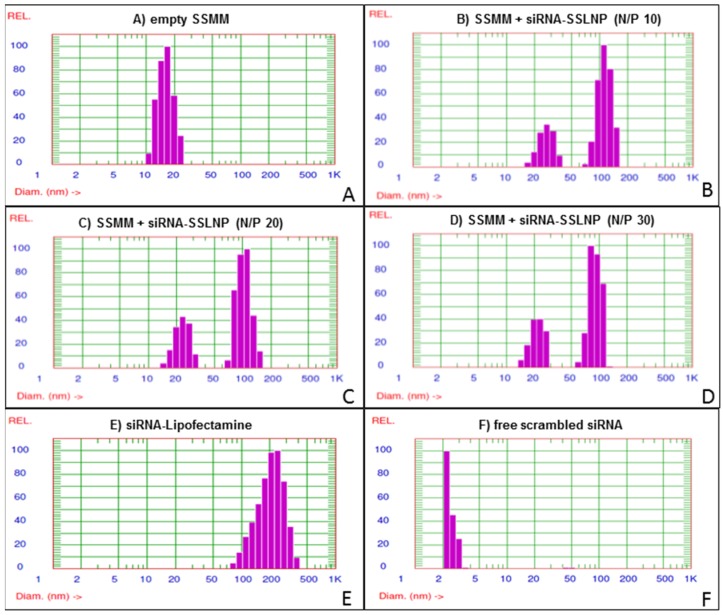
Since its discovery, small interfering RNA (siRNA) has been considered a potent tool for modulating gene expression. It has the ability to specifically target proteins via selective degradation of messenger RNA (mRNA) not easily accessed by conventional drugs. Hence, RNA interference (RNAi) therapeutics have great potential in the treatment of many diseases caused by faulty protein expression such as fibrosis and cancer. However, for clinical application siRNA faces a number of obstacles, such as poor stability, and off-target effects. Here we developed a unique targeted nanomedicine to tackle current siRNA delivery issues by formulating a biocompatible, biodegradable and relatively inexpensive nanocarrier of sterically stabilized phospholipid nanoparticles (SSLNPs). This nanocarrier is capable of incorporating siRNA in its core through self-association with a novel cationic lipid composed of naturally occuring phospholipids and amino acids. This overall assembly protects and delivers sufficient amounts of siRNA to knockdown over-expressed protein in target cells. The siRNA used in this study, targets connective tissue growth factor (CTGF), an important regulator of fibrosis in both hepatic and renal cells. Furthermore, asialoglycoprotein receptors are targeted by attaching the galactosamine ligand to the nanocarries which enhances the uptake of nanoparticles by hepatocytes and renal tubular epithelial cells, the major producers of CTGF in fibrosis. On animals this innovative nanoconstruct, small interfering RNA in sterically stabilized phospholipid nanoparticles (siRNA-SSLNP), showed favorable pharmacokinetic properties and accumulated mostly in hepatic and renal tissues making siRNA-SSLNP a suitable system for targeting liver and kidney fibrotic diseases.
自发现以来,小干扰RNA(siRNA)一直被视为调节基因表达的有力工具。它能够通过选择性降解传统药物难以作用的信使RNA(mRNA)来特异性靶向蛋白质。因此,RNA干扰(RNAi)疗法在治疗许多由蛋白质表达异常引起的疾病(如纤维化和癌症)方面具有巨大潜力。然而,对于临床应用而言,siRNA面临着诸多障碍,如稳定性差和脱靶效应。在此,我们开发了一种独特的靶向纳米药物,通过制备一种生物相容性好、可生物降解且相对廉价的空间稳定磷脂纳米颗粒(SSLNP)纳米载体来解决当前siRNA递送问题。这种纳米载体能够通过与一种由天然磷脂和氨基酸组成的新型阳离子脂质自组装,将siRNA包裹在其核心。这种整体组装保护并递送足够量的siRNA以敲低靶细胞中过表达的蛋白质。本研究中使用的siRNA靶向结缔组织生长因子(CTGF),它是肝和肾细胞纤维化的重要调节因子。此外,通过将半乳糖胺配体连接到纳米载体上靶向去唾液酸糖蛋白受体,这增强了肝细胞和肾小管上皮细胞对纳米颗粒的摄取,而这两种细胞是纤维化过程中CTGF的主要产生者。在动物实验中,这种创新的纳米构建体,即空间稳定磷脂纳米颗粒中的小干扰RNA(siRNA-SSLNP),表现出良好的药代动力学特性,并且主要在肝和肾组织中积累,这使得siRNA-SSLNP成为靶向肝和肾纤维化疾病的合适系统。