Department of Human Anatomy and Cell Science, Max Rady College of Medicine, Rady Faculty of Health Sciences, University of Manitoba, Winnipeg, Canada.
Biology of Breathing Theme, Children's Hospital Research Institute of Manitoba, University of Manitoba, Winnipeg, Canada.
Sci Rep. 2017 Mar 27;7:44841. doi: 10.1038/srep44841.
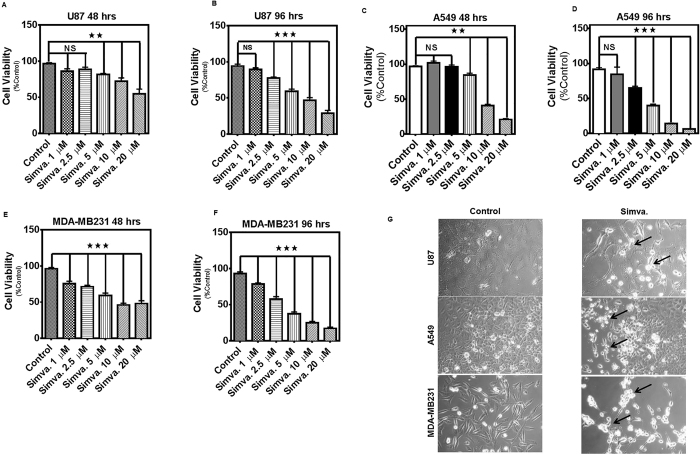
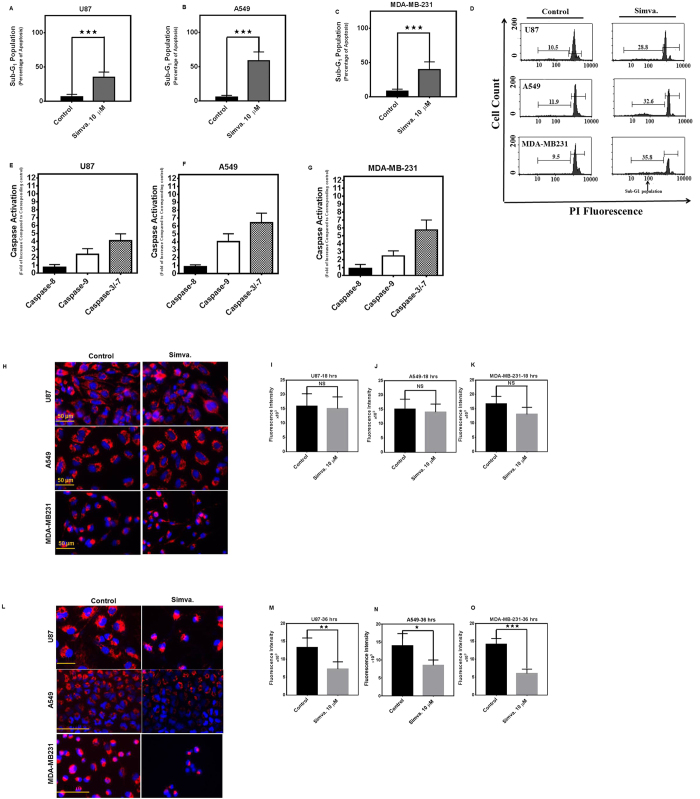
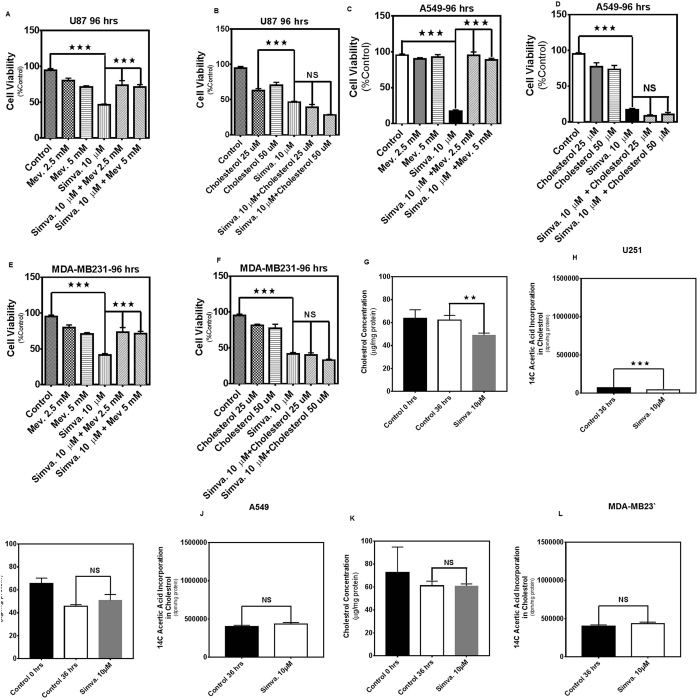
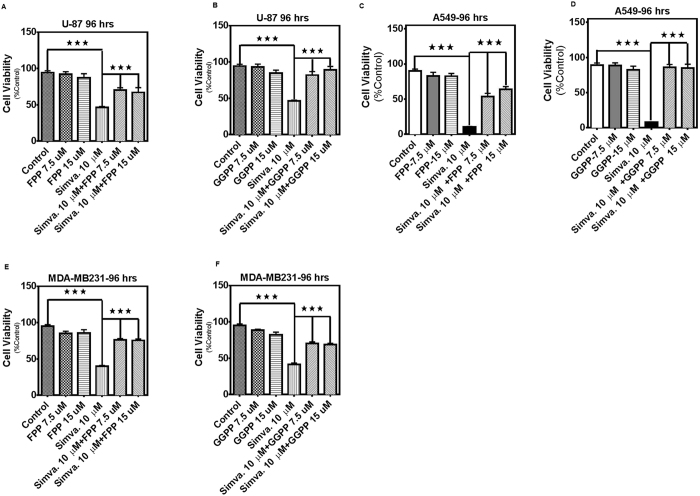
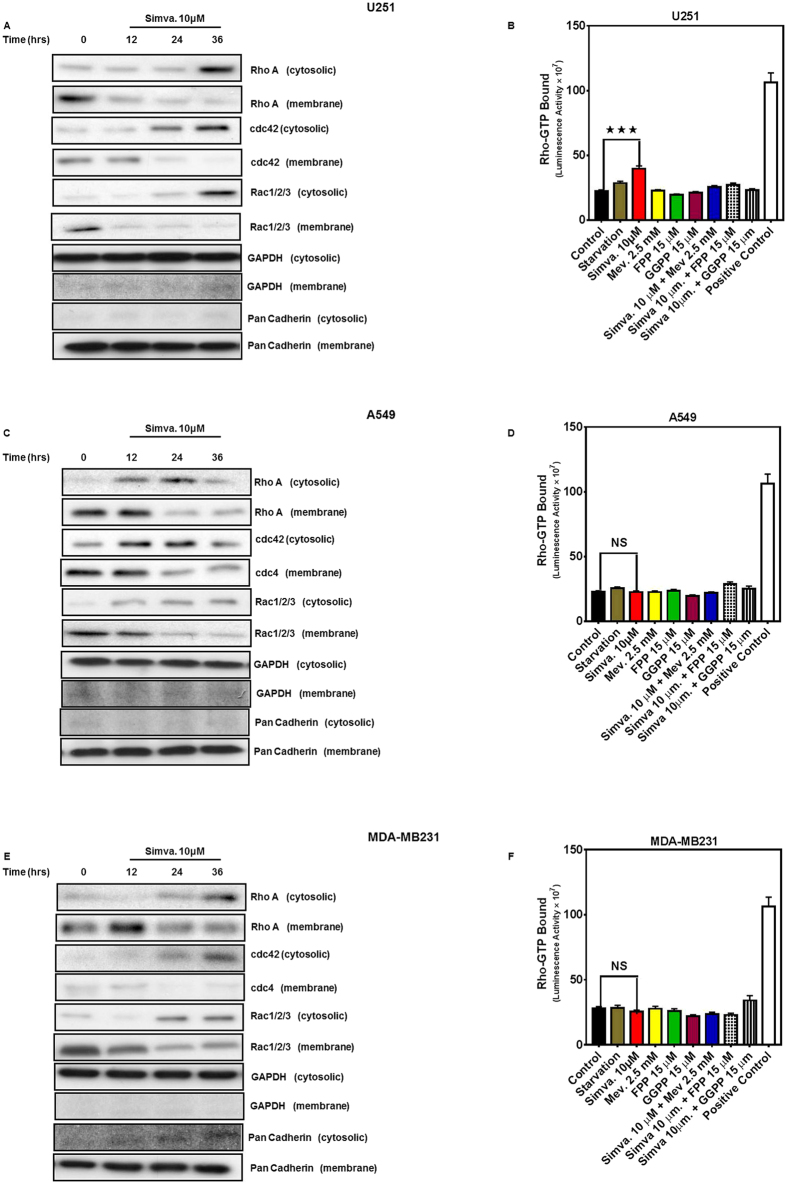
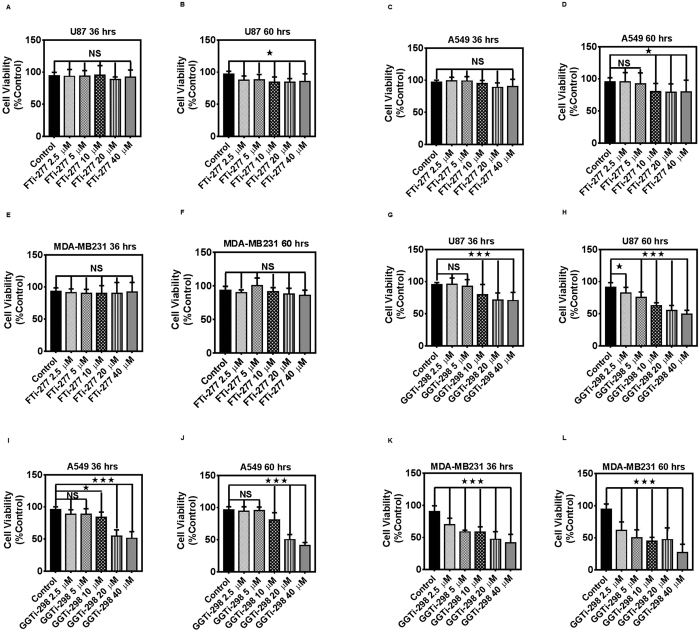
The mevalonate (MEV) cascade is responsible for cholesterol biosynthesis and the formation of the intermediate metabolites geranylgeranylpyrophosphate (GGPP) and farnesylpyrophosphate (FPP) used in the prenylation of proteins. Here we show that the MEV cascade inhibitor simvastatin induced significant cell death in a wide range of human tumor cell lines, including glioblastoma, astrocytoma, neuroblastoma, lung adenocarcinoma, and breast cancer. Simvastatin induced apoptotic cell death via the intrinsic apoptotic pathway. In all cancer cell types tested, simvastatin-induced cell death was not rescued by cholesterol, but was dependent on GGPP- and FPP-depletion. We confirmed that simvastatin caused the translocation of the small Rho GTPases RhoA, Cdc42, and Rac1/2/3 from cell membranes to the cytosol in U251 (glioblastoma), A549 (lung adenocarcinoma) and MDA-MB-231(breast cancer). Simvastatin-induced Rho-GTP loading significantly increased in U251 cells which were reversed with MEV, FPP, GGPP. In contrast, simvastatin did not change Rho-GTP loading in A549 and MDA-MB-231. Inhibition of geranylgeranyltransferase I by GGTi-298, but not farnesyltransferase by FTi-277, induced significant cell death in U251, A549, and MDA-MB-231. These results indicate that MEV cascade inhibition by simvastatin induced the intrinsic apoptosis pathway via inhibition of Rho family prenylation and depletion of GGPP, in a variety of different human cancer cell lines.
甲羟戊酸(MEV)级联反应负责胆固醇的生物合成和中间代谢产物香叶基香叶基焦磷酸(GGPP)和法呢基焦磷酸(FPP)的形成,这些物质用于蛋白质的异戊烯化。在这里,我们表明,MEV 级联反应抑制剂辛伐他汀可诱导广泛的人类肿瘤细胞系,包括神经胶质瘤、星形细胞瘤、神经母细胞瘤、肺腺癌和乳腺癌,发生显著的细胞死亡。辛伐他汀通过内在凋亡途径诱导细胞凋亡。在所有测试的癌细胞类型中,辛伐他汀诱导的细胞死亡不能被胆固醇挽救,但依赖于 GGPP 和 FPP 的耗竭。我们证实,辛伐他汀可导致小 Rho GTPases RhoA、Cdc42 和 Rac1/2/3 从小鼠神经胶质瘤细胞系 U251(神经胶质瘤)、A549(肺腺癌)和 MDA-MB-231(乳腺癌)的细胞膜向细胞质易位。辛伐他汀诱导的 Rho-GTP 加载在 U251 细胞中显著增加,用 MEV、FPP 和 GGPP 可逆转这一现象。相比之下,辛伐他汀并没有改变 A549 和 MDA-MB-231 中的 Rho-GTP 加载。法尼基转移酶抑制剂 FTi-277 而非香叶基转移酶抑制剂 GGTi-298 可诱导 U251、A549 和 MDA-MB-231 发生显著的细胞死亡。这些结果表明,辛伐他汀通过抑制 Rho 家族异戊烯化和 GGPP 的耗竭,抑制 MEV 级联反应,在多种不同的人类癌细胞系中诱导内在凋亡途径。