Vilg Jenny Veide, Undeland Ingrid
Food and Nutrition Science, Biology and Biological Engineering, Chalmers University of Technology, 41296 Gothenburg, Sweden.
J Appl Phycol. 2017;29(1):585-593. doi: 10.1007/s10811-016-0957-6. Epub 2016 Sep 23.
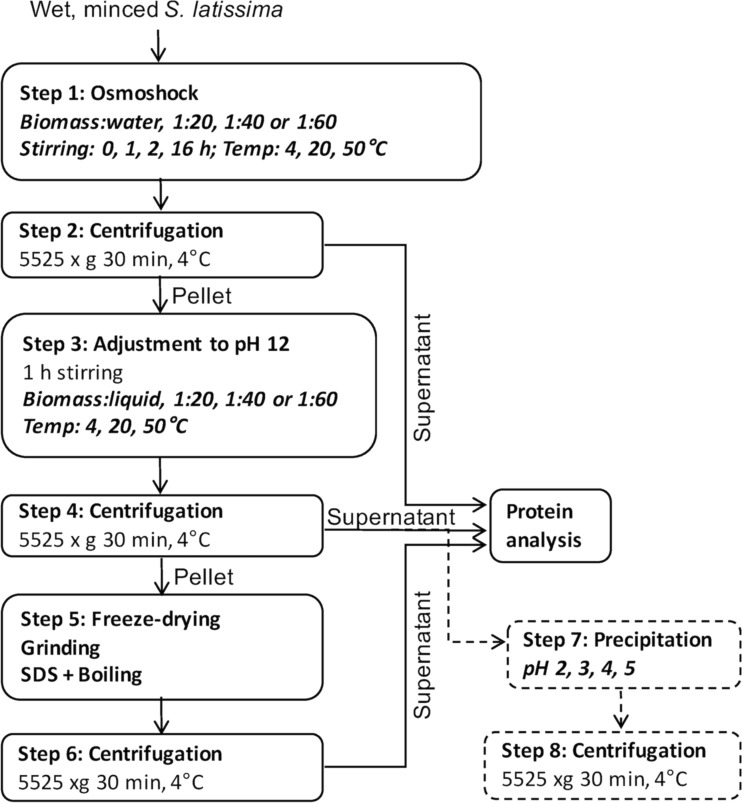
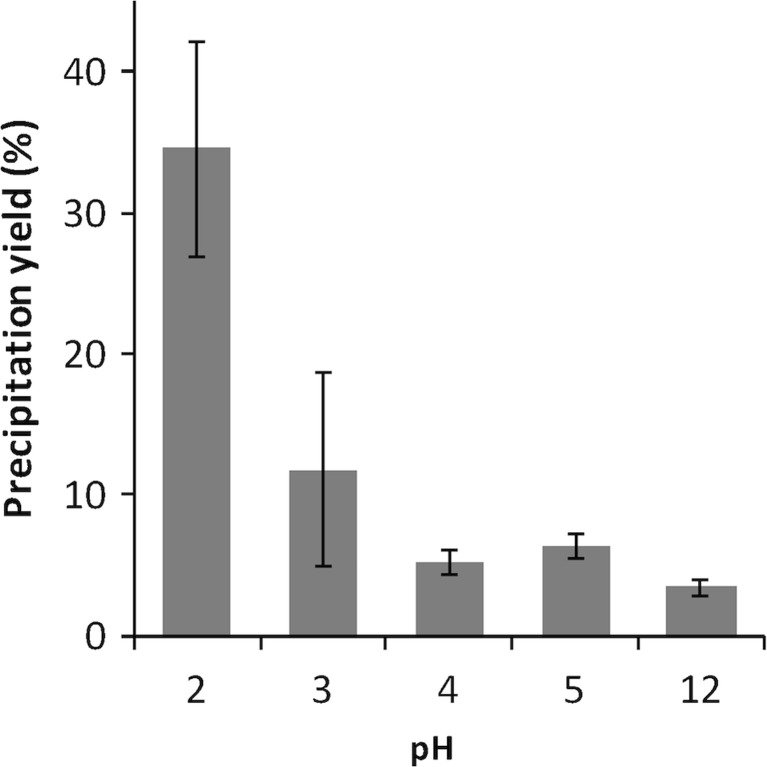
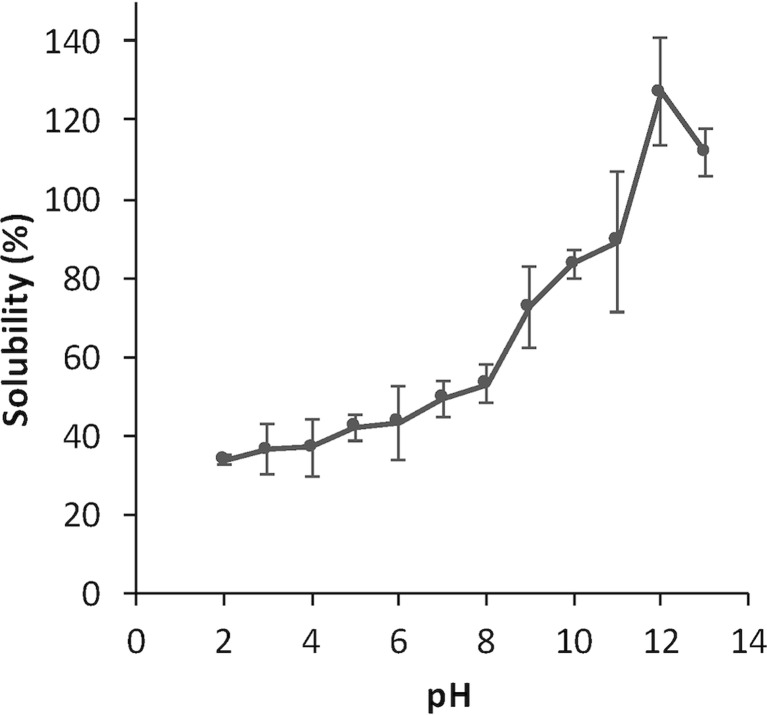
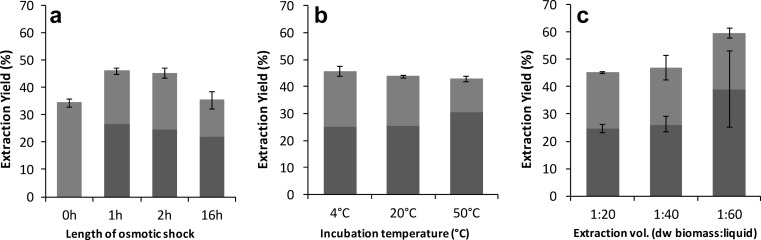
In the light of the global search for novel and sustainable protein sources, macroalgal proteins are becoming an attractive target. To date, mainly red and green macroalgae have been investigated in this respect, whereas the brown species are less studied, possibly because of the lower content of protein. In a biorefinery context, however, the protein content of brown macroalgae can still be economically interesting due to fast growth and the possibility to co-extract other compounds, such as alginates. The aim of this study was to develop a simple, scalable pH shift-based protein isolation technique applicable on wet biomass. Factors investigated were extraction volume, temperature, protein solubilization pH, osmoshock pretreatment and protein precipitation pH. Maximum protein solubility was obtained at pH 12, where 34 % of the total protein content could be extracted with 5.56 volumes of extraction solution (20 volumes on dry weight (dw) basis). Osmoshocking significantly increased the yield, and 20, 40 and 60 volumes of water (dw basis) gave 45.1, 46.8 and 59.5 % yield, respectively. The temperature during osmoshocking did not significantly affect the extraction yield, and extended time (16 vs. 1 or 2 h) reduced protein yield. Precipitation of solubilized proteins was possible below pH 4; the highest precipitation yield, 34.5 %, was obtained at pH 2. After combined alkaline extraction and acid precipitation, 16.01 % of the proteins were recovered, which can be considered acceptable in comparison to other studies on algae but leaves some room for improvement when compared to protein extraction from, for instance, soy.
鉴于全球对新型可持续蛋白质来源的探索,大型藻类蛋白质正成为一个有吸引力的目标。迄今为止,在这方面主要研究了红藻和绿藻,而褐藻的研究较少,这可能是因为其蛋白质含量较低。然而,在生物炼制背景下,由于褐藻生长迅速且有可能共提取其他化合物(如藻酸盐),其蛋白质含量在经济上仍具有吸引力。本研究的目的是开发一种简单、可扩展的基于pH值变化的蛋白质分离技术,适用于湿生物质。研究的因素包括提取体积、温度、蛋白质溶解pH值、渗透压休克预处理和蛋白质沉淀pH值。在pH值为12时获得了最大蛋白质溶解度,用5.56倍体积的提取溶液(以干重计为20倍体积)可提取总蛋白质含量的34%。渗透压休克显著提高了产量,20、40和60倍体积的水(以干重计)的产量分别为45.1%、46.8%和59.5%。渗透压休克期间的温度对提取产量没有显著影响,延长时间(16小时与1或2小时相比)会降低蛋白质产量。在pH值低于4时可使溶解的蛋白质沉淀;在pH值为2时获得了最高沉淀产量,即34.5%。经过碱性提取和酸性沉淀相结合后,回收了16.01%的蛋白质,与其他藻类研究相比,这可以认为是可以接受的,但与从例如大豆中提取蛋白质相比,仍有一定的改进空间。