Kalckert Andreas, Ehrsson H H
Psychology, University of Reading MalaysiaIskandar Puteri, Malaysia; Department of Neuroscience, Karolinska InstitutetStockholm, Sweden.
Department of Neuroscience, Karolinska Institutet Stockholm, Sweden.
Front Psychol. 2017 Mar 10;8:344. doi: 10.3389/fpsyg.2017.00344. eCollection 2017.
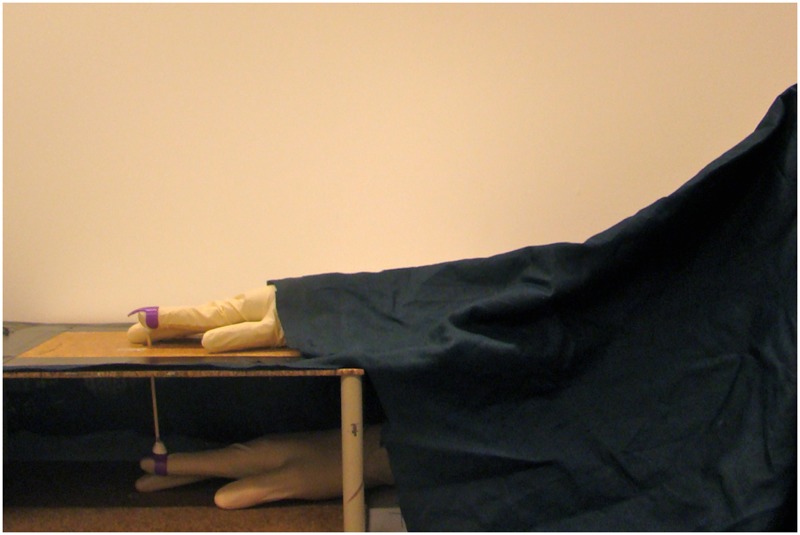
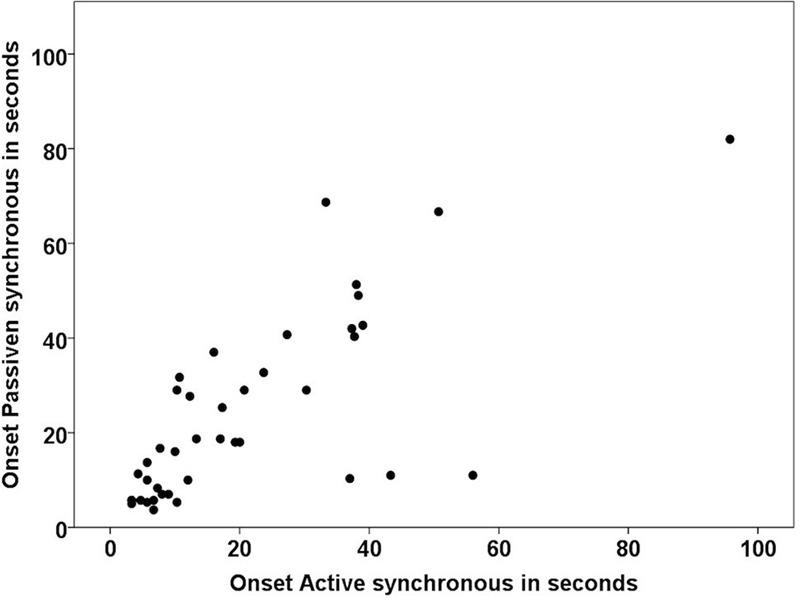
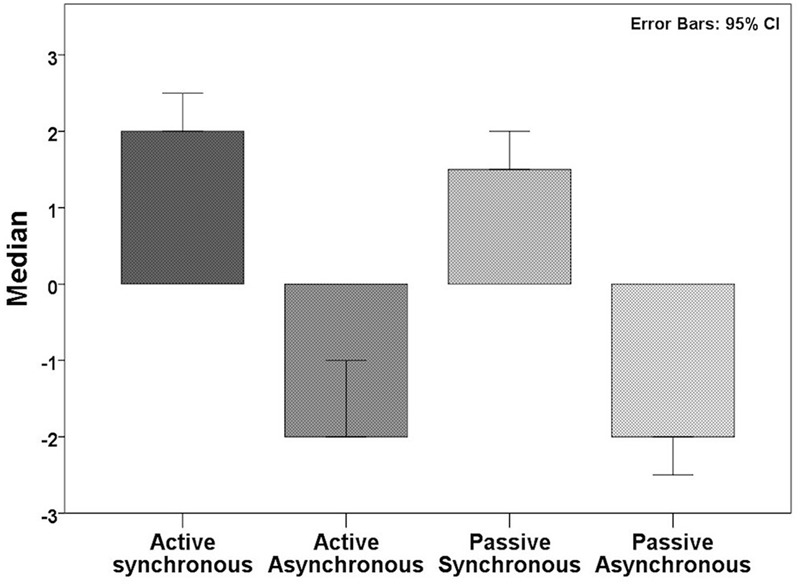
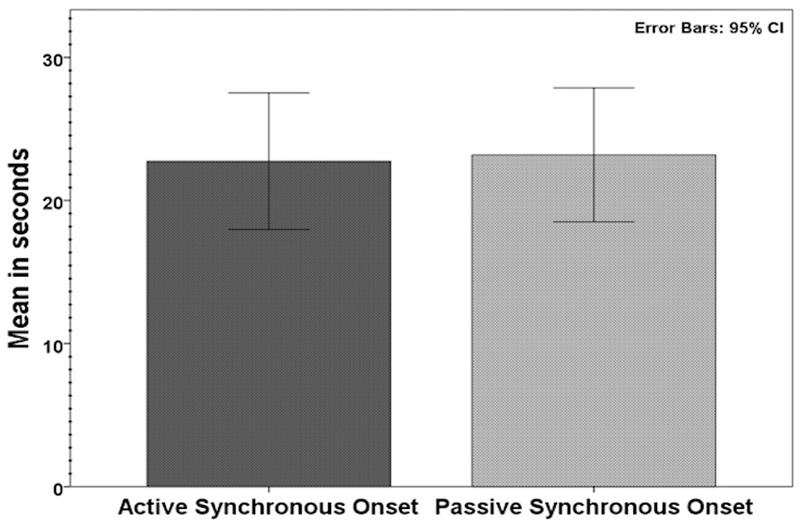
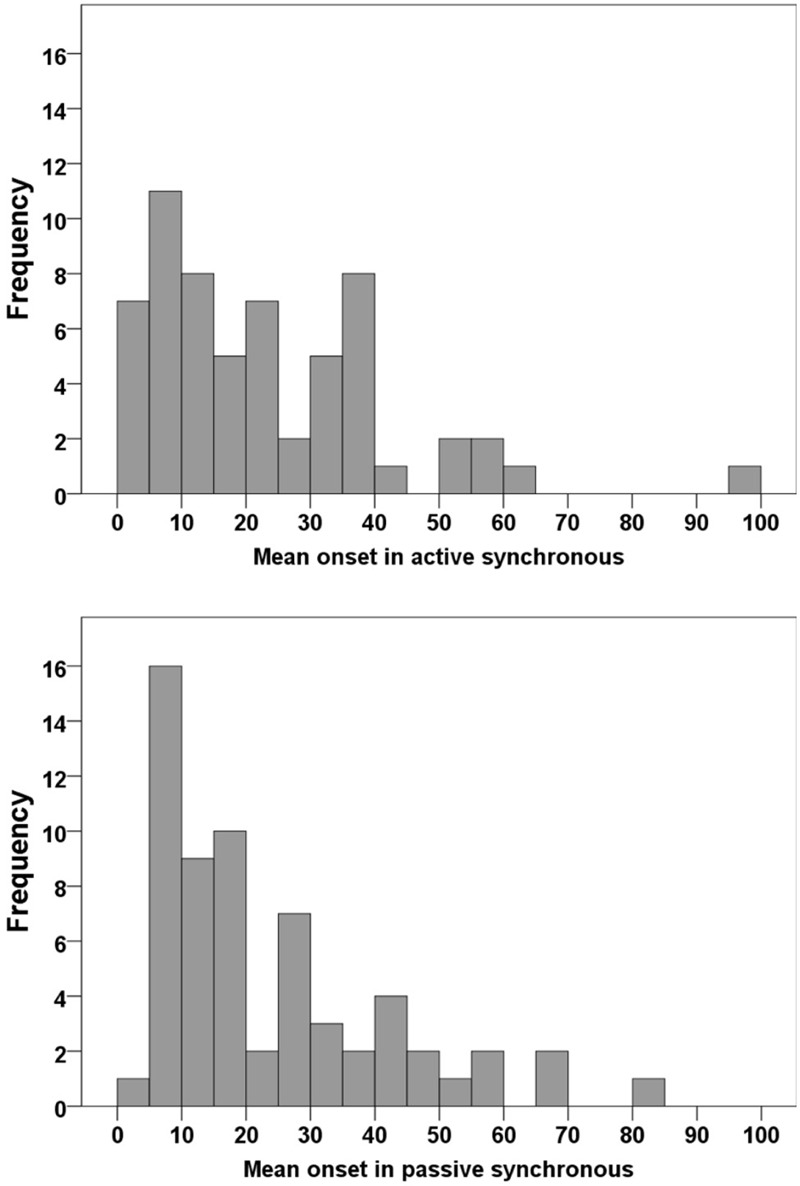
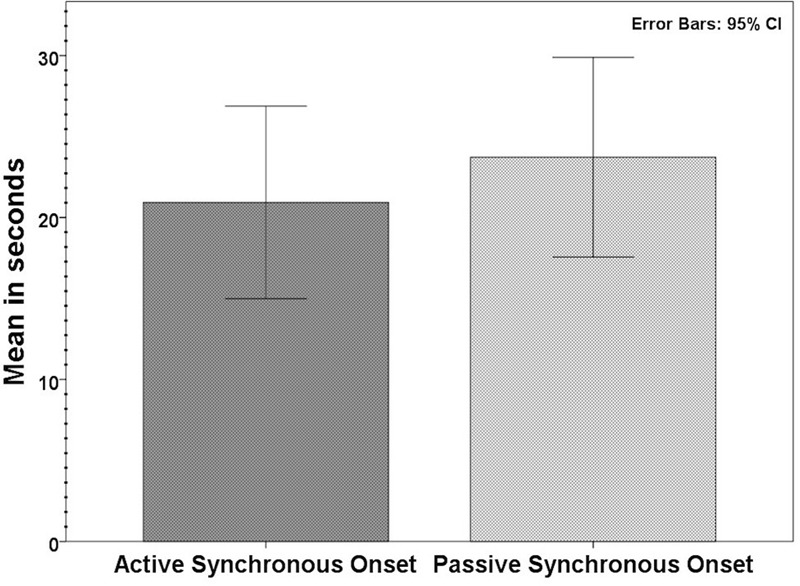
The rubber hand illusion (RHI) is a perceptual illusion whereby a model hand is perceived as part of one's own body. This illusion has been extensively studied, but little is known about the temporal evolution of this perceptual phenomenon, i.e., how long it takes until participants start to experience ownership over the model hand. In the present study, we investigated a version of the rubber hand experiment based on finger movements and measured the average onset time in active and passive movement conditions. This comparison enabled us to further explore the possible role of intentions and motor control processes that are only present in the active movement condition. The results from a large group of healthy participants ( = 117) showed that the illusion of ownership took approximately 23 s to emerge (active: 22.8; passive: 23.2). The 90th percentile occurs in both conditions within approximately 50 s (active: 50; passive: 50.6); therefore, most participants experience the illusion within the first minute. We found indirect evidence of a facilitatory effect of active movements compared to passive movements, and we discuss these results in the context of our current understanding of the processes underlying the moving RHI.
橡胶手错觉(RHI)是一种感知错觉,即模型手被感知为自身身体的一部分。这种错觉已得到广泛研究,但对于这种感知现象的时间演变,即参与者开始将模型手视为自己身体一部分所需的时间,人们知之甚少。在本研究中,我们基于手指运动对橡胶手实验的一个版本进行了研究,并测量了主动和被动运动条件下的平均起始时间。这种比较使我们能够进一步探究仅在主动运动条件下才存在的意图和运动控制过程可能发挥的作用。一大组健康参与者(n = 117)的结果表明,所有权错觉大约需要23秒才会出现(主动:22.8秒;被动:23.2秒)。两种条件下的第90百分位数均在大约50秒内出现(主动:50秒;被动:50.6秒);因此,大多数参与者在第一分钟内就会体验到这种错觉。我们发现了与被动运动相比主动运动具有促进作用的间接证据,并在我们目前对移动橡胶手错觉背后过程的理解背景下讨论了这些结果。