Uzun Fatih, Erturk Mehmet, Cakmak Huseyin Altug, Kalkan Ali Kemal, Akturk Ibrahim Faruk, Yalcin Ahmet Arif, Uygur Begum, Bulut Umit, Oz Kursat
Department of Cardiology, Mehmet Akif Ersoy Thoracic and Cardiovascular Surgery Education and Training Hospital, Istanbul, Turkey.
Department of Cardiology, Mustafakemalpasa State Hospital, Bursa, Turkey.
Postepy Kardiol Interwencyjnej. 2017;13(1):32-38. doi: 10.5114/aic.2017.66184. Epub 2017 Mar 10.
Inflammation and increased platelet activation play a crucial role in the initiation and progression of atherosclerosis. Platelet-to-lymphocyte ratio (PLR) has recently been reported as a new independent predictor for major adverse cardiovascular events in cardiovascular diseases.
To investigate the relation between PLR and cardiovascular mortality in patients with intermittent claudication or critical limb ischemia (CLI) or both.
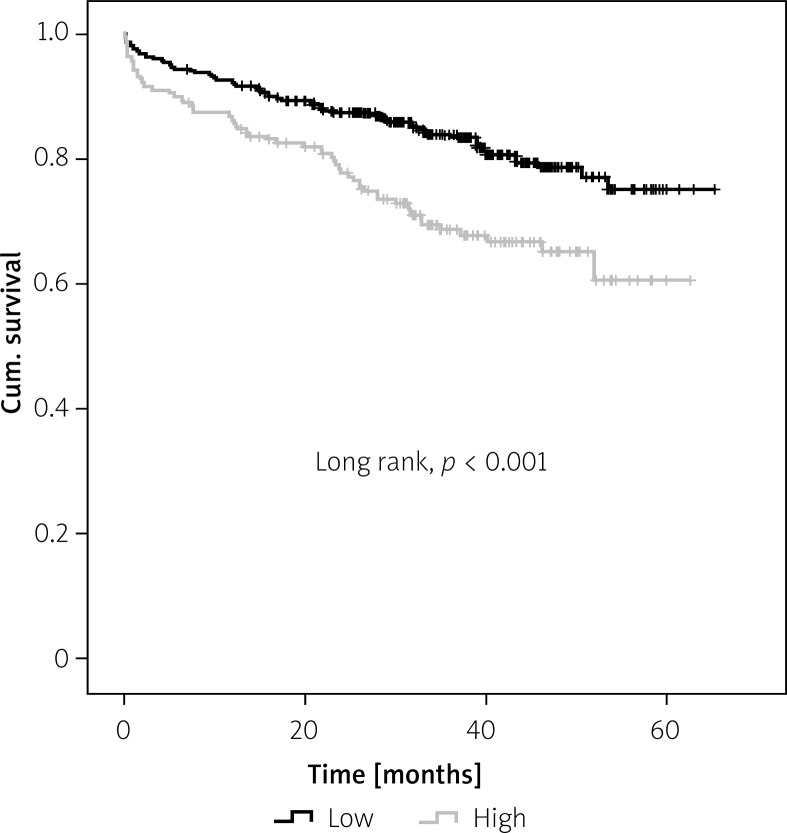
In our retrospective study, 602 consecutive patients who were admitted to a large tertiary hospital with the diagnosis of symptomatic peripheral arterial occlusive disease (PAOD) were included. Patients were divided into two groups according to their PLR as follows: high PLR (PLR > 142) and low PLR (PLR ≤ 142) groups.
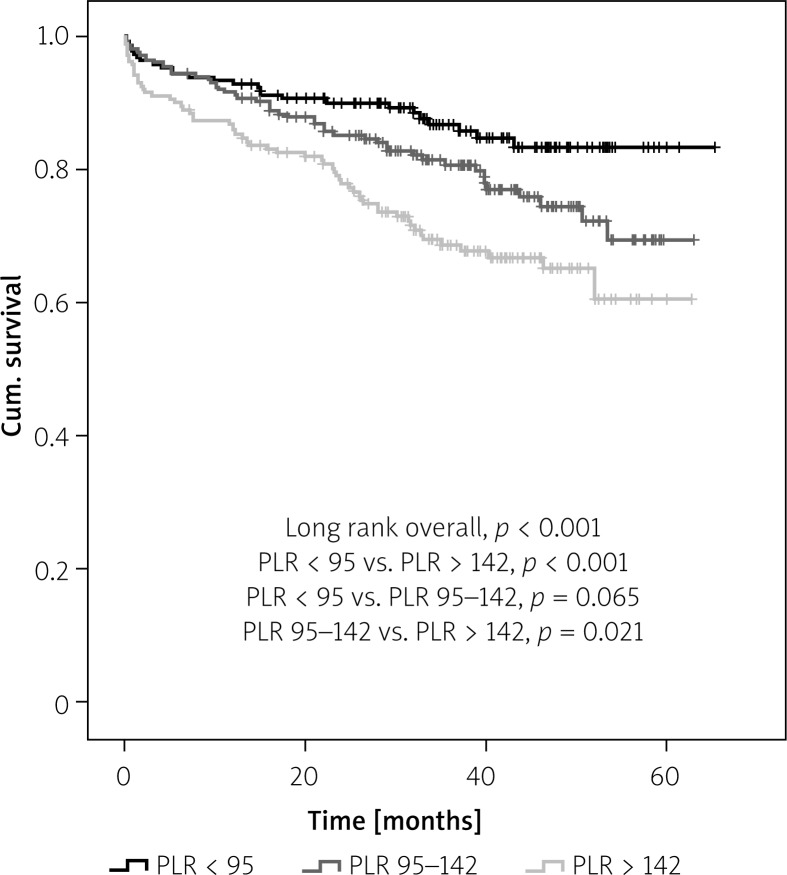
During the follow-up period (median: 33.8 months (interquartile range: 21-45)), 131 deaths occurred out of 602 (21.8%) patients. Cardiovascular mortality was found to be significantly higher in the high PLR group compared to the low PLR group (31.6% vs. 17.2 %; < 0.001). Even after adjustment for various risk factors, PLR > 142 and age were found to be independent predictors of long-term cardiovascular mortality in Cox regression analysis (hazard ratios (95% confidence interval): 1.03 (1.01-1.04) and 1.04 (1.02-1.06), < 0.001 and < 0.001, respectively).
Platelet-to-lymphocyte ratio, which is one of the parameters of routine complete blood count, reflects increased inflammatory status, platelet activation and aggregation. PLR is a cheap and readily available marker that has the ability to improve risk stratification provided by conventional risk scores in predicting long-term cardiovascular mortality in PAOD.
炎症和血小板活化增加在动脉粥样硬化的发生和发展中起关键作用。血小板与淋巴细胞比值(PLR)最近被报道为心血管疾病中主要不良心血管事件的一个新的独立预测指标。
研究PLR与间歇性跛行或严重肢体缺血(CLI)或两者皆有的患者心血管死亡率之间的关系。
在我们的回顾性研究中,纳入了602例连续入住一家大型三级医院且诊断为有症状外周动脉闭塞性疾病(PAOD)的患者。根据PLR将患者分为两组:高PLR组(PLR>142)和低PLR组(PLR≤142)。
在随访期(中位数:33.8个月(四分位间距:21 - 45))内,602例患者中有131例(21.8%)死亡。发现高PLR组的心血管死亡率显著高于低PLR组(31.6%对17.2%;<0.001)。即使在对各种危险因素进行调整后,在Cox回归分析中,PLR>142和年龄被发现是长期心血管死亡率的独立预测因素(风险比(95%置信区间):1.
03(1.01 - 1.04)和1.04(1.02 - 1.06),分别<0.001和<0.001)。
血小板与淋巴细胞比值作为常规全血细胞计数的参数之一,反映了炎症状态增加、血小板活化和聚集。PLR是一种廉价且易于获得的标志物,在预测PAOD患者长期心血管死亡率方面,有能力改善传统风险评分所提供的风险分层。