Narain Niven R, Diers Anne R, Lee Arleide, Lao Socheata, Chan Joyce Y, Schofield Sally, Andreazi Joe, Ouro-Djobo Rakibou, Jimenez Joaquin J, Friss Tracey, Tanna Nikunj, Dalvi Aditee, Wang Sihe, Bunch Dustin, Sun Yezhou, Wu Wenfang, Thapa Khampaseuth, Gesta Stephane, Rodrigues Leonardo O, Akmaev Viatcheslav R, Vishnudas Vivek K, Sarangarajan Rangaprasad
Berg, LLC, Framingham, MA, USA; Berg, LLC, Framingham, MA, USA.
Department of Dermatology, University of Miami Miller School of Medicine, Miami, FL, USA 33136; Department of Dermatology, University of Miami Miller School of Medicine, Miami, FL, USA 33136.
Future Sci OA. 2016 Dec 22;3(1):FSO161. doi: 10.4155/fsoa-2016-0065. eCollection 2017 Mar.
A novel strategy for prostate cancer (PrCa) biomarker discovery is described.
MATERIALS & METHODS: perturbation biology, proteomics and Bayesian causal analysis identified biomarkers that were validated in models and clinical specimens.
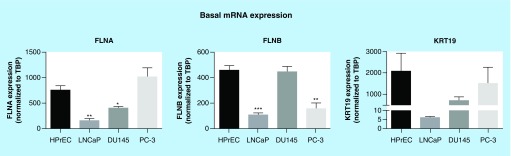
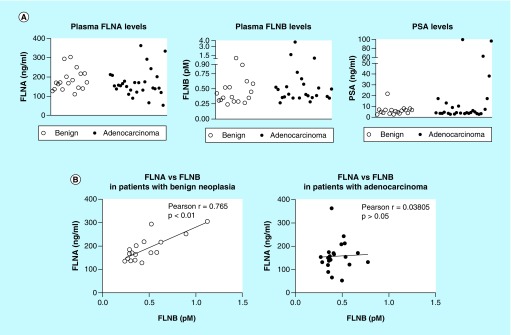
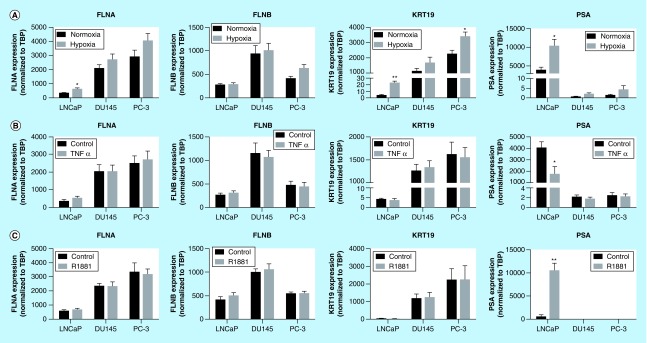
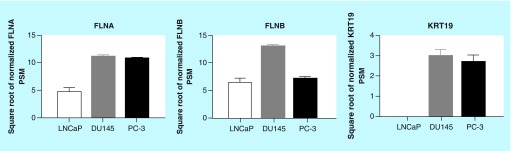
Filamin-B (FLNB) and Keratin-19 were identified as biomarkers. Filamin-A (FLNA) was found to be causally linked to FLNB. Characterization of the biomarkers in a panel of cells revealed differential mRNA expression and regulation. Moreover, FLNA and FLNB were detected in the conditioned media of cells. Last, in patients without PrCa, FLNA and FLNB blood levels were positively correlated, while in patients with adenocarcinoma the relationship is dysregulated.
These data support the strategy and the potential use of the biomarkers for PrCa.
描述一种用于前列腺癌(PrCa)生物标志物发现的新策略。
通过扰动生物学、蛋白质组学和贝叶斯因果分析确定了在模型和临床标本中得到验证的生物标志物。
细丝蛋白-B(FLNB)和角蛋白-19被鉴定为生物标志物。发现细丝蛋白-A(FLNA)与FLNB存在因果联系。在一组细胞中对这些生物标志物的表征揭示了不同的mRNA表达和调控。此外,在细胞的条件培养基中检测到了FLNA和FLNB。最后,在无PrCa的患者中,FLNA和FLNB的血液水平呈正相关,而在腺癌患者中这种关系失调。
这些数据支持该策略以及这些生物标志物在PrCa中的潜在应用。