Samaržija Ivana
Laboratory for Epigenomics, Division of Molecular Medicine, Ruđer Bošković Institute, 10000 Zagreb, Croatia.
Biomedicines. 2023 Dec 28;12(1):79. doi: 10.3390/biomedicines12010079.
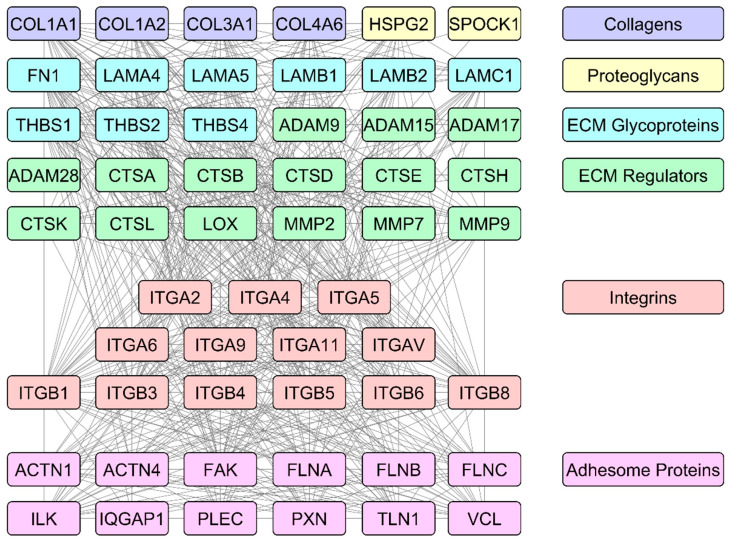
Prostate cancer is among the top five cancer types according to incidence and mortality. One of the main obstacles in prostate cancer management is the inability to foresee its course, which ranges from slow growth throughout years that requires minimum or no intervention to highly aggressive disease that spreads quickly and resists treatment. Therefore, it is not surprising that numerous studies have attempted to find biomarkers of prostate cancer occurrence, risk stratification, therapy response, and patient outcome. However, only a few prostate cancer biomarkers are used in clinics, which shows how difficult it is to find a novel biomarker. Cell adhesion to the extracellular matrix (ECM) through integrins is among the essential processes that govern its fate. Upon activation and ligation, integrins form multi-protein intracellular structures called integrin adhesion complexes (IACs). In this review article, the focus is put on the biomarker potential of the ECM- and IAC-related molecules stemming from both body fluids and prostate cancer tissue. The processes that they are involved in, such as tumor stiffening, bone turnover, and communication via exosomes, and their biomarker potential are also reviewed.
根据发病率和死亡率,前列腺癌位列五大癌症类型之中。前列腺癌治疗的主要障碍之一是无法预测其病程,其病程范围从多年缓慢生长(只需极少干预或无需干预)到极具侵袭性、迅速扩散且抵抗治疗的疾病。因此,众多研究试图寻找前列腺癌发生、风险分层、治疗反应及患者预后的生物标志物也就不足为奇了。然而,临床上仅使用了少数几种前列腺癌生物标志物,这表明寻找新型生物标志物的难度之大。细胞通过整合素与细胞外基质(ECM)黏附是决定其命运的关键过程之一。激活和连接后,整合素形成称为整合素黏附复合体(IACs)的多蛋白细胞内结构。在这篇综述文章中,重点关注源自体液和前列腺癌组织的与ECM和IAC相关分子的生物标志物潜力。还综述了它们所涉及的过程,如肿瘤硬化、骨转换以及通过外泌体进行的通讯,及其生物标志物潜力。