Center for Vaccine Development, University of Maryland School of Medicine, Baltimore, MD, USA.
Department of Medicine, Division of Gastroenterology and Hepatology, Johns Hopkins University School of Medicine, Baltimore, MD, USA.
Sci Rep. 2017 Mar 27;7:45270. doi: 10.1038/srep45270.
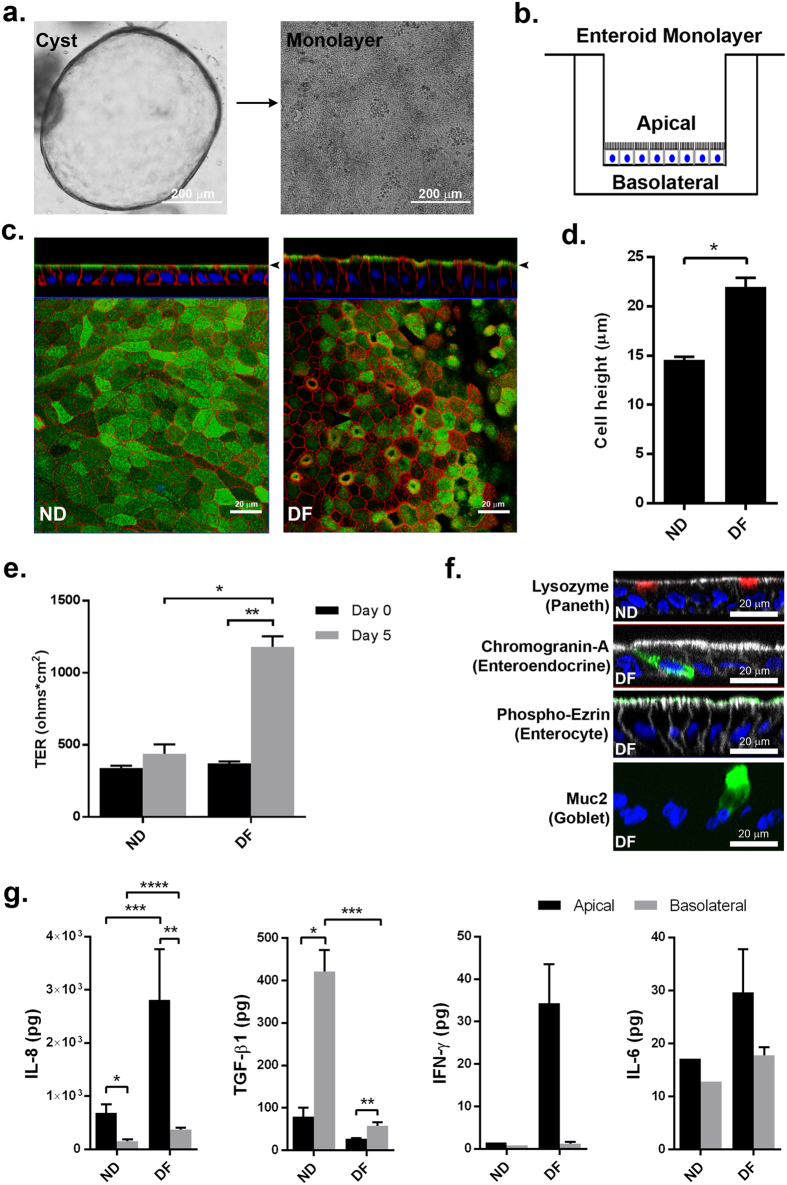
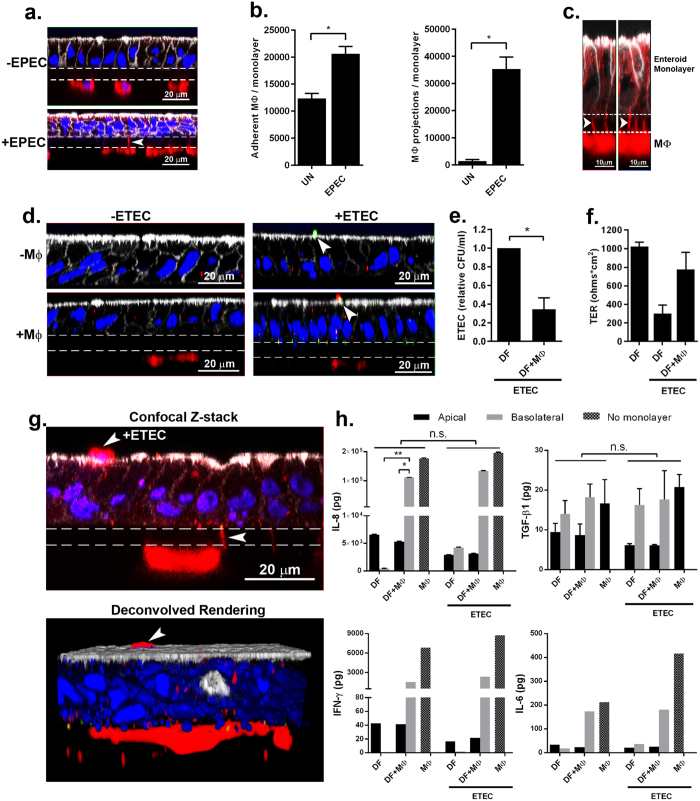
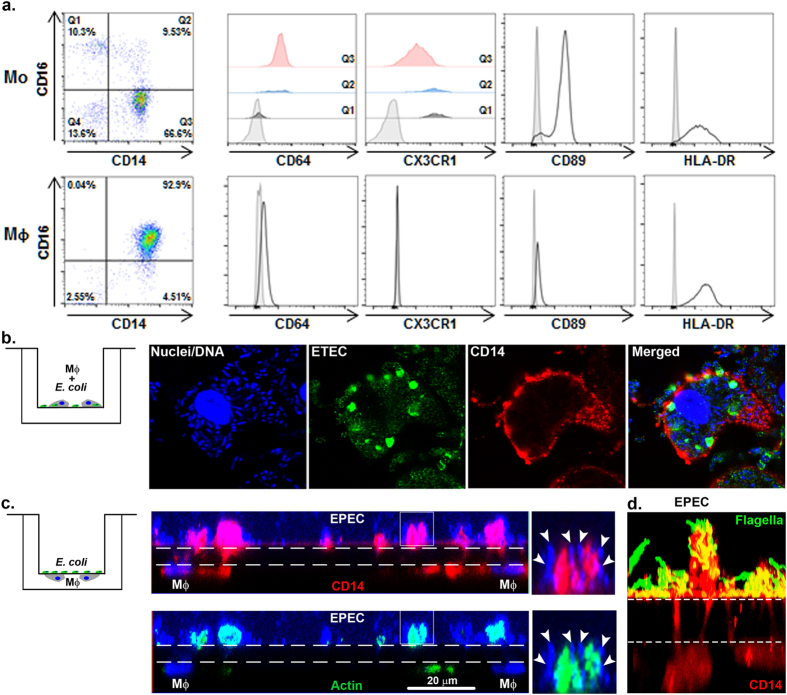
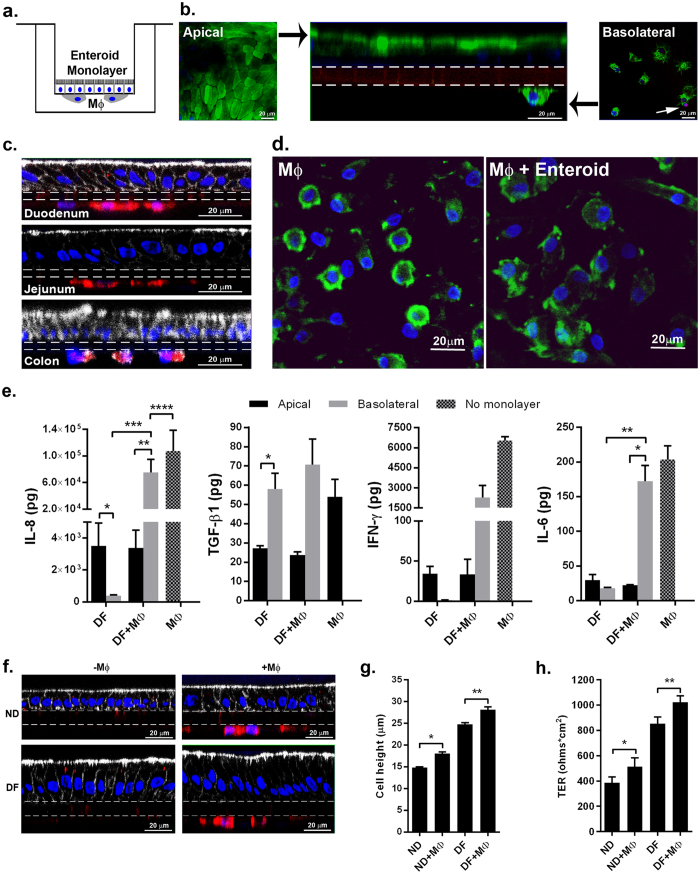
Integration of the intestinal epithelium and the mucosal immune system is critical for gut homeostasis. The intestinal epithelium is a functional barrier that secludes luminal content, senses changes in the gut microenvironment, and releases immune regulators that signal underlying immune cells. However, interactions between epithelial and innate immune cells to maintain barrier integrity and prevent infection are complex and poorly understood. We developed and characterized a primary human macrophage-enteroid co-culture model for in-depth studies of epithelial and macrophage interactions. Human intestinal stem cell-derived enteroid monolayers co-cultured with human monocyte-derived macrophages were used to evaluate barrier function, cytokine secretion, and protein expression under basal conditions and following bacterial infection. Macrophages enhanced barrier function and maturity of enteroid monolayers as indicated by increased transepithelial electrical resistance and cell height. Communication between the epithelium and macrophages was demonstrated through morphological changes and cytokine production. Intraepithelial macrophage projections, efficient phagocytosis, and stabilized enteroid barrier function revealed a coordinated response to enterotoxigenic and enteropathogenic E. coli infections. In summary, we have established the first primary human macrophage-enteroid co-culture system, defined conditions that allow for a practical and reproducible culture model, and demonstrated its suitability to study gut physiology and host responses to enteric pathogens.
肠上皮细胞和黏膜免疫系统的整合对于肠道稳态至关重要。肠上皮细胞是一种功能性屏障,可隔离腔内容物,感知肠道微环境的变化,并释放免疫调节剂,向潜在的免疫细胞发出信号。然而,上皮细胞和固有免疫细胞之间的相互作用以维持屏障完整性和防止感染是复杂且尚未完全理解的。我们开发并表征了一种原代人巨噬细胞-类肠器官共培养模型,用于深入研究上皮细胞和巨噬细胞的相互作用。用人肠干细胞衍生的类肠器官单层与单核细胞衍生的人巨噬细胞共培养,以评估基础条件下和细菌感染后的屏障功能、细胞因子分泌和蛋白表达。巨噬细胞增强了类肠器官单层的屏障功能和成熟度,表现为跨上皮电阻和细胞高度增加。上皮细胞和巨噬细胞之间的通讯通过形态变化和细胞因子产生来证明。上皮内巨噬细胞突起、有效的吞噬作用和稳定的类肠器官屏障功能揭示了对肠毒素和肠致病性大肠杆菌感染的协调反应。总之,我们建立了第一个原代人巨噬细胞-类肠器官共培养系统,定义了允许实用和可重复培养模型的条件,并证明了其适合研究肠道生理学和宿主对肠道病原体的反应。