Okonofua Friday, Randawa Abdullahi, Ogu Rosemary, Agholor Kingsley, Okike Ola, Abdus-Salam Rukayat Adeola, Gana Mohammed, Abe Eghe, Durodola Adetoye, Galadanci Hadiza
Women's Health and Action Research Centre, Benin City, Edo State, Nigeria.
University of Medical Sciences, Ondo City, Ondo State, Nigeria.
PLoS One. 2017 Mar 27;12(3):e0173414. doi: 10.1371/journal.pone.0173414. eCollection 2017.
Late arrival in hospital by women experiencing pregnancy complications is an important background factor leading to maternal mortality in Nigeria. The use of effective and timely emergency obstetric care determines whether women survive or die, or become near-miss cases. Healthcare managers have the responsibility to deploy resources for implementing emergency obstetric care.
To determine the nature of institutional policies and frameworks for managing obstetric complications and reducing maternal deaths in Nigeria.
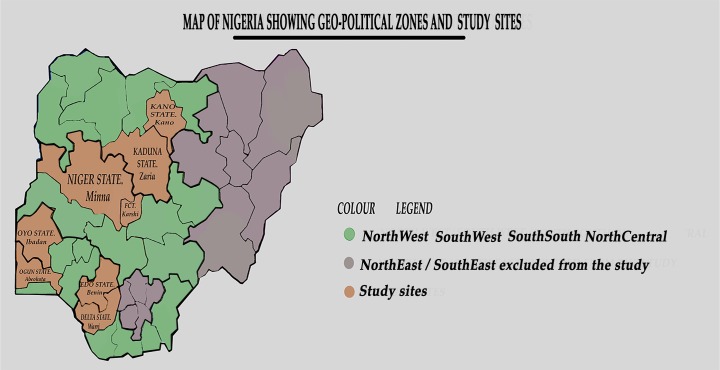
Thirty-six hospital managers, heads of obstetrics department and senior midwives were interviewed about hospital infrastructure, resources, policies and processes relating to emergency obstetric care, whilst allowing informants to discuss their thoughts and feelings. The interviews were audiotaped, transcribed and analyzed using Atlas ti 6.2software.
Hospital managers are aware of the seriousness of maternal mortality and the steps to improve maternal healthcare. Many reported the lack of policies and specific action-plans for maternal mortality prevention, and many did not purposely disburse budgets or resources to address the problem. Although some reported that maternal/perinatal audit take place in their hospitals, there was no substantive evidence and no records of maternal/perinatal audits were made available. Respondents decried the lack of appropriate data collection system in the hospitals for accurate monitoring of maternal mortality and identification of appropriate remediating actions.
Healthcare managers are handicapped to properly manage the healthcare system for maternal mortality prevention. Relevant training of healthcare managers would be crucial to enable the development of strategic implementation plans for the prevention of maternal mortality.
妊娠并发症女性入院过晚是尼日利亚孕产妇死亡的一个重要背景因素。有效且及时地使用紧急产科护理决定了女性是生还是死,抑或是成为濒临死亡病例。医疗保健管理人员有责任调配资源以实施紧急产科护理。
确定尼日利亚管理产科并发症及降低孕产妇死亡的机构政策和框架的性质。
对36名医院管理人员、产科部门负责人和资深助产士进行了访谈,内容涉及与紧急产科护理相关的医院基础设施、资源、政策和流程,同时让受访者讨论他们的想法和感受。访谈进行了录音、转录,并使用Atlas ti 6.2软件进行分析。
医院管理人员意识到孕产妇死亡问题的严重性以及改善孕产妇医疗保健的步骤。许多人报告称缺乏预防孕产妇死亡的政策和具体行动计划,而且许多人没有特意拨出预算或资源来解决这个问题。尽管一些人报告称他们所在的医院进行了孕产妇/围产期审计,但没有实质性证据,也没有提供孕产妇/围产期审计的记录。受访者谴责医院缺乏适当的数据收集系统,无法准确监测孕产妇死亡情况并确定适当的补救措施。
医疗保健管理人员在妥善管理预防孕产妇死亡的医疗保健系统方面存在障碍。对医疗保健管理人员进行相关培训对于制定预防孕产妇死亡的战略实施计划至关重要。