Benkaddour Abdelhaq, Jradi Khalil, Robert Sylvain, Daneault Claude
Lignocellulosic Materials Research Center, University of Quebec at Trois-Rivières, 3351 des Forges avenue, Trois-Rivières, QC G9A-5H7, Canada.
Canada Research Chair on Value-Added papers, Trois-Rivières, QC G9A-5H7, Canada.
Nanomaterials (Basel). 2013 Mar 1;3(1):141-157. doi: 10.3390/nano3010141.
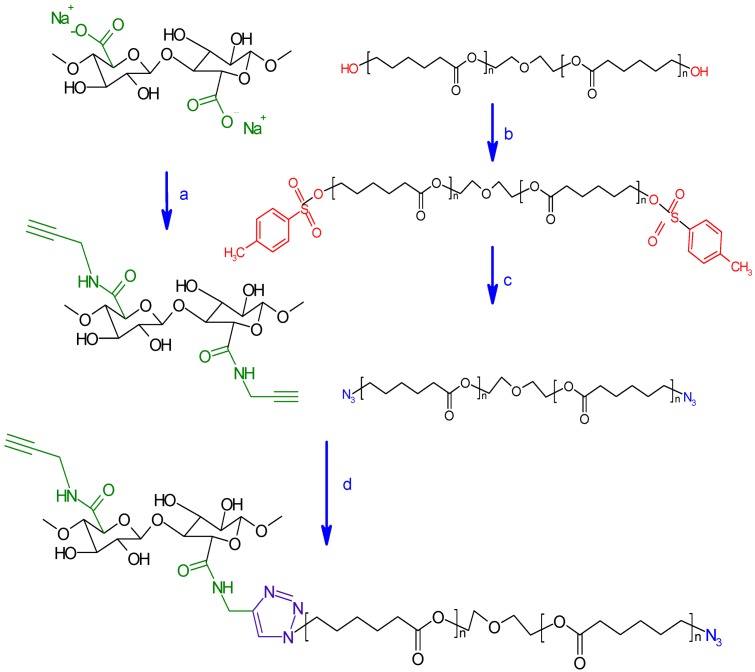
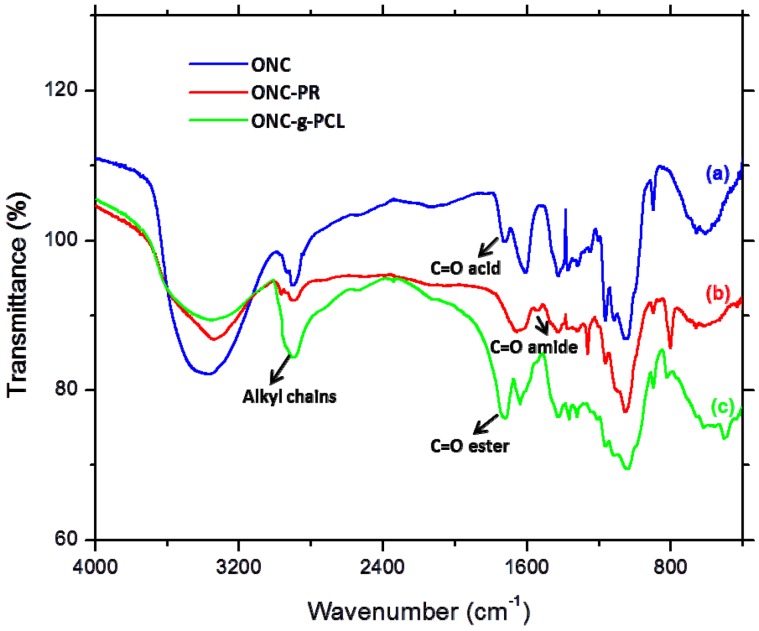
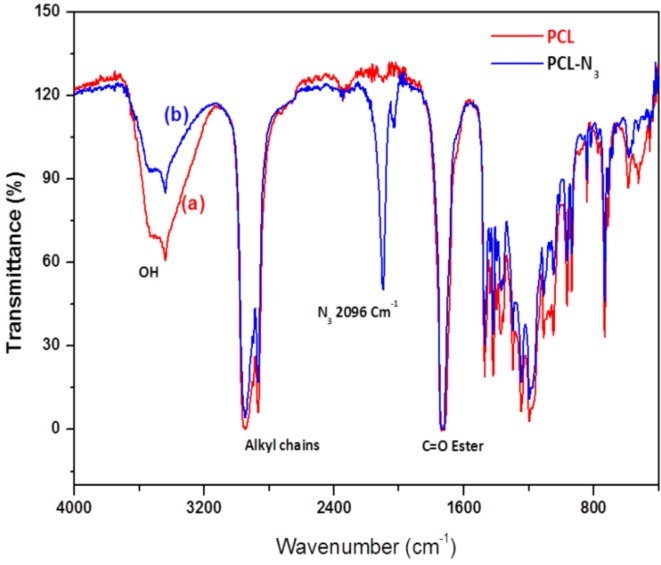
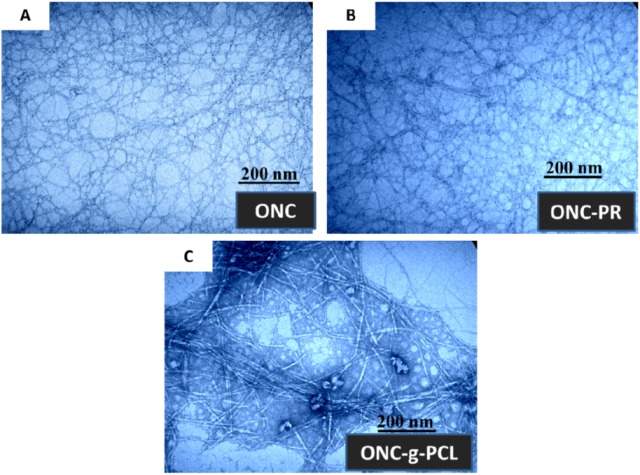
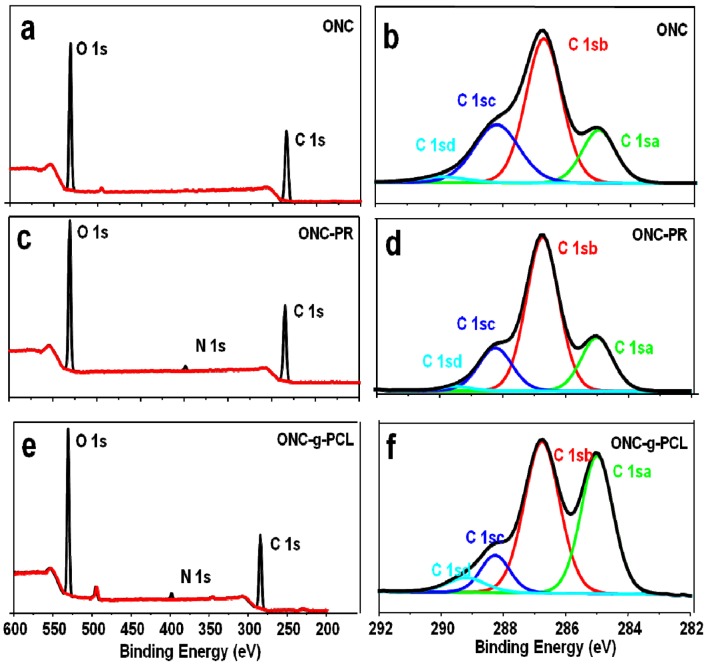
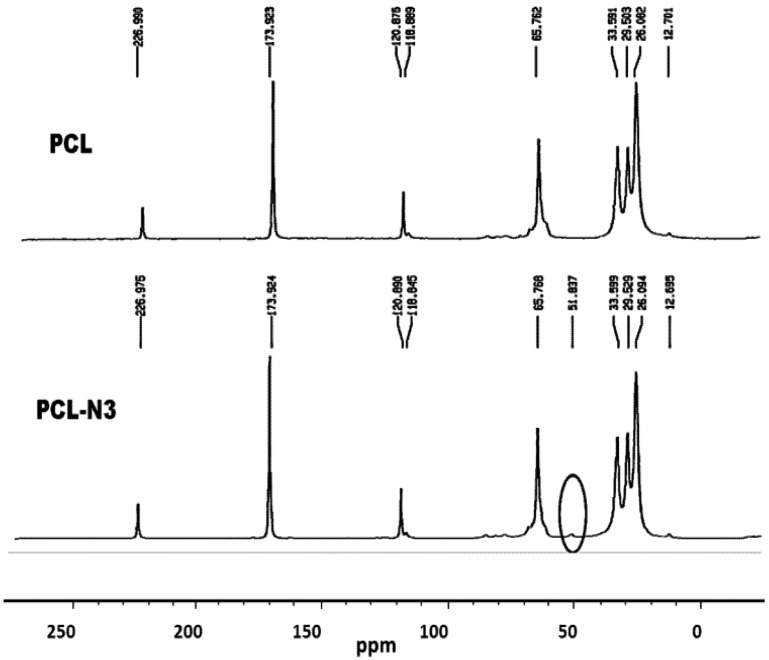
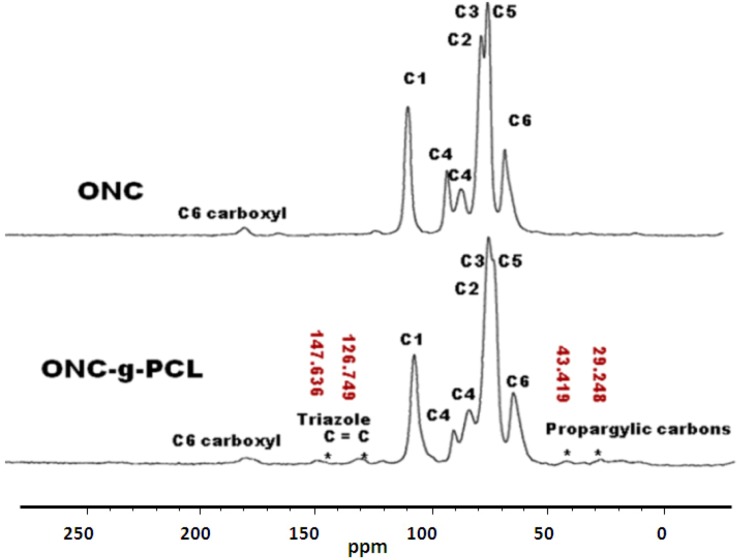
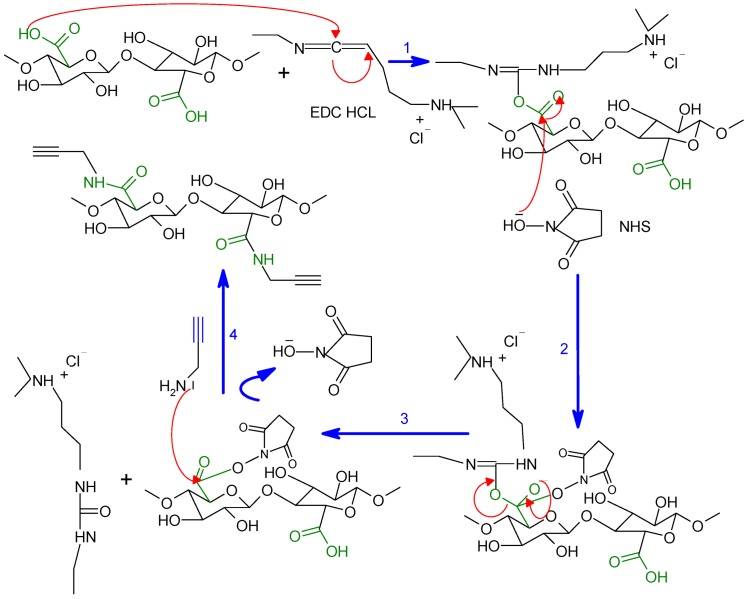
The main objective of this work is the grafting of polycaprolactone diol (PCL) on the surface of oxidized nanocelluloses (ONC) in order to enhance the compatibility between the hydrophilic cellulose nanofibres and the hydrophobic polymer matrix. This grafting was successfully realized with a new strategy known as click chemistry. In this context, the oxidized nanocelluloses bearing alkyl groups (ONC-PR) were prepared by reacting amino groups of propargylamine (PR) with carboxyl groups of ONC. In parallel, PCL was converted into azido-polycaprolactone (PCL-N₃) in two steps: (i) tosylation of polycaprolactone (PCL-OTs) and (ii) conversion of PCL-OTs into PCL-N₃ by nucleophilic displacement using sodium azide. Finally, ONC-PR was reacted with PCL-N₃ in heterogeneous conditions through click chemistry in order to prepare polycaprolactone grafted oxidized nanocellulose (ONC-g-PCL), which could be suitable for improving the interfacial adhesion in the composite materials. The grafted samples were characterized by transmission electron microscopy and by Fourier transform infrared spectroscopy (FTIR), X-ray photoelectron spectroscopy (XPS) and Carbon-13 nuclear magnetic resonance spectroscopy (C-NMR) spectroscopic techniques.
这项工作的主要目的是将聚己内酯二醇(PCL)接枝到氧化纳米纤维素(ONC)表面,以增强亲水性纤维素纳米纤维与疏水性聚合物基体之间的相容性。这种接枝通过一种称为点击化学的新策略成功实现。在此背景下,通过使炔丙胺(PR)的氨基与ONC的羧基反应制备了带有烷基的氧化纳米纤维素(ONC-PR)。同时,PCL分两步转化为叠氮基聚己内酯(PCL-N₃):(i)聚己内酯(PCL-OTs)的甲苯磺酰化,以及(ii)使用叠氮化钠通过亲核取代将PCL-OTs转化为PCL-N₃。最后,通过点击化学使ONC-PR在非均相条件下与PCL-N₃反应,以制备聚己内酯接枝的氧化纳米纤维素(ONC-g-PCL),其可适用于改善复合材料中的界面粘附。通过透射电子显微镜以及傅里叶变换红外光谱(FTIR)、X射线光电子能谱(XPS)和碳-13核磁共振光谱(C-NMR)光谱技术对接枝样品进行了表征。