• 文献检索
  • 文档翻译
  • 深度研究
  • 学术资讯
  • Suppr Zotero 插件Zotero 插件
  • 邀请有礼
  • 套餐&价格
  • 历史记录
应用&插件
Suppr Zotero 插件Zotero 插件浏览器插件Mac 客户端Windows 客户端微信小程序
定价
高级版会员购买积分包购买API积分包
服务
文献检索文档翻译深度研究API 文档MCP 服务
关于我们
关于 Suppr公司介绍联系我们用户协议隐私条款
关注我们

Suppr 超能文献

核心技术专利:CN118964589B侵权必究
粤ICP备2023148730 号-1Suppr @ 2026

文献检索

告别复杂PubMed语法,用中文像聊天一样搜索,搜遍4000万医学文献。AI智能推荐,让科研检索更轻松。

立即免费搜索

文件翻译

保留排版,准确专业,支持PDF/Word/PPT等文件格式,支持 12+语言互译。

免费翻译文档

深度研究

AI帮你快速写综述,25分钟生成高质量综述,智能提取关键信息,辅助科研写作。

立即免费体验

失语症语言治疗后句子生成过程的恢复:来自眼动追踪的证据。

Recovery of Sentence Production Processes Following Language Treatment in Aphasia: Evidence from Eyetracking.

作者信息

Mack Jennifer E, Nerantzini Michaela, Thompson Cynthia K

机构信息

Department of Communication Sciences and Disorders, Northwestern University Evanston, IL, USA.

Department of Communication Sciences and Disorders, Northwestern UniversityEvanston, IL, USA; Cognitive Neurology and Alzheimer's Disease Center, Northwestern UniversityEvanston, IL, USA; Department of Neurology, Northwestern UniversityEvanston, IL, USA.

出版信息

Front Hum Neurosci. 2017 Mar 13;11:101. doi: 10.3389/fnhum.2017.00101. eCollection 2017.

DOI:10.3389/fnhum.2017.00101
PMID:28348524
原文链接:https://pmc.ncbi.nlm.nih.gov/articles/PMC5346573/
Abstract

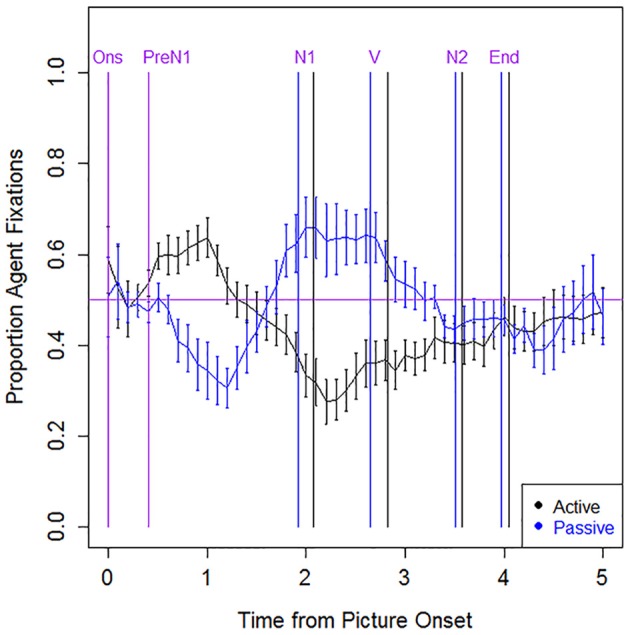
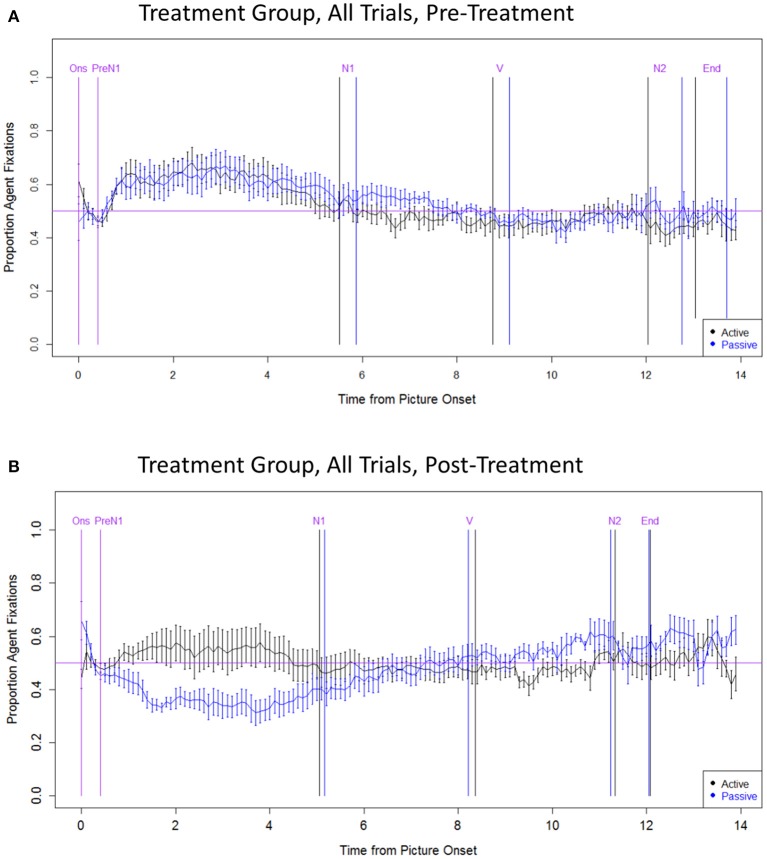
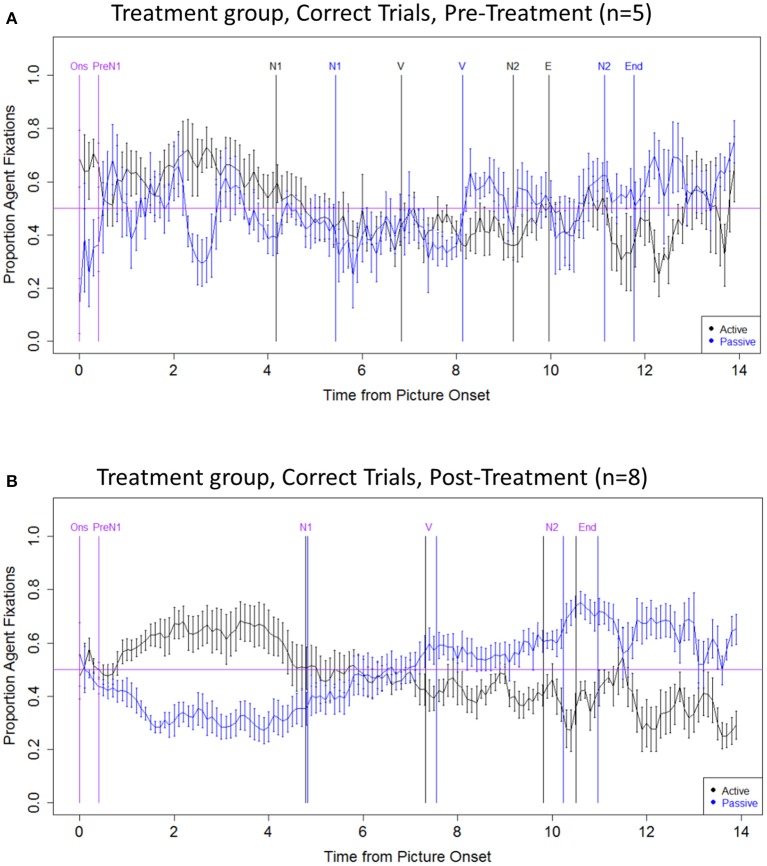
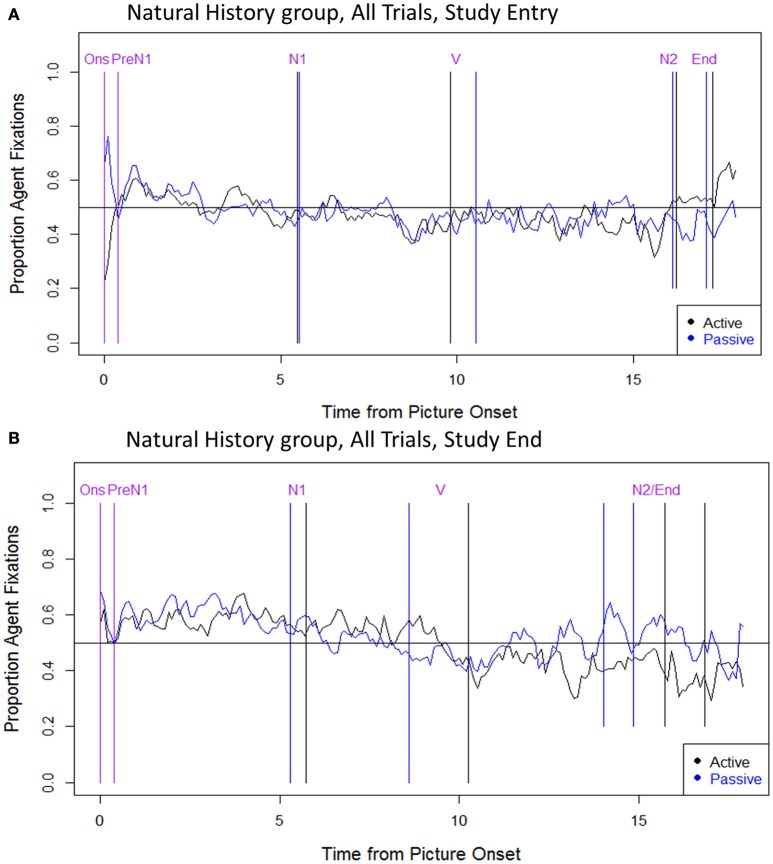
Sentence production impairments in aphasia often improve with treatment. However, little is known about how cognitive processes supporting sentence production, such as sentence planning, are impacted by treatment. The present study used eyetracking to examine changes in sentence production resulting from a 12-week language treatment program focused on passive sentences (Treatment of Underlying Forms (TUF); Thompson and Shapiro, 2005). In two pre-treatment and two post-treatment sessions, nine participants with mild-to-moderate agrammatic aphasia performed a structural priming task, which involved repeating primed sentences (actives or passives) and then, using the same verb, producing sentences describing pictured events. Two individuals with aphasia performed the eyetracking task on the same schedule without intervening language treatment. Ten unimpaired older adults also performed the task to identify normal performance patterns. Sentence production accuracy and speech onset latencies were examined, and eye movements to the pictured Agent and Theme characters were analyzed in the first 400 ms after picture onset, reflecting early sentence planning, and in the regions preceding the production of the sentence subject and post-verbal noun, reflecting lexical encoding. Unimpaired controls performed with high accuracy. Their early eye movements (first 400 ms) indicated equal fixations to the Agent and Theme, consistent with structural sentence planning (i.e., initial construction of an abstract structural frame). Subsequent eye movements occurring prior to speech onset were consistent with encoding of the correct sentence subject (i.e., the Agent in actives, Theme in passives), with encoding of the post-verbal noun beginning at speech onset. In participants with aphasia, accuracy improved significantly with treatment, and post-treatment (but not pre-treatment) eye movements were qualitatively similar to those of unimpaired controls, indicating correct encoding of the Agent and Theme nouns for both active and passive sentences. Analysis of early eye movements also showed a treatment-induced increase in structural planning. No changes in sentence production accuracy or eye movements were found in the aphasic participants who did not receive treatment. These findings indicate that treatment improves sentence production and results in the emergence of normal-like cognitive processes associated with successful sentence production, including structural planning.

摘要

失语症患者的句子生成障碍通常会随着治疗而改善。然而,对于支持句子生成的认知过程,如句子规划,如何受到治疗的影响,我们知之甚少。本研究使用眼动追踪技术来检查一个为期12周、专注于被动句的语言治疗项目(底层形式治疗(TUF);汤普森和夏皮罗,2005年)所导致的句子生成变化。在两次治疗前和两次治疗后阶段,九名轻度至中度语法缺失性失语症患者执行了一项结构启动任务,该任务包括重复启动句(主动句或被动句),然后使用相同的动词生成描述图片事件的句子。两名失语症患者按照相同的时间表执行眼动追踪任务,不进行干预性语言治疗。十名未受损的老年人也执行了该任务,以确定正常的表现模式。检查了句子生成的准确性和言语起始潜伏期,并分析了图片呈现后前400毫秒内对图片中施事和受事角色的眼动,这反映了早期句子规划,以及在句子主语和动词后名词生成之前区域的眼动,这反映了词汇编码。未受损的对照组表现出高准确性。他们早期的眼动(前400毫秒)表明对施事和受事的注视相等,这与句子结构规划一致(即抽象结构框架的初始构建)。言语起始前发生的后续眼动与正确句子主语的编码一致(即主动句中的施事,被动句中的受事),动词后名词的编码在言语起始时开始。在失语症患者中,治疗后准确性显著提高,治疗后的眼动(但不是治疗前的)在质量上与未受损对照组相似,表明主动句和被动句中施事和受事名词的编码正确。对早期眼动的分析还显示,治疗导致结构规划增加。未接受治疗的失语症参与者在句子生成准确性或眼动方面没有发现变化。这些发现表明,治疗改善了句子生成,并导致出现与成功句子生成相关的类似正常的认知过程,包括结构规划。
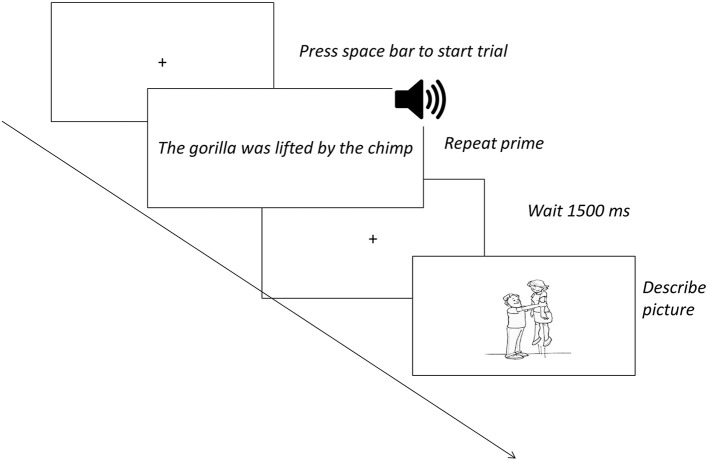
https://cdn.ncbi.nlm.nih.gov/pmc/blobs/f7c7/5346573/d1d8ddc35ae7/fnhum-11-00101-g0006.jpg
https://cdn.ncbi.nlm.nih.gov/pmc/blobs/f7c7/5346573/0ce0fc83f8b0/fnhum-11-00101-g0001.jpg
https://cdn.ncbi.nlm.nih.gov/pmc/blobs/f7c7/5346573/7d7f1829361c/fnhum-11-00101-g0002.jpg
https://cdn.ncbi.nlm.nih.gov/pmc/blobs/f7c7/5346573/47d16703a8c9/fnhum-11-00101-g0003.jpg
https://cdn.ncbi.nlm.nih.gov/pmc/blobs/f7c7/5346573/fa19ac1203ef/fnhum-11-00101-g0004.jpg
https://cdn.ncbi.nlm.nih.gov/pmc/blobs/f7c7/5346573/040177782276/fnhum-11-00101-g0005.jpg
https://cdn.ncbi.nlm.nih.gov/pmc/blobs/f7c7/5346573/d1d8ddc35ae7/fnhum-11-00101-g0006.jpg
https://cdn.ncbi.nlm.nih.gov/pmc/blobs/f7c7/5346573/0ce0fc83f8b0/fnhum-11-00101-g0001.jpg
https://cdn.ncbi.nlm.nih.gov/pmc/blobs/f7c7/5346573/7d7f1829361c/fnhum-11-00101-g0002.jpg
https://cdn.ncbi.nlm.nih.gov/pmc/blobs/f7c7/5346573/47d16703a8c9/fnhum-11-00101-g0003.jpg
https://cdn.ncbi.nlm.nih.gov/pmc/blobs/f7c7/5346573/fa19ac1203ef/fnhum-11-00101-g0004.jpg
https://cdn.ncbi.nlm.nih.gov/pmc/blobs/f7c7/5346573/040177782276/fnhum-11-00101-g0005.jpg
https://cdn.ncbi.nlm.nih.gov/pmc/blobs/f7c7/5346573/d1d8ddc35ae7/fnhum-11-00101-g0006.jpg

相似文献

1
Recovery of Sentence Production Processes Following Language Treatment in Aphasia: Evidence from Eyetracking.失语症语言治疗后句子生成过程的恢复:来自眼动追踪的证据。
Front Hum Neurosci. 2017 Mar 13;11:101. doi: 10.3389/fnhum.2017.00101. eCollection 2017.
2
Tracking sentence comprehension: Test-retest reliability in people with aphasia and unimpaired adults.追踪句子理解:失语症患者和无语言障碍成年人的重测信度
J Neurolinguistics. 2016 Nov;40:98-111. doi: 10.1016/j.jneuroling.2016.06.001. Epub 2016 Jun 24.
3
What Goes Wrong during Passive Sentence Production in Agrammatic Aphasia: An Eyetracking Study.语法缺失性失语症患者被动句生成过程中出现了什么问题:一项眼动追踪研究。
Aphasiology. 2010 Jul 12;24(12):1576-1592. doi: 10.1080/02687031003714442.
4
Effect of lexical accessibility on syntactic production in aphasia: An eyetracking study.词汇通达性对失语症句法生成的影响:一项眼动追踪研究。
Aphasiology. 2020;34(4):391-410. doi: 10.1080/02687038.2019.1665963. Epub 2019 Sep 17.
5
Recovery of Online Sentence Processing in Aphasia: Eye Movement Changes Resulting From Treatment of Underlying Forms.失语症患者在线句子处理能力的恢复:基于底层形式治疗所导致的眼动变化
J Speech Lang Hear Res. 2017 May 24;60(5):1299-1315. doi: 10.1044/2016_JSLHR-L-16-0108.
6
Tracking Passive Sentence Comprehension in Agrammatic Aphasia.追踪语法缺失性失语症中的被动句理解
J Neurolinguistics. 2012 Jan 1;25(1):31-43. doi: 10.1016/j.jneuroling.2011.08.001.
7
Recovery of offline and online sentence processing in aphasia: Language and domain-general network neuroplasticity.失语症中离线和在线句子处理的恢复:语言和全脑网络神经可塑性。
Cortex. 2019 Nov;120:394-418. doi: 10.1016/j.cortex.2019.06.015. Epub 2019 Jul 13.
8
Real-time comprehension of wh- movement in aphasia: evidence from eyetracking while listening.失语症中对疑问句移位的实时理解:来自听时眼动追踪的证据。
Brain Lang. 2007 Jan;100(1):1-22. doi: 10.1016/j.bandl.2006.06.004. Epub 2006 Jul 17.
9
Real-time production of unergative and unaccusative sentences in normal and agrammatic speakers: An eyetracking study.正常和语法缺失者实时生成作格不及物句和非作格不及物句:一项眼动追踪研究。
Aphasiology. 2011;25(6-7):813-825. doi: 10.1080/02687038.2010.542563.
10
Grammatical Planning Units During Real-Time Sentence Production in Speakers With Agrammatic Aphasia and Healthy Speakers.语法性失语症患者和健康受试者实时句子生成过程中的语法规划单元
J Speech Lang Hear Res. 2015 Aug;58(4):1182-94. doi: 10.1044/2015_JSLHR-L-14-0250.

引用本文的文献

1
Structural Priming in Aphasia: A State-of-the-Art Review and Future Directions.失语症中的结构启动:现状综述与未来方向
Aphasiology. 2024 Dec 25. doi: 10.1080/02687038.2024.2445660.
2
Implicit structural priming as a treatment component for aphasia: Specifying essential learning conditions.内隐结构启动作为失语症的一种治疗成分:明确基本学习条件。
Cogn Neuropsychol. 2024 Jul-Sep;41(5-6):190-214. doi: 10.1080/02643294.2025.2479485. Epub 2025 Apr 3.
3
Online Eye Tracking for Aphasia: A Feasibility Study Comparing Web and Lab Tracking and Implications for Clinical Use.

本文引用的文献

1
Grammatical Encoding and Learning in Agrammatic Aphasia: Evidence from Structural Priming.语法缺失性失语症中的语法编码与学习:来自结构启动效应的证据
J Mem Lang. 2016 Dec;91:202-218. doi: 10.1016/j.jml.2016.02.004. Epub 2016 Mar 21.
2
Recovery of Online Sentence Processing in Aphasia: Eye Movement Changes Resulting From Treatment of Underlying Forms.失语症患者在线句子处理能力的恢复:基于底层形式治疗所导致的眼动变化
J Speech Lang Hear Res. 2017 May 24;60(5):1299-1315. doi: 10.1044/2016_JSLHR-L-16-0108.
3
Tracking sentence comprehension: Test-retest reliability in people with aphasia and unimpaired adults.
在线失语症眼动追踪:比较网络和实验室追踪的可行性研究及其对临床应用的影响。
Brain Behav. 2024 Nov;14(11):e70112. doi: 10.1002/brb3.70112.
4
Syntactic flexibility and lexical encoding in aging sentence production: an eye tracking study.衰老句子生成中的句法灵活性和词汇编码:一项眼动追踪研究。
Front Psychol. 2024 Aug 26;15:1304517. doi: 10.3389/fpsyg.2024.1304517. eCollection 2024.
5
What is Functional Communication? A Theoretical Framework for Real-World Communication Applied to Aphasia Rehabilitation.功能性沟通是什么?应用于失语症康复的现实世界沟通的理论框架。
Neuropsychol Rev. 2022 Dec;32(4):937-973. doi: 10.1007/s11065-021-09531-2.
6
Plasticity of sentence processing networks: evidence from a patient with agrammatic variant of primary progressive aphasia (PPA).句子处理网络的可塑性:来自患有语法缺失型原发性进行性失语症(PPA)患者的证据。
Neurocase. 2021 Feb;27(1):39-56. doi: 10.1080/13554794.2020.1862241. Epub 2020 Dec 30.
7
Quantifying grammatical impairments in primary progressive aphasia: Structured language tests and narrative language production.量化原发性进行性失语症中的语法障碍:结构性语言测试和叙事语言产生。
Neuropsychologia. 2021 Jan 22;151:107713. doi: 10.1016/j.neuropsychologia.2020.107713. Epub 2020 Dec 5.
8
Effect of lexical accessibility on syntactic production in aphasia: An eyetracking study.词汇通达性对失语症句法生成的影响:一项眼动追踪研究。
Aphasiology. 2020;34(4):391-410. doi: 10.1080/02687038.2019.1665963. Epub 2019 Sep 17.
9
Neurocognitive Recovery of Sentence Processing in Aphasia.失语症句子加工的神经认知恢复。
J Speech Lang Hear Res. 2019 Nov 22;62(11):3947-3972. doi: 10.1044/2019_JSLHR-L-RSNP-19-0219.
10
Recovery of offline and online sentence processing in aphasia: Language and domain-general network neuroplasticity.失语症中离线和在线句子处理的恢复:语言和全脑网络神经可塑性。
Cortex. 2019 Nov;120:394-418. doi: 10.1016/j.cortex.2019.06.015. Epub 2019 Jul 13.
追踪句子理解:失语症患者和无语言障碍成年人的重测信度
J Neurolinguistics. 2016 Nov;40:98-111. doi: 10.1016/j.jneuroling.2016.06.001. Epub 2016 Jun 24.
4
Verb and sentence production and comprehension in aphasia: Northwestern Assessment of Verbs and Sentences (NAVS).失语症中的动词及句子产出与理解:西北动词与句子评估(NAVS)
Aphasiology. 2012;26(10):1250-1277. doi: 10.1080/02687038.2012.693584.
5
Grammatical Planning Units During Real-Time Sentence Production in Speakers With Agrammatic Aphasia and Healthy Speakers.语法性失语症患者和健康受试者实时句子生成过程中的语法规划单元
J Speech Lang Hear Res. 2015 Aug;58(4):1182-94. doi: 10.1044/2015_JSLHR-L-14-0250.
6
The role of the verb in grammatical function assignment in English and Korean.动词在英语和韩语语法功能分配中的作用。
J Exp Psychol Learn Mem Cogn. 2014 Sep;40(5):1363-76. doi: 10.1037/a0036797. Epub 2014 Jun 2.
7
Priming sentence planning.启动句子规划。
Cogn Psychol. 2014 Sep;73:1-40. doi: 10.1016/j.cogpsych.2014.04.001. Epub 2014 May 14.
8
Training verb argument structure production in agrammatic aphasia: behavioral and neural recovery patterns.训练语法缺失性失语症患者动词论元结构产生:行为和神经恢复模式。
Cortex. 2013 Oct;49(9):2358-76. doi: 10.1016/j.cortex.2013.02.003. Epub 2013 Feb 19.
9
Syntactic and morphosyntactic processing in stroke-induced and primary progressive aphasia.中风后和原发性进行性失语症的句法和形态句法处理。
Behav Neurol. 2013;26(1-2):35-54. doi: 10.3233/BEN-2012-110220.
10
Real-time production of unergative and unaccusative sentences in normal and agrammatic speakers: An eyetracking study.正常和语法缺失者实时生成作格不及物句和非作格不及物句:一项眼动追踪研究。
Aphasiology. 2011;25(6-7):813-825. doi: 10.1080/02687038.2010.542563.