Ganapathy-Kanniappan Shanmugasundaram
Division of Interventional Radiology, Russell H. Morgan, Department of Radiology and Radiological Sciences, Johns Hopkins University School of Medicine , Baltimore, MD , USA.
Front Oncol. 2017 Mar 13;7:36. doi: 10.3389/fonc.2017.00036. eCollection 2017.
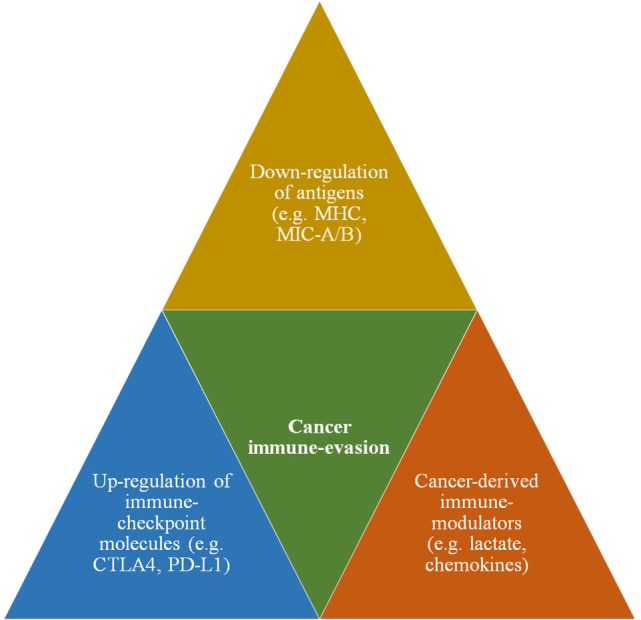
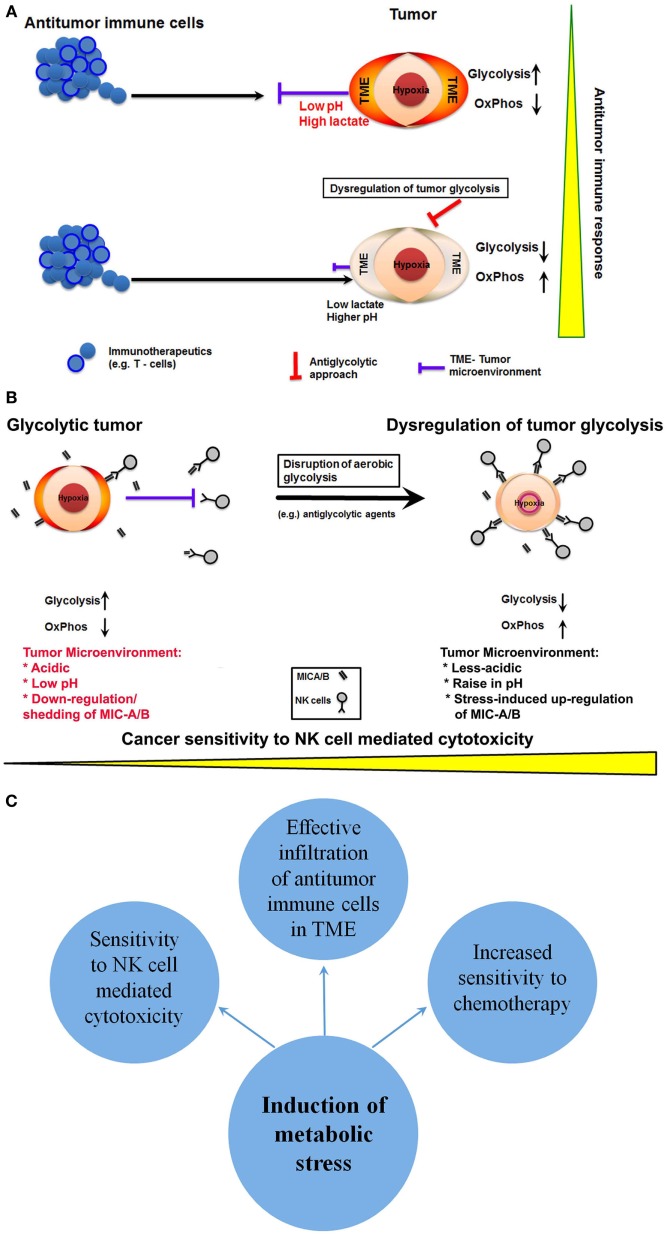
Immune evasion and deregulation of energy metabolism play a pivotal role in cancer progression. Besides the coincidence in their historical documentation and concurrent recognition as hallmarks of cancer, both immune evasion and metabolic deregulation may be functionally linked as well. For example, the metabolic phenotype, particularly tumor glycolysis (aerobic glycolysis), impacts the tumor microenvironment (TME), which in turn acts as a major barrier for successful targeting of cancer by antitumor immune cells and other therapeutics. Similarly, in the light of recent research, it has been known that some of the immune sensitive antigens that are downregulated in cancer may also be restored or induced by cellular/metabolic stress. For instance, cancer cells downregulate the cell surface ligands such as MHC class I chain-related (MIC) protein-(A/B) that are normally upregulated in disease/pathological conditions. Noteworthy, the MHC class I chain-related protein A and B (MIC-A/B) are recognized by natural killer (NK) cells for immune elimination. Interestingly, MIC-A/B is stress inducible as demonstrated by oxidative stress and other cellular-stress factors. Consequently, stimulation of metabolic stress has also been shown to sensitize cancer cells to NK cell-mediated cytotoxicity. Taken together, data from recent reports imply that dysregulation of tumor glycolysis could facilitate induction of immune sensitive surface ligands leading to increased efficacy of antitumor immunotherapeutics. Nonetheless, dysregulated tumor glycolysis may also impact the TME and alter it from acidic, low pH into a therapeutically desirable TME that can enhance the effective infiltration of antitumor immune cells. In this mini-review, targeting tumor glycolysis has been discussed to evaluate its potential implications to enhance and/or facilitate anticancer immunity.
免疫逃逸和能量代谢失调在癌症进展中起着关键作用。除了在历史文献记载中有巧合之处且同时被视为癌症的标志外,免疫逃逸和代谢失调在功能上也可能存在联系。例如,代谢表型,特别是肿瘤糖酵解(有氧糖酵解),会影响肿瘤微环境(TME),而肿瘤微环境反过来又成为抗肿瘤免疫细胞和其他治疗方法成功靶向癌症的主要障碍。同样,根据最近的研究,已知一些在癌症中下调的免疫敏感抗原也可能通过细胞/代谢应激得以恢复或诱导。例如,癌细胞会下调细胞表面配体,如在疾病/病理状况下通常会上调的MHC I类链相关(MIC)蛋白 - (A/B)。值得注意的是,MHC I类链相关蛋白A和B(MIC - A/B)可被自然杀伤(NK)细胞识别以进行免疫清除。有趣的是,如氧化应激和其他细胞应激因素所示,MIC - A/B是应激诱导型的。因此,代谢应激的刺激也已被证明可使癌细胞对NK细胞介导的细胞毒性敏感。综上所述,近期报告的数据表明肿瘤糖酵解失调可能有助于诱导免疫敏感表面配体,从而提高抗肿瘤免疫治疗的疗效。尽管如此,失调的肿瘤糖酵解也可能影响肿瘤微环境,并将其从酸性、低pH值转变为有利于治疗的肿瘤微环境,从而增强抗肿瘤免疫细胞的有效浸润。在这篇小型综述中,我们讨论了靶向肿瘤糖酵解以评估其对增强和/或促进抗癌免疫的潜在影响。