Meng Lu, Tong Jingfeng, Wang Hui, Tao Chengwu, Wang Qinglan, Niu Chen, Zhang Xiaoming, Gao Qian
Key laboratory of Medical Molecular Virology, Institute of Biomedical Sciences and Institute of Medical Microbiology, Shanghai Medical College, Fudan University Shanghai, China.
Key laboratory of Medical Molecular Virology, Institute of Biomedical Sciences and Institute of Medical Microbiology, Shanghai Medical College, Fudan UniversityShanghai, China; The State Key Laboratory of Respiratory Disease for Allergy at Shenzhen University, School of Medicine, Shenzhen UniversityGuangdong, China.
Front Cell Infect Microbiol. 2017 Mar 13;7:68. doi: 10.3389/fcimb.2017.00068. eCollection 2017.
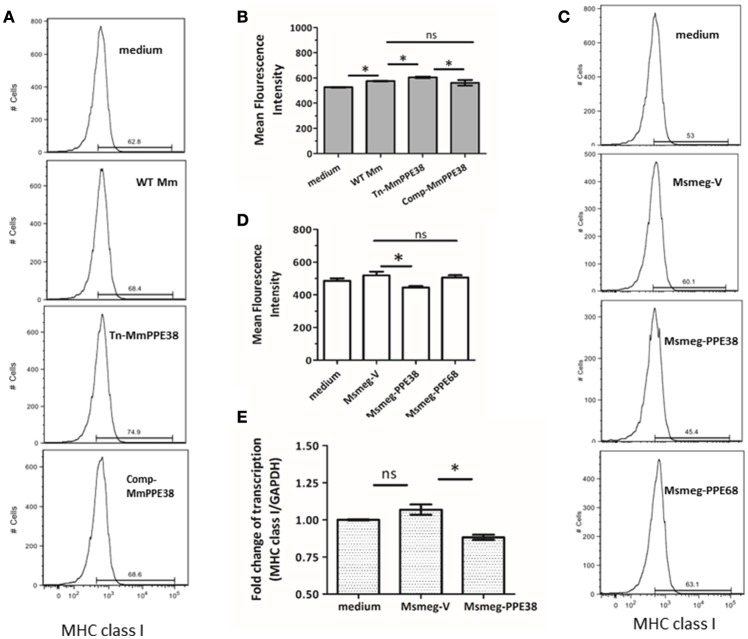
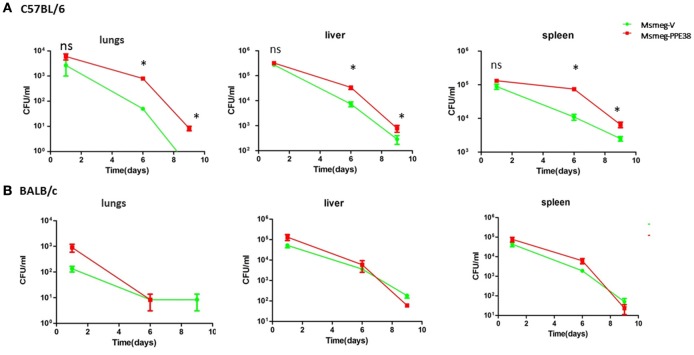
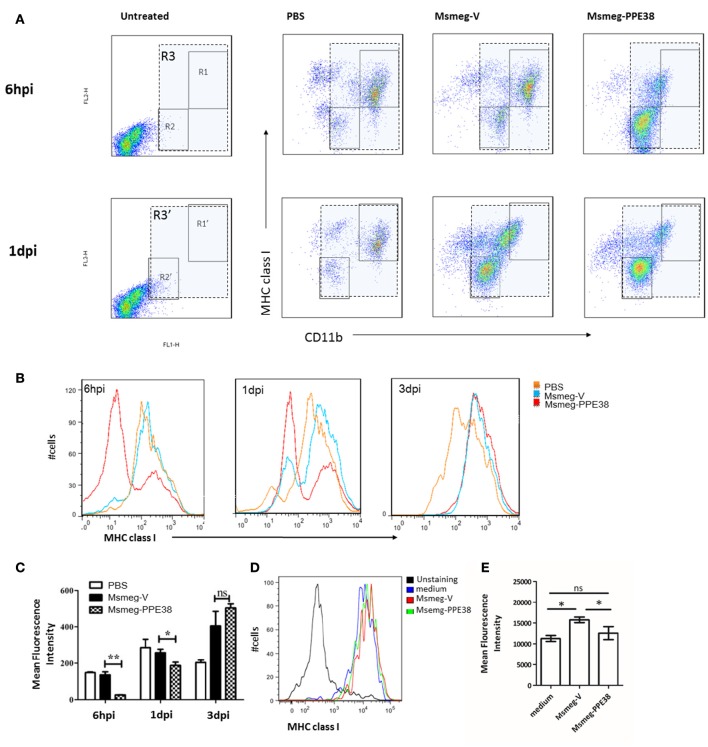
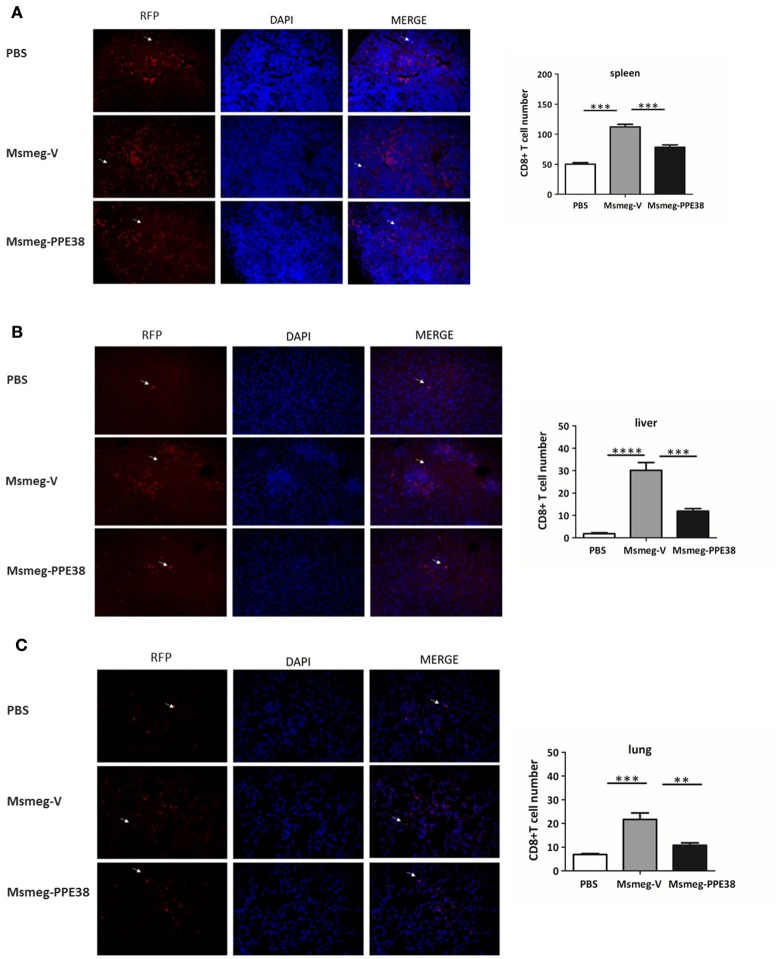
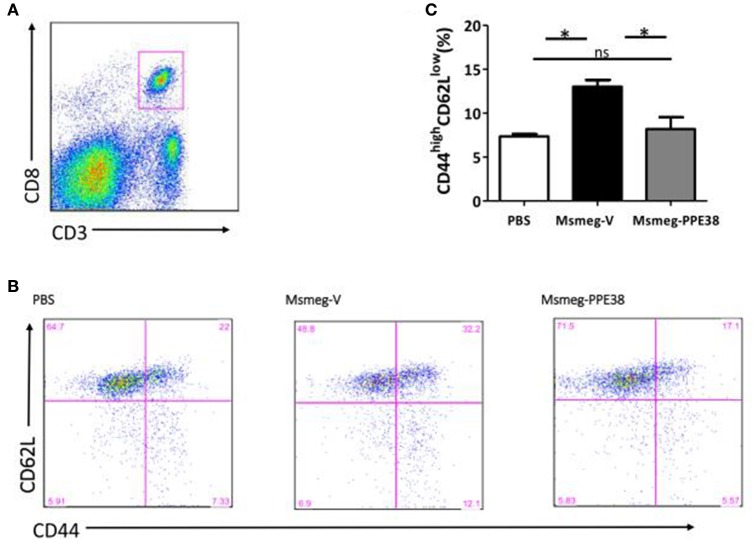
Suppression of CD8 T cell activation is a critical mechanism used by (MTB) to escape protective host immune responses. PPE38 belongs to the unique PPE family of MTB and in our previous study, PPE38 protein was speculated to participate in manipulating macrophage MHC class I pathway. To test this hypothesis, the function of mycobacterial PPE38 protein was assessed here using macrophage and mouse infection models. Decreased amount of MHC class I was observed on the surface of macrophages infected with PPE38-expressing mycobacteria. The transcript of genes encoding MHC class I was also inhibited by PPE38. After infection of C57BL/6 mice with expressing PPE38 (Msmeg-PPE38), decreased number of CD8 T cells was found in spleen, liver, and lungs through immunohistochemical analysis, comparing to the control strain harboring empty vector (Msmeg-V). Consistently, flow cytometry assay showed that fewer effector/memory CD8 T cells (CD44CD62L) were activated in spleen from Msmeg-PPE38 infected mice. Moreover, Msmeg-PPE38 confers a growth advantage over Msmeg-V in C57BL/6 mice, indicating an effect of PPE38 to favor mycobacterial persistence . Overall, this study shows a unique biological function of PPE38 protein to facilitate mycobacteria to escape host immunity, and provides hints for TB vaccine development.
抑制CD8 T细胞活化是结核分枝杆菌(MTB)用于逃避宿主保护性免疫反应的关键机制。PPE38属于MTB独特的PPE家族,在我们之前的研究中,推测PPE38蛋白参与调控巨噬细胞MHC I类途径。为了验证这一假设,本文利用巨噬细胞和小鼠感染模型评估了分枝杆菌PPE38蛋白的功能。在用表达PPE38的分枝杆菌感染的巨噬细胞表面,观察到MHC I类分子数量减少。编码MHC I类分子的基因转录也受到PPE38的抑制。用表达PPE38的耻垢分枝杆菌(Msmeg-PPE38)感染C57BL/6小鼠后,通过免疫组织化学分析发现,与携带空载体的对照菌株(Msmeg-V)相比,脾脏、肝脏和肺中CD8 T细胞数量减少。一致地,流式细胞术分析表明,在感染Msmeg-PPE38的小鼠脾脏中,活化的效应/记忆CD8 T细胞(CD44+CD62L-)较少。此外,在C57BL/6小鼠中,Msmeg-PPE38比Msmeg-V具有生长优势,表明PPE38对分枝杆菌持续存在有影响。总体而言,本研究揭示了PPE38蛋白促进分枝杆菌逃避宿主免疫的独特生物学功能,并为结核病疫苗开发提供了线索。