Bennett Christopher F, Kwon Jane J, Chen Christine, Russell Joshua, Acosta Kathlyn, Burnaevskiy Nikolay, Crane Matthew M, Bitto Alessandro, Vander Wende Helen, Simko Marissa, Pineda Victor, Rossner Ryan, Wasko Brian M, Choi Haeri, Chen Shiwen, Park Shirley, Jafari Gholamali, Sands Bryan, Perez Olsen Carissa, Mendenhall Alexander R, Morgan Philip G, Kaeberlein Matt
Department of Pathology, University of Washington, Seattle, WA, United States of America.
Molecular and Cellular Biology Program, University of Washington, Seattle, WA, United States of America.
PLoS Genet. 2017 Mar 29;13(3):e1006695. doi: 10.1371/journal.pgen.1006695. eCollection 2017 Mar.
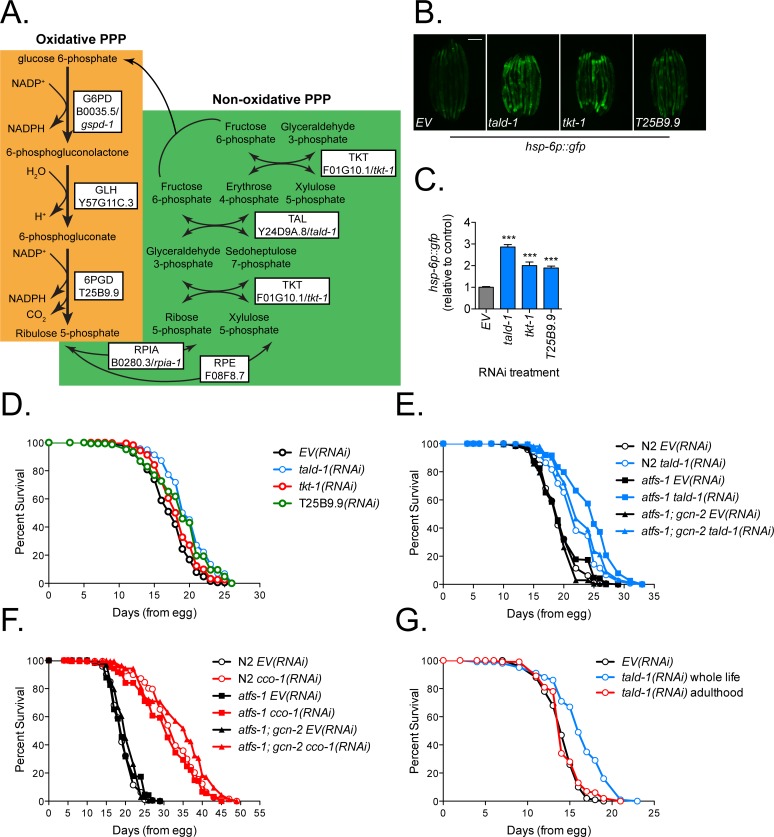
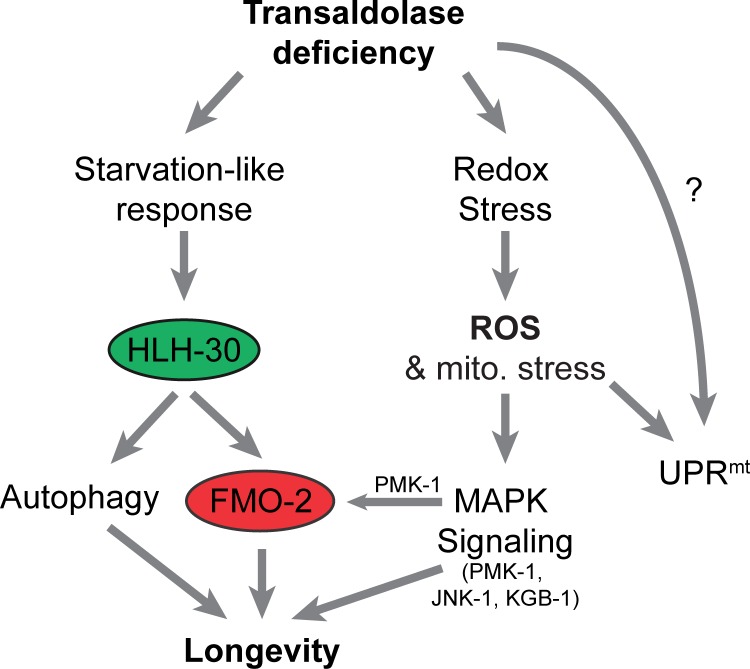
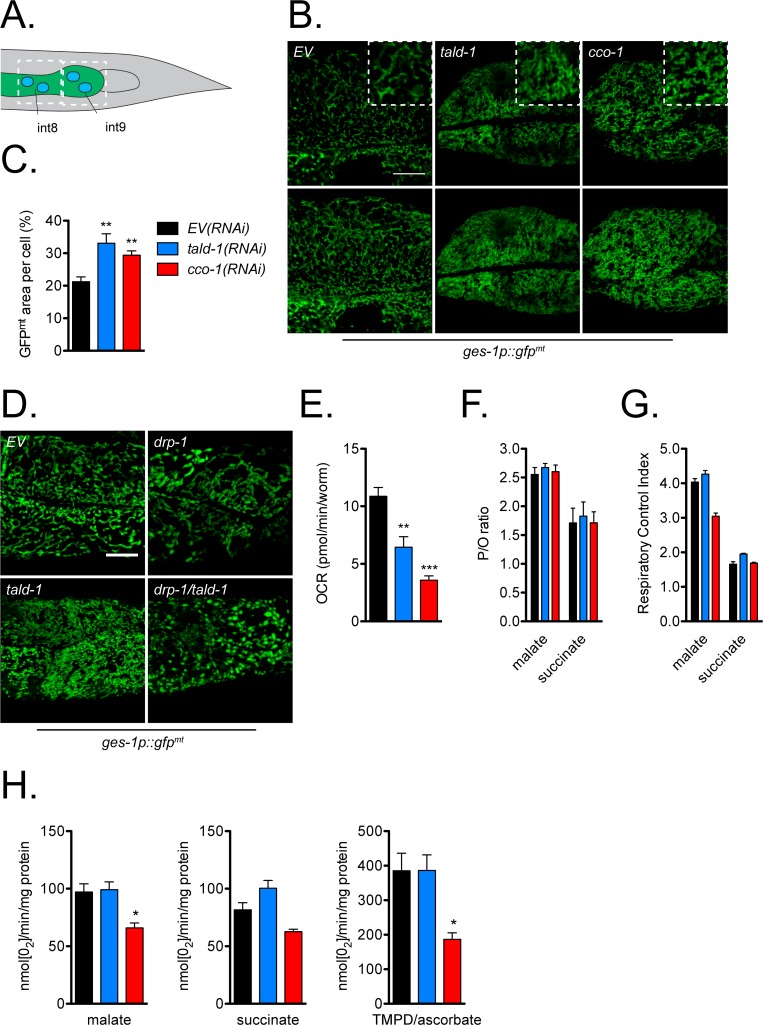
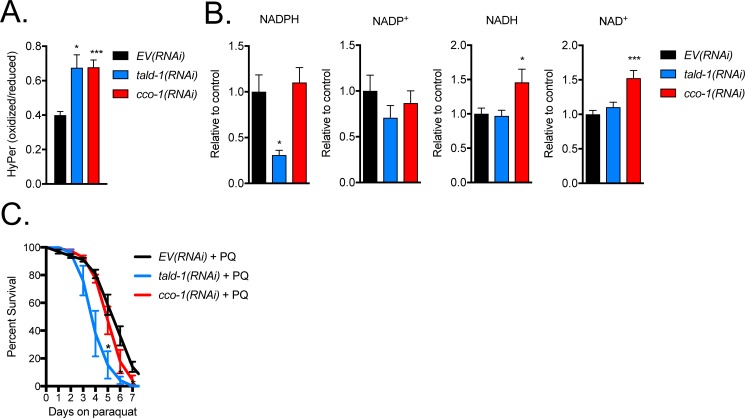
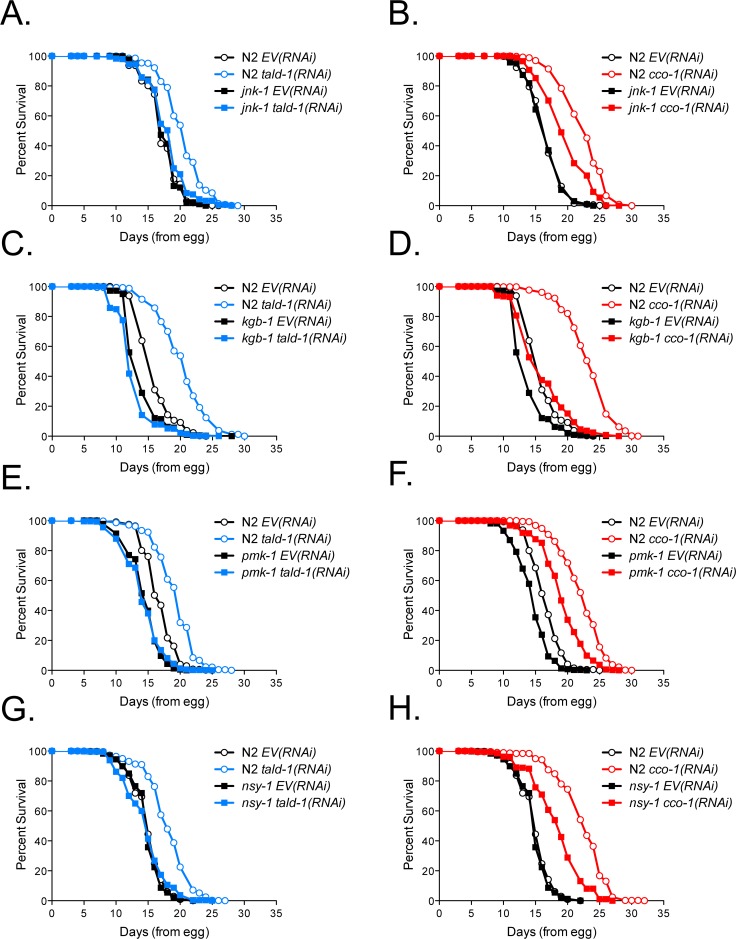
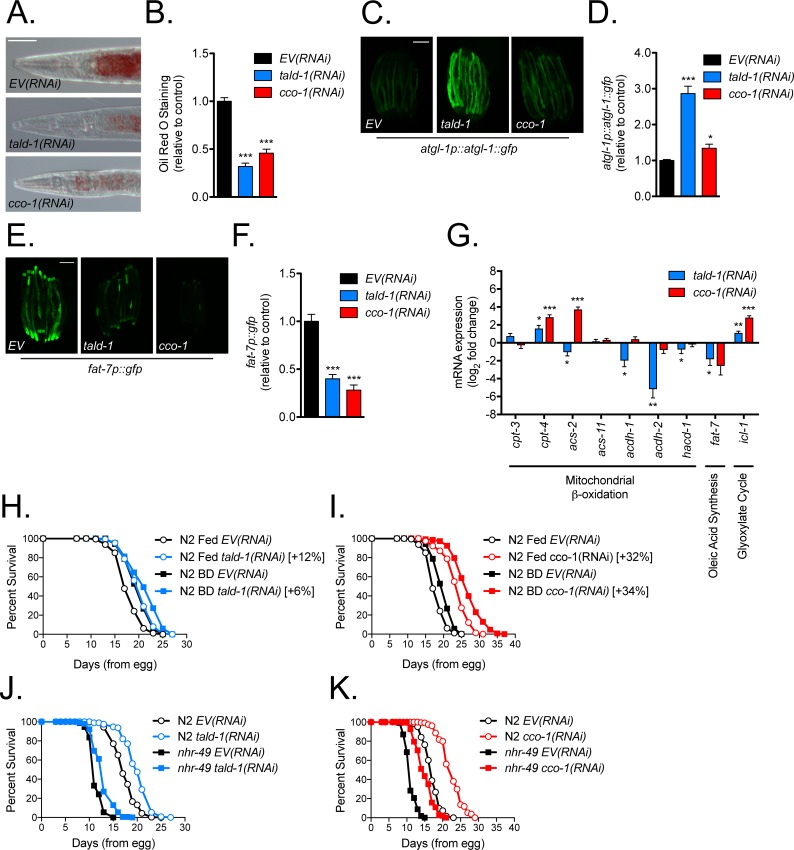
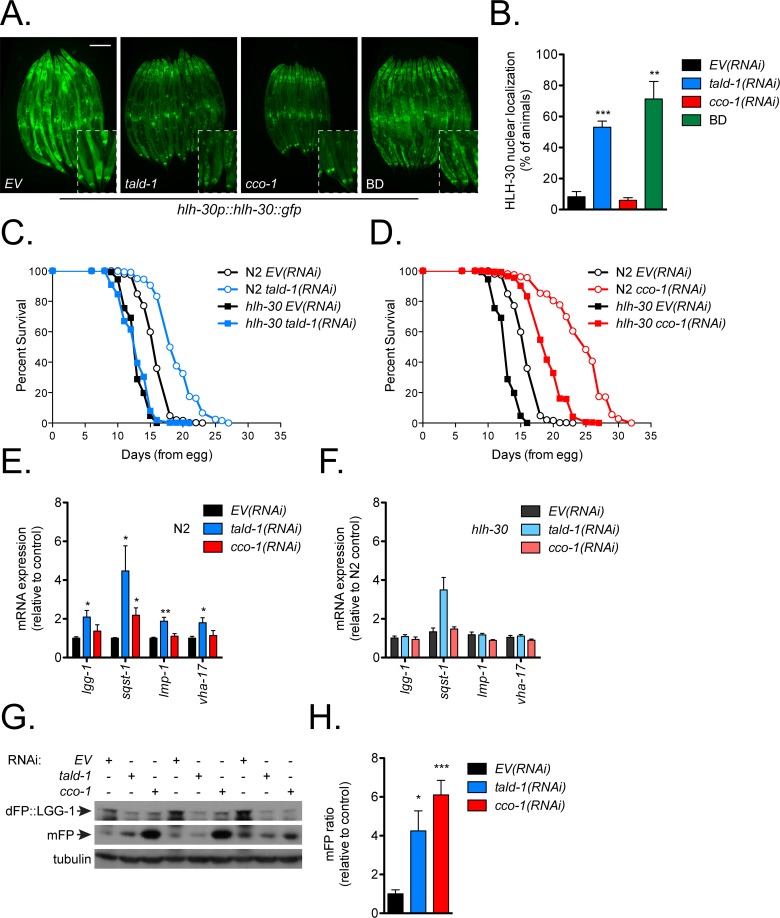
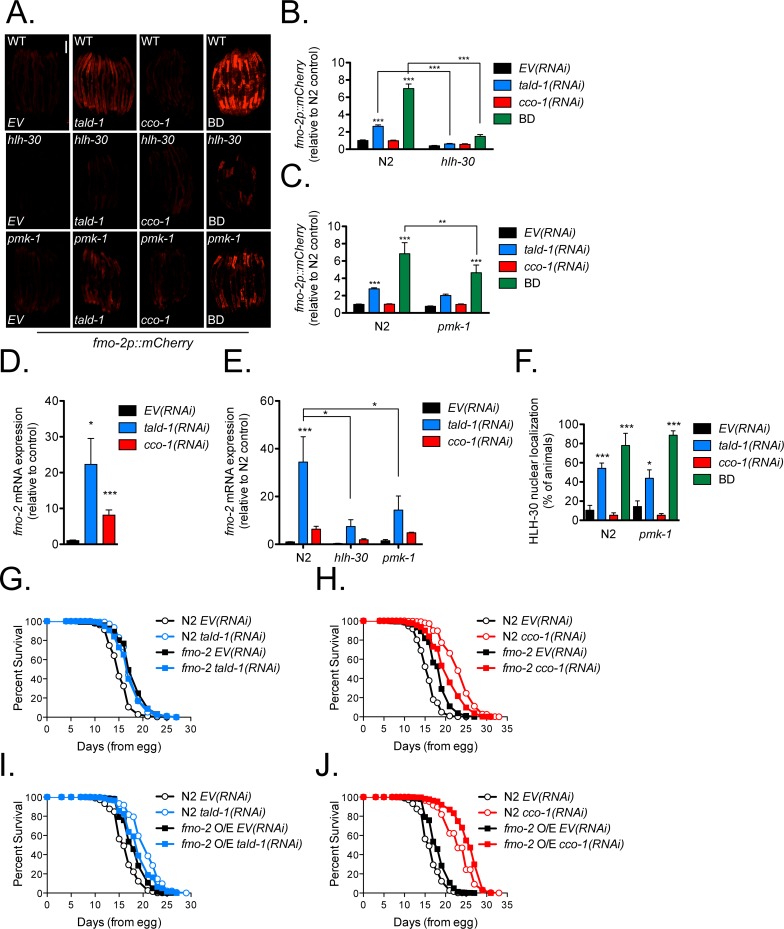
Mitochondrial dysfunction can increase oxidative stress and extend lifespan in Caenorhabditis elegans. Homeostatic mechanisms exist to cope with disruptions to mitochondrial function that promote cellular health and organismal longevity. Previously, we determined that decreased expression of the cytosolic pentose phosphate pathway (PPP) enzyme transaldolase activates the mitochondrial unfolded protein response (UPRmt) and extends lifespan. Here we report that transaldolase (tald-1) deficiency impairs mitochondrial function in vivo, as evidenced by altered mitochondrial morphology, decreased respiration, and increased cellular H2O2 levels. Lifespan extension from knockdown of tald-1 is associated with an oxidative stress response involving p38 and c-Jun N-terminal kinase (JNK) MAPKs and a starvation-like response regulated by the transcription factor EB (TFEB) homolog HLH-30. The latter response promotes autophagy and increases expression of the flavin-containing monooxygenase 2 (fmo-2). We conclude that cytosolic redox established through the PPP is a key regulator of mitochondrial function and defines a new mechanism for mitochondrial regulation of longevity.
线粒体功能障碍可增加氧化应激并延长秀丽隐杆线虫的寿命。存在稳态机制来应对线粒体功能的破坏,从而促进细胞健康和机体长寿。此前,我们确定胞质磷酸戊糖途径(PPP)酶转醛醇酶的表达降低会激活线粒体未折叠蛋白反应(UPRmt)并延长寿命。在此我们报告,转醛醇酶(tald-1)缺陷在体内损害线粒体功能,线粒体形态改变、呼吸作用降低和细胞过氧化氢水平升高证明了这一点。敲低tald-1导致的寿命延长与涉及p38和c-Jun氨基末端激酶(JNK)丝裂原活化蛋白激酶(MAPK)的氧化应激反应以及由转录因子EB(TFEB)同源物HLH-30调节的饥饿样反应有关。后一种反应促进自噬并增加含黄素单加氧酶2(fmo-2)的表达。我们得出结论,通过PPP建立的胞质氧化还原是线粒体功能的关键调节因子,并定义了一种线粒体调节寿命的新机制。