Erkut Cihan, Gade Vamshidhar R, Laxman Sunil, Kurzchalia Teymuras V
Max Planck Institute of Molecular Cell Biology and Genetics, Dresden, Germany.
Institute for Stem Cell Biology and Regenerative Medicine, Bangalore, India.
Elife. 2016 Apr 19;5:e13614. doi: 10.7554/eLife.13614.
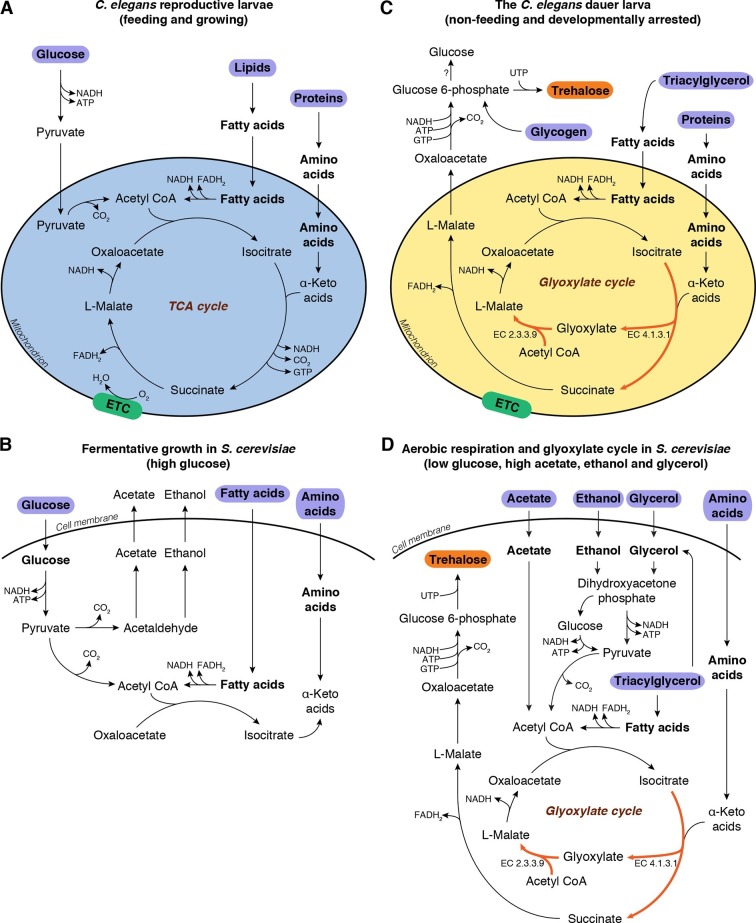
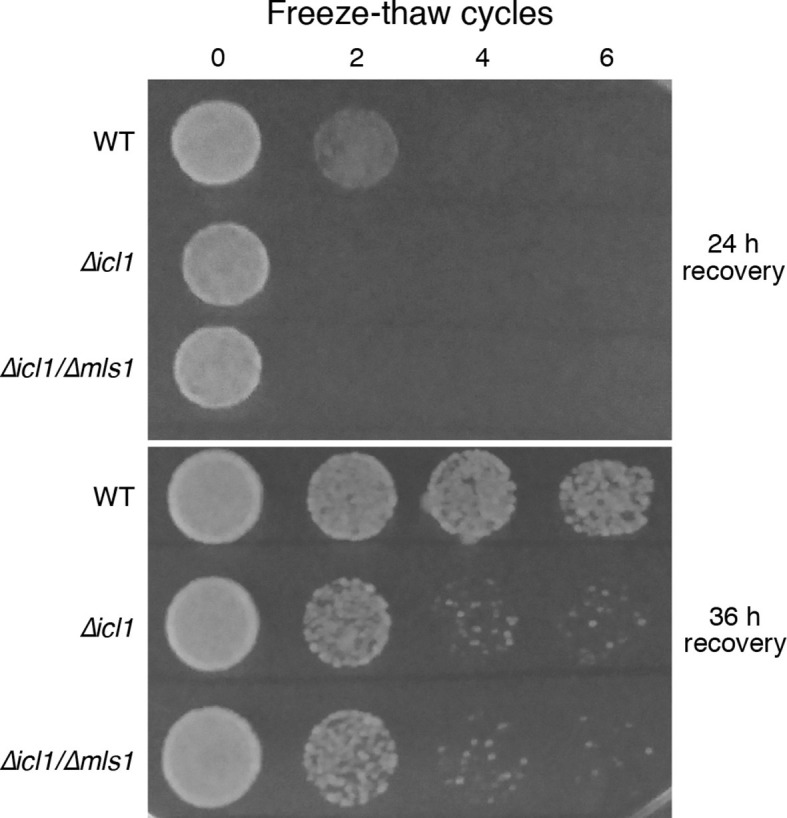
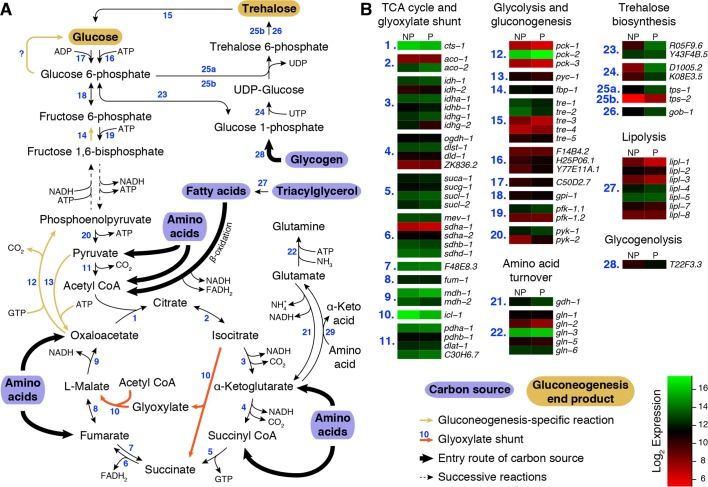
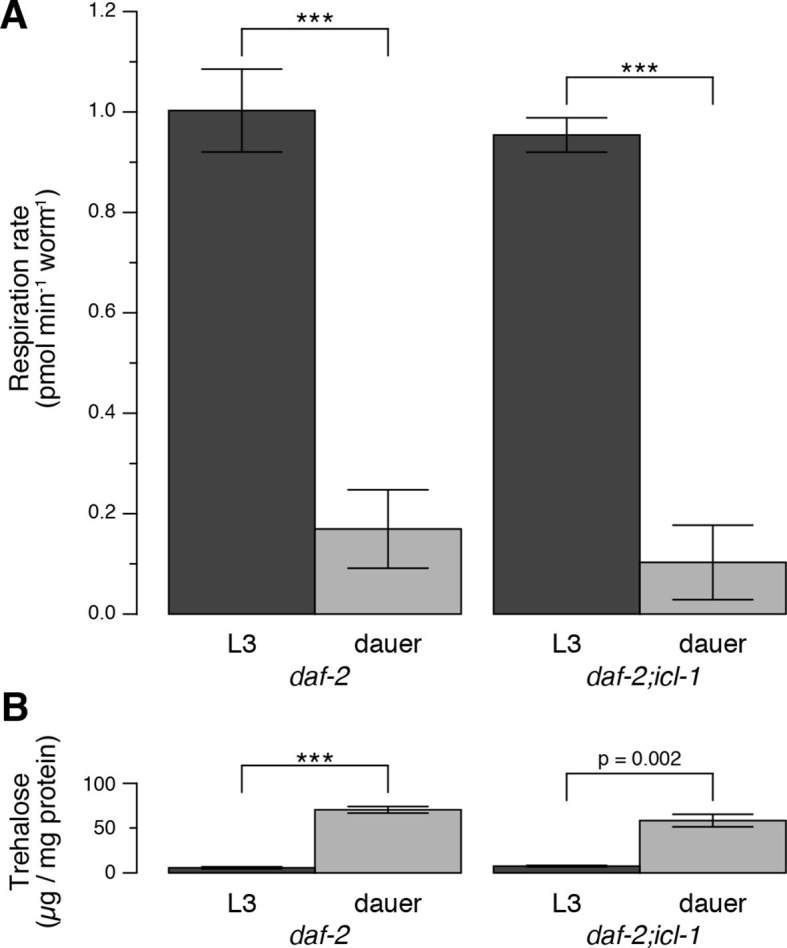
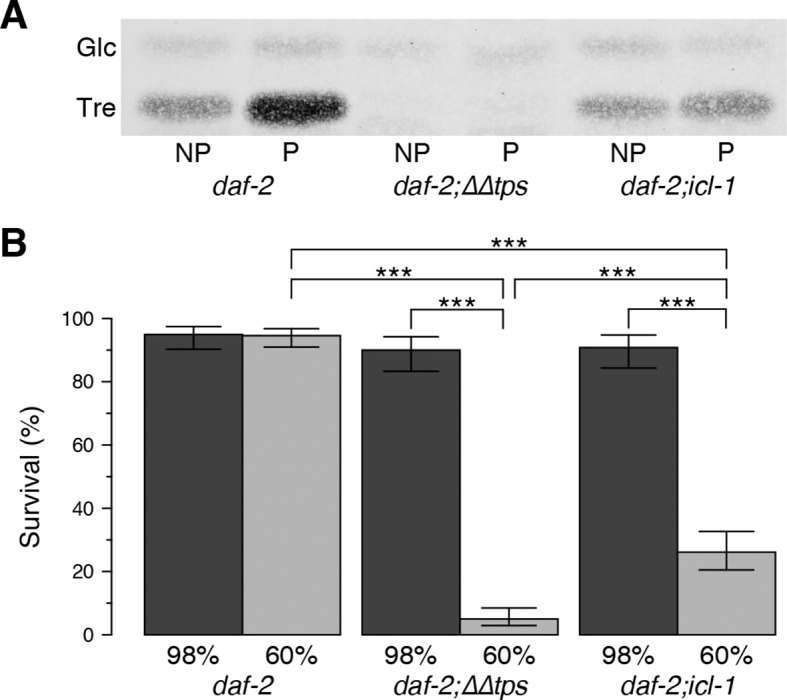
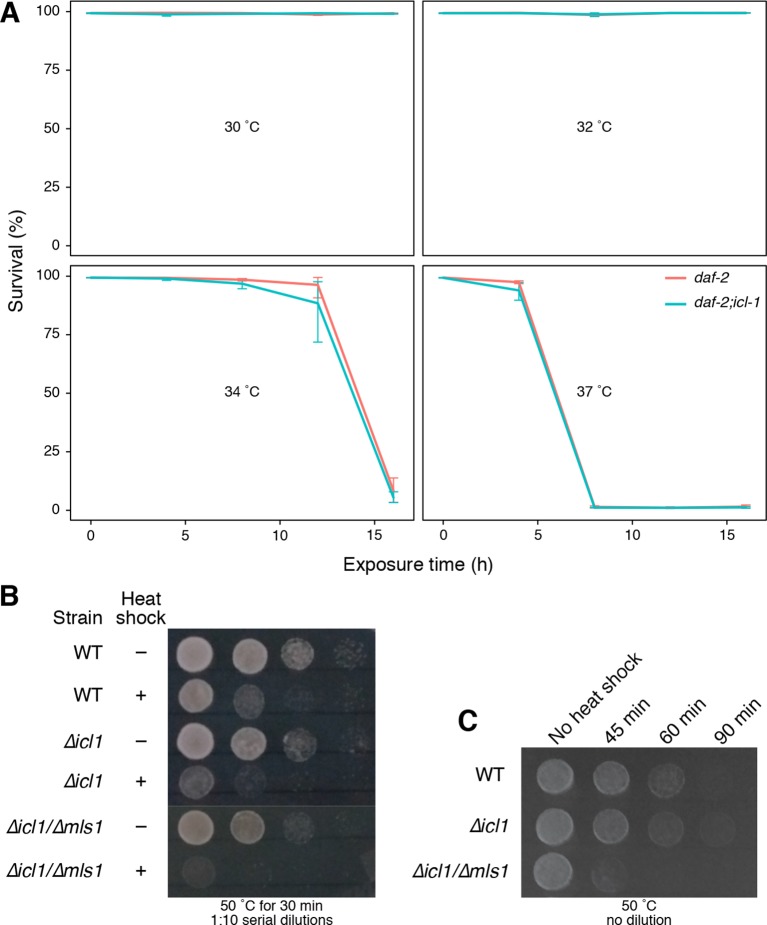
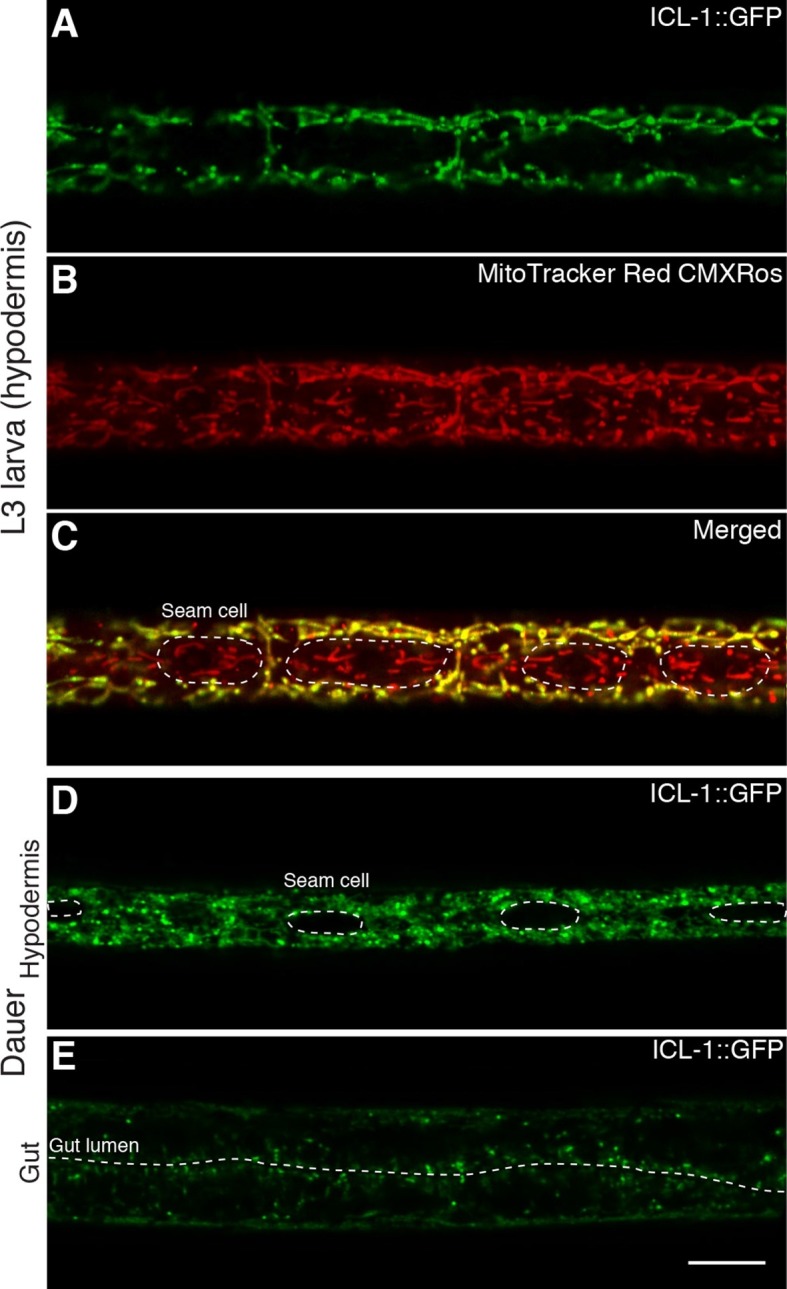
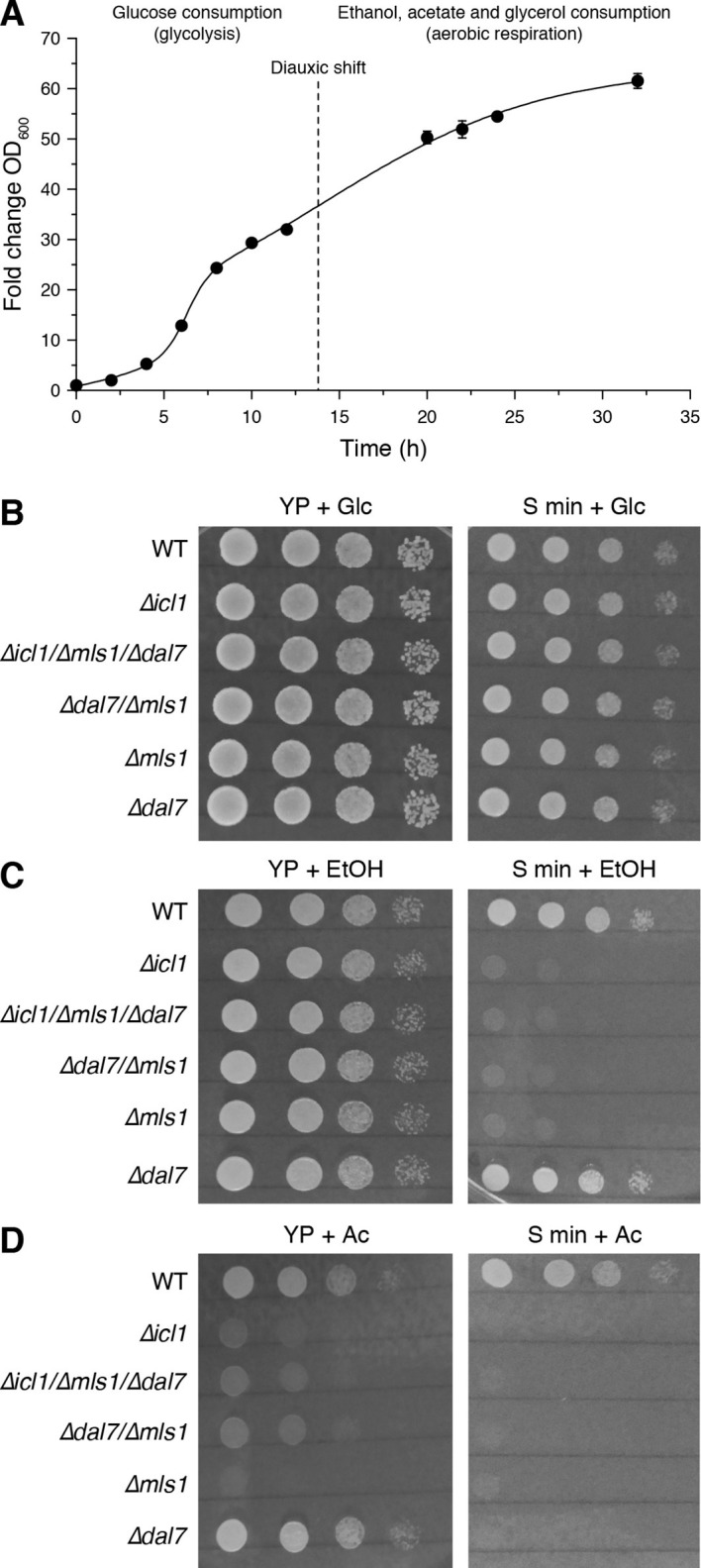
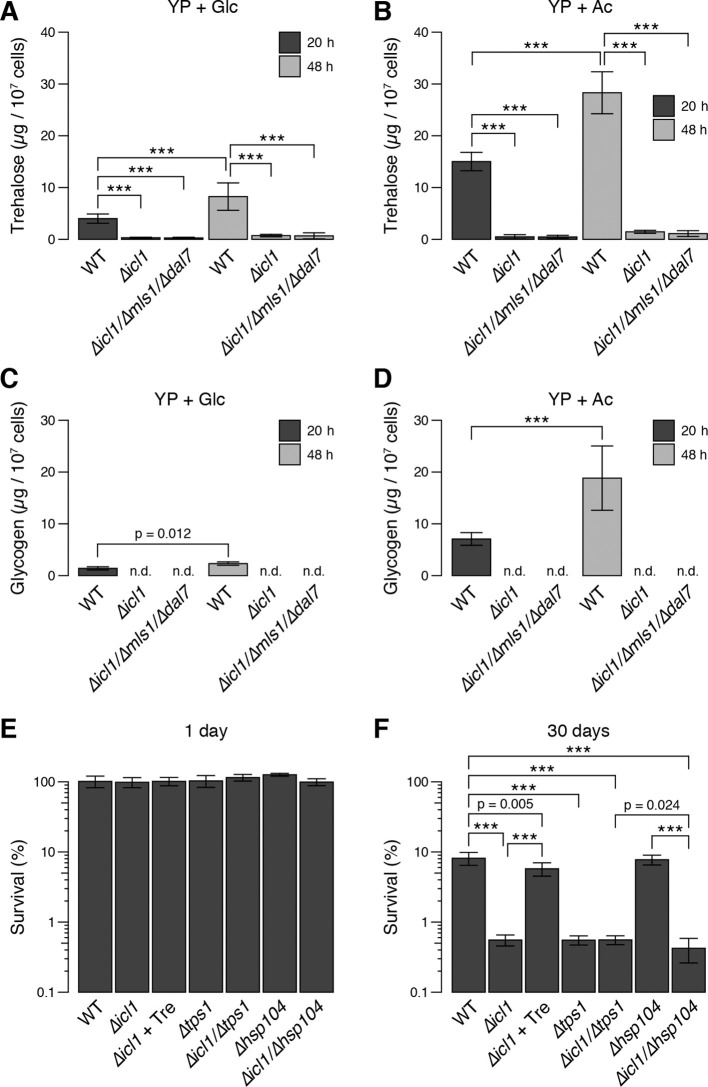
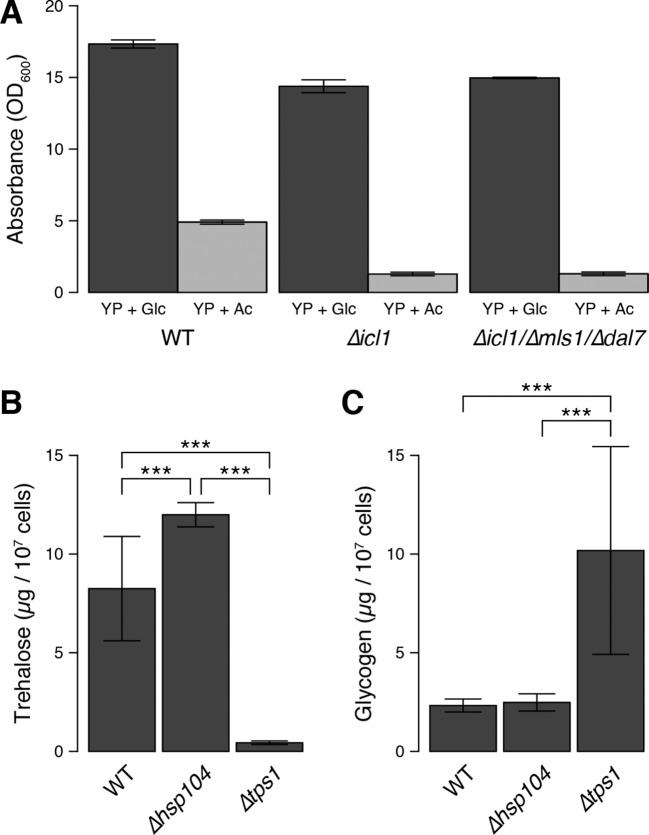
Many organisms, including species from all kingdoms of life, can survive desiccation by entering a state with no detectable metabolism. To survive, C. elegans dauer larvae and stationary phase S. cerevisiae require elevated amounts of the disaccharide trehalose. We found that dauer larvae and stationary phase yeast switched into a gluconeogenic mode in which metabolism was reoriented toward production of sugars from non-carbohydrate sources. This mode depended on full activity of the glyoxylate shunt (GS), which enables synthesis of trehalose from acetate. The GS was especially critical during preparation of worms for harsh desiccation (preconditioning) and during the entry of yeast into stationary phase. Loss of the GS dramatically decreased desiccation tolerance in both organisms. Our results reveal a novel physiological role for the GS and elucidate a conserved metabolic rewiring that confers desiccation tolerance on organisms as diverse as worm and yeast.
许多生物体,包括来自生命所有界的物种,都可以通过进入一种无可检测到的新陈代谢的状态来在脱水状态下存活。为了存活,秀丽隐杆线虫的 dauer 幼虫和静止期的酿酒酵母需要大量的二糖海藻糖。我们发现,dauer 幼虫和静止期酵母转变为糖异生模式,其中新陈代谢重新导向从非碳水化合物来源生产糖类。这种模式依赖于乙醛酸循环支路(GS)的完全活性,该支路能够从乙酸盐合成海藻糖。GS 在使蠕虫为严酷脱水做准备(预处理)期间以及酵母进入静止期期间尤为关键。GS 的缺失显著降低了这两种生物体的脱水耐受性。我们的结果揭示了 GS 的一种新的生理作用,并阐明了一种保守的代谢重布线,这种重布线赋予了像蠕虫和酵母这样不同的生物体脱水耐受性。