Li Jiebin, Li Chunsheng, Yuan Wei, Wu Junyuan, Li Jie, Li Zhenhua, Zhao Yongzhen
Beijing Key Laboratory of Cardiopulmonary-Cerebral Resuscitation, Department of Emergency Medicine, Beijing Chaoyang Hospital, Capital Medical University, Beijing, China.
Department of Emergency Medicine, Beijing FuXing Hospital, Capital Medical University, Beijing, China.
PLoS One. 2017 Mar 29;12(3):e0174596. doi: 10.1371/journal.pone.0174596. eCollection 2017.
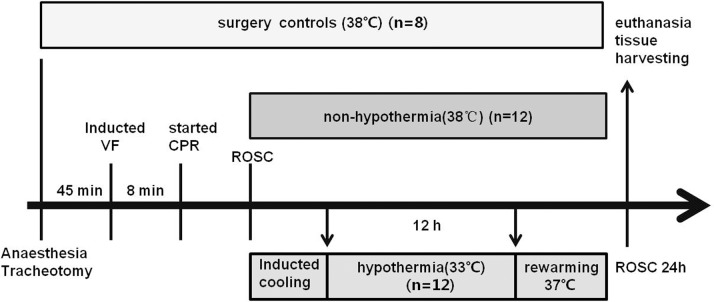
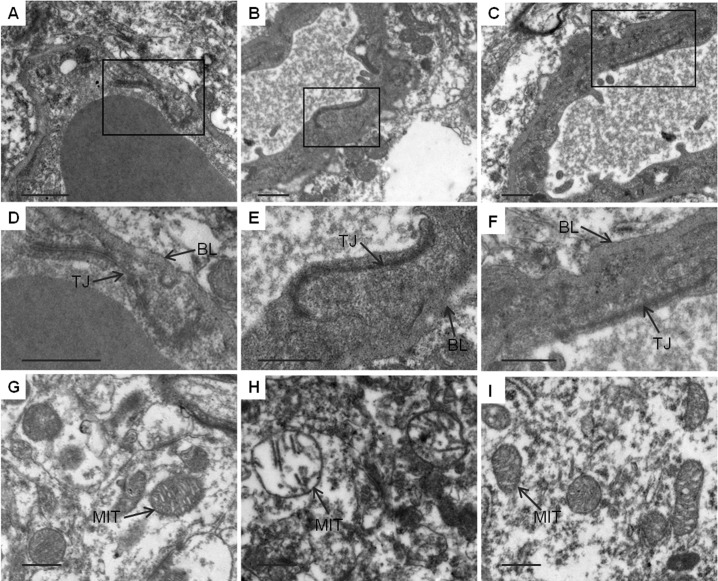
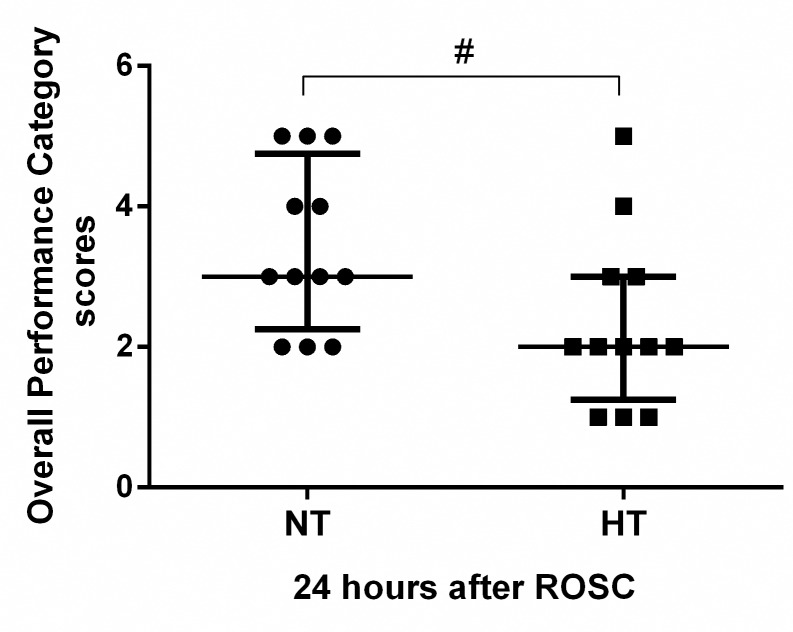
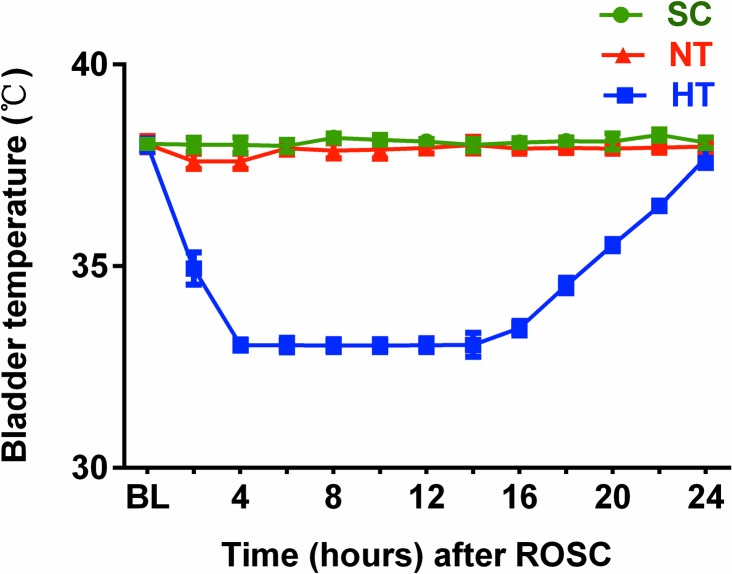
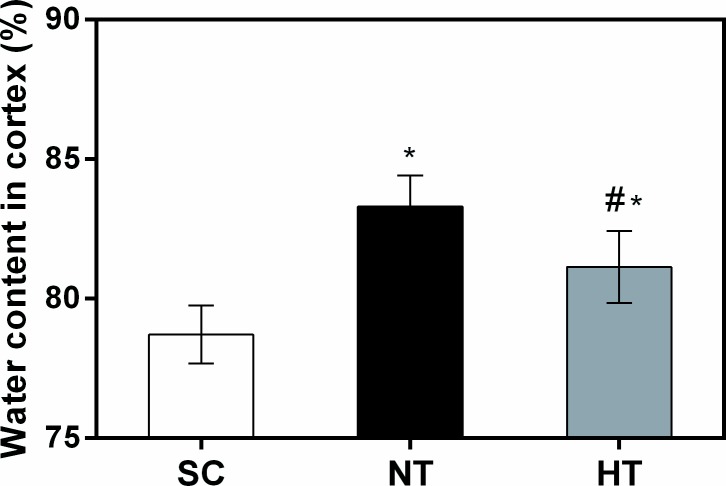
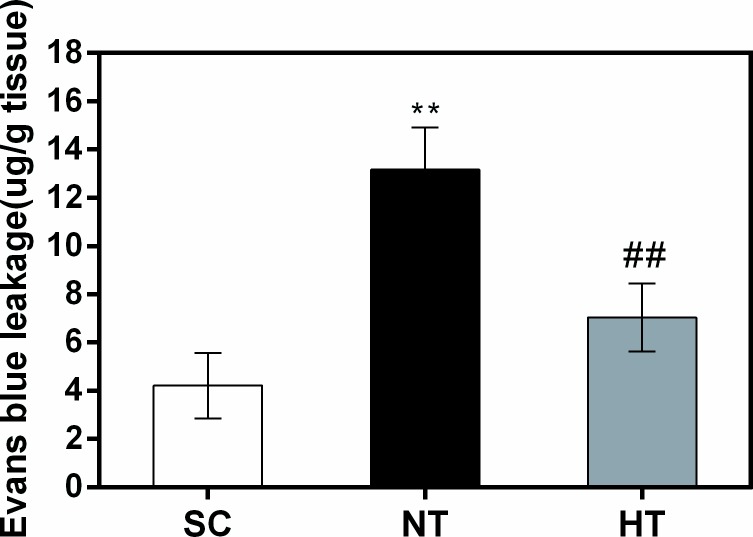
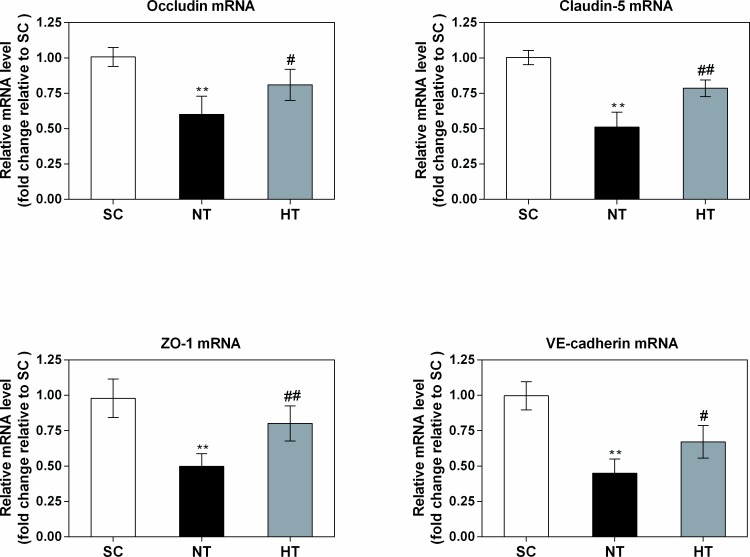
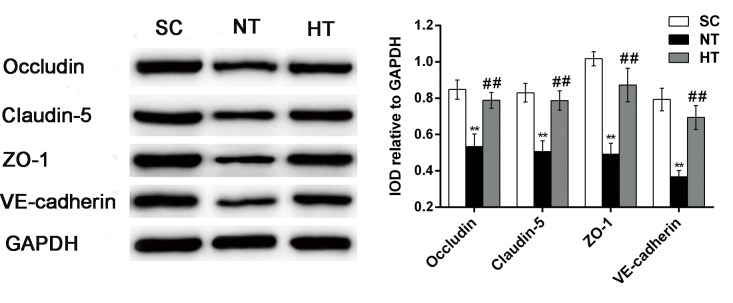
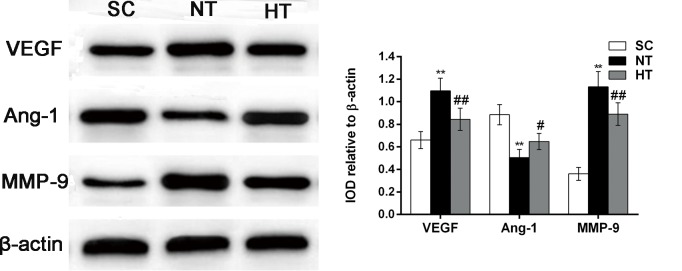
Mild hypothermia improves survival and neurological recovery after cardiac arrest (CA) and cardiopulmonary resuscitation (CPR). However, the mechanism underlying this phenomenon is not fully elucidated. The aim of this study was to determine whether mild hypothermia alleviates early blood-brain barrier (BBB) disruption. We investigated the effects of mild hypothermia on neurologic outcome, survival rate, brain water content, BBB permeability and changes in tight junctions (TJs) and adherens junctions (AJs) after CA and CPR. Pigs were subjected to 8 min of untreated ventricular fibrillation followed by CPR. Mild hypothermia (33°C) was intravascularly induced and maintained at this temperature for 12 h, followed by active rewarming. Mild hypothermia significantly reduced cortical water content, decreased BBB permeability and attenuated TJ ultrastructural and basement membrane breakdown in brain cortical microvessels. Mild hypothermia also attenuated the CPR-induced decreases in TJ (occludin, claudin-5, ZO-1) and AJ (VE-cadherin) protein and mRNA expression. Furthermore, mild hypothermia decreased the CA- and CPR-induced increases in matrix metalloproteinase-9 (MMP-9) and vascular endothelial growth factor (VEGF) expression and increased angiogenin-1 (Ang-1) expression. Our findings suggest that mild hypothermia attenuates the CA- and resuscitation-induced early brain oedema and BBB disruption, and this improvement might be at least partially associated with attenuation of the breakdown of TJ and AJ, suppression of MMP-9 and VEGF expression, and upregulation of Ang-1 expression.
轻度低温可改善心脏骤停(CA)和心肺复苏(CPR)后的生存率和神经功能恢复。然而,这一现象背后的机制尚未完全阐明。本研究的目的是确定轻度低温是否能减轻早期血脑屏障(BBB)破坏。我们研究了轻度低温对CA和CPR后神经功能结局、生存率、脑含水量、BBB通透性以及紧密连接(TJ)和黏附连接(AJ)变化的影响。对猪进行8分钟未经处理的室颤,随后进行CPR。通过血管内诱导使猪体温降至轻度低温(33°C),并在此温度下维持12小时,随后积极复温。轻度低温显著降低了皮质含水量,降低了BBB通透性,并减轻了脑皮质微血管中TJ超微结构和基底膜的破坏。轻度低温还减轻了CPR诱导的TJ(闭合蛋白、claudin-5、紧密连接蛋白-1)和AJ(血管内皮钙黏蛋白)蛋白及mRNA表达的降低。此外,轻度低温降低了CA和CPR诱导的基质金属蛋白酶-9(MMP-9)和血管内皮生长因子(VEGF)表达的增加,并增加了血管生成素-1(Ang-1)的表达。我们的研究结果表明轻度低温减轻了CA和复苏诱导的早期脑水肿和BBB破坏,这种改善可能至少部分与TJ和AJ破坏的减轻、MMP-9和VEGF表达的抑制以及Ang-1表达的上调有关。