Wagner R Doug, Johnson Shemedia J
Microbiology Division, National Center for Toxicological Research, U.S. Food and Drug Administration, 3900 NCTR Rd, Jefferson, AR, 72079, USA.
BMC Microbiol. 2017 Mar 29;17(1):77. doi: 10.1186/s12866-017-0990-x.
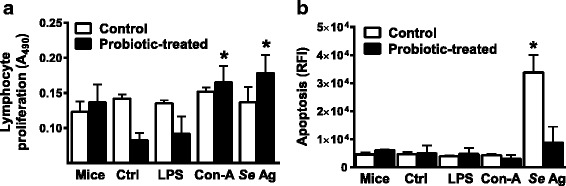
Salmonella enterica infections often exhibit a form of immune evasion. We previously observed that probiotic bacteria could prevent inhibition of lymphoproliferation and apoptosis responses of T cells associated with S. enterica infections in orally challenged mice.
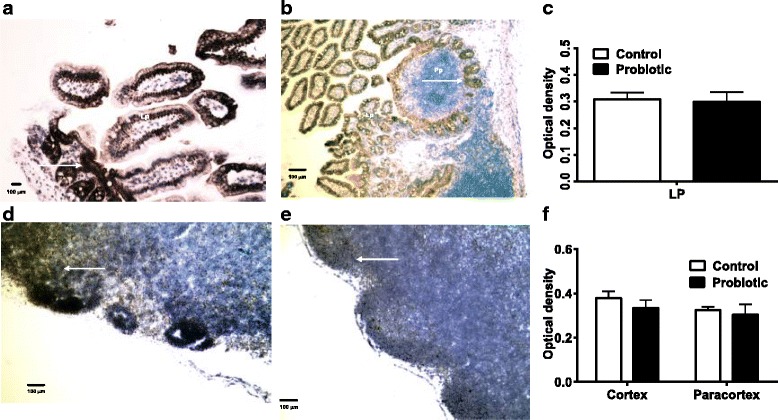
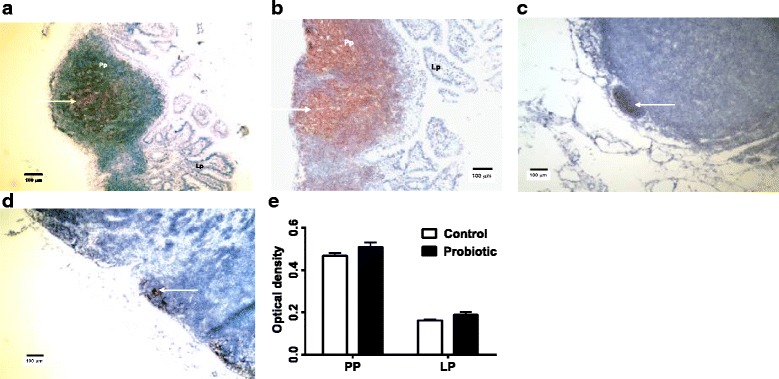
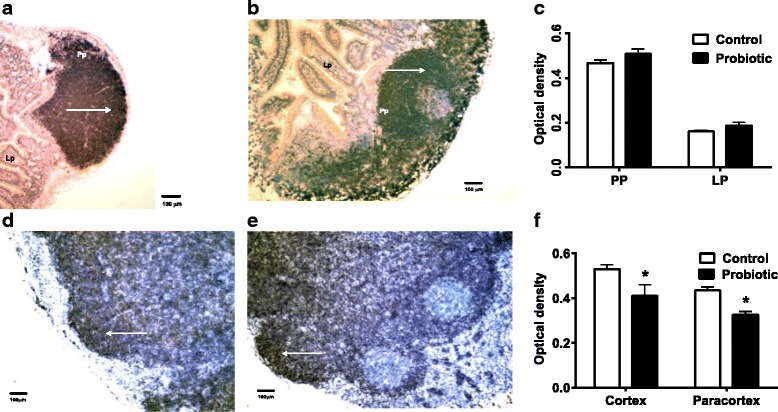
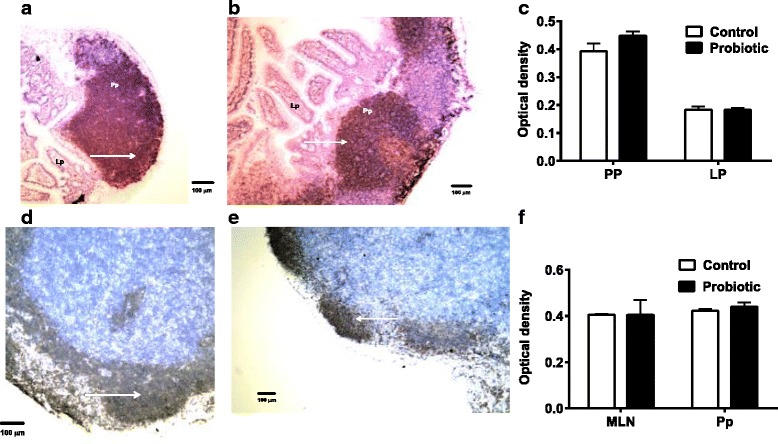
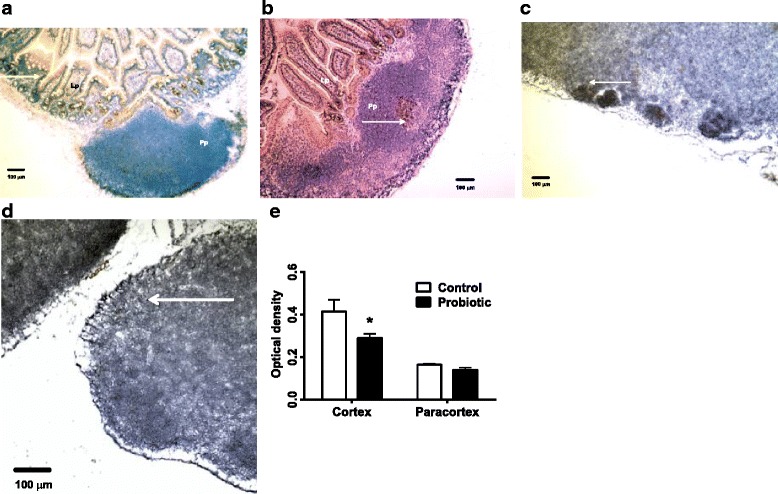
In this study, changes in expression of genes related to lymphocyte activation in mucosa-associated lymphoid tissues (MALT) of mice orally infected with S. enterica with and without treatment with probiotic bacteria were evaluated. Probiotic bacteria increased expression of mRNA for clusters of differentiation antigen 2 (Cd2), protein tyrosine phosphatase receptor type C (Ptprc), and Toll-like receptor 6 (Tlr6) genes related to T and B cell activation in mouse intestinal tissue. The probiotic bacteria were also associated with reduced mRNA expression of a group of genes (RelB, Myd88, Iκκa, Jun, Irak2) related to nuclear factor of kappa light chains enhancer in B cells (NF-κB) signal transduction pathway-regulated cytokine responses. Probiotic bacteria were also associated with reduced mRNA expression of apoptotic genes (Casp2, Casp12, Dad1, Akt1, Bad) that suggest high avidity lymphocyte sparing. Reduced CD2 immunostaining in mesenteric lymph nodes (MLN) was suggestive of reduced lymphocyte activation in probiotic-treated mice. Reduced immunostaining of TLR6 in MALT of probiotic-treated, S. enterica-infected mice suggests that diminished innate immune sensitivity to S. enterica antigens is associated with preventing lymphocyte deletion.
The results of this study are consistent with prevention of S. enterica-induced deletion of lymphocytes by the influence of probiotic bacteria in mucosal lymphoid tissues of mice.
肠炎沙门氏菌感染常表现出一种免疫逃避形式。我们之前观察到,益生菌可预防口服攻击小鼠中与肠炎沙门氏菌感染相关的T细胞淋巴细胞增殖抑制和凋亡反应。
在本研究中,评估了口服感染肠炎沙门氏菌且用或不用益生菌治疗的小鼠黏膜相关淋巴组织(MALT)中与淋巴细胞活化相关基因的表达变化。益生菌增加了小鼠肠道组织中与T和B细胞活化相关的分化抗原簇2(Cd2)、蛋白酪氨酸磷酸酶受体C型(Ptprc)和Toll样受体6(Tlr6)基因的mRNA表达。益生菌还与一组与B细胞中κ轻链增强子核因子(NF-κB)信号转导途径调节的细胞因子反应相关的基因(RelB、Myd88、Iκκa、Jun、Irak2)的mRNA表达降低有关。益生菌还与凋亡基因(Casp2、Casp12、Dad1、Akt1、Bad)的mRNA表达降低有关,这表明淋巴细胞具有高亲和力。肠系膜淋巴结(MLN)中CD2免疫染色降低提示益生菌治疗小鼠的淋巴细胞活化减少。益生菌治疗的肠炎沙门氏菌感染小鼠的MALT中TLR6免疫染色降低表明,对肠炎沙门氏菌抗原的固有免疫敏感性降低与预防淋巴细胞缺失有关。
本研究结果与益生菌对小鼠黏膜淋巴组织的影响预防肠炎沙门氏菌诱导的淋巴细胞缺失一致。