Preda Veronica G, Săndulescu Oana
Department of Biochemistry and Molecular Biology, University of Bucharest, Faculty of Biology, Bucharest, Romania.
Department of Genetics and Applied Biotechnology, University of Bucharest, Faculty of Biology, Bucharest, Romania.
Discoveries (Craiova). 2019 Sep 30;7(3):e100. doi: 10.15190/d.2019.13.
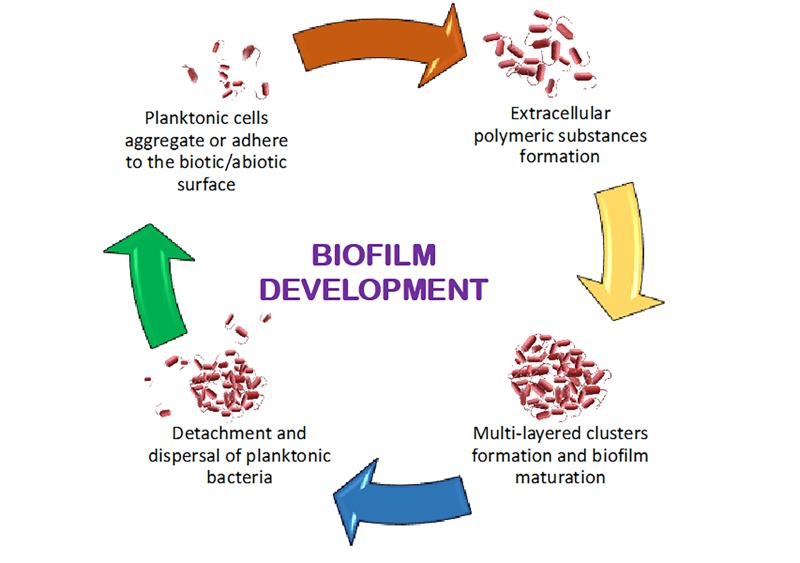
Antibiotic resistance is a relevant topic nowadays, representing one of the main causes of infection-related mortality and morbidity at a global level. This phenomenon is worrisome and represents an area of interest for both clinical practice and fundamental research. One important mechanism whereby bacteria acquire resistance to antibiotics and evade the immune system is by forming biofilms. It is estimated that ~80% of the bacteria producing chronic infections can form biofilms. During the process of biofilm formation microorganisms have the ability to communicate with each other through quorum sensing. Quorum sensing regulates the metabolic activity of planktonic cells, and it can induce microbial biofilm formation and increased virulence. In this review we describe the biofilm formation process, quorum sensing, quorum quenching, several key infectious bacteria producing biofilm, methods of prevention and their challenges and limitations. Although progress has been made in the prevention and treatment of biofilm-driven infections, new strategies are required and have to be further developed.
抗生素耐药性是当今一个重要的话题,是全球范围内与感染相关的死亡率和发病率的主要原因之一。这一现象令人担忧,是临床实践和基础研究都感兴趣的领域。细菌获得抗生素耐药性并逃避免疫系统的一个重要机制是形成生物膜。据估计,约80%引发慢性感染的细菌能够形成生物膜。在生物膜形成过程中,微生物能够通过群体感应相互交流。群体感应调节浮游细胞的代谢活性,并可诱导微生物生物膜形成和毒力增加。在这篇综述中,我们描述了生物膜形成过程、群体感应、群体猝灭、几种产生生物膜的关键感染性细菌、预防方法及其挑战和局限性。尽管在生物膜驱动感染的预防和治疗方面已经取得了进展,但仍需要并必须进一步开发新的策略。