Bahar Entaz, Akter Kazi-Marjahan, Lee Geum-Hwa, Lee Hwa-Young, Rashid Harun-Or, Choi Min-Kyung, Bhattarai Kashi Raj, Hossain Mir Mohammad Monir, Ara Joushan, Mazumder Kishor, Raihan Obayed, Chae Han-Jung, Yoon Hyonok
College of Pharmacy, Research Institute of Pharmaceutical Sciences, Gyeongsang National University, Gyeongnam, Jinju, 52828, Republic of Korea.
Department of Pharmacology, Medical School, Chonbuk National University, Jeonju, 54896, Jeonbuk, Republic of Korea.
BMC Complement Altern Med. 2017 Mar 29;17(1):179. doi: 10.1186/s12906-017-1697-0.
Medicinal plants are becoming more popular in the treatment of various diseases because of the adverse effects of the current therapy, especially antioxidant plant components such as phenols and flavonoids have a protective role against oxidative stress-induced degenerative diseases like diabetes. Thus, the purpose of this study was to investigate β-cell protection and antidiabetic activities of Crassocephalum crepidioides (Asteraceae) Benth. S. Moore.
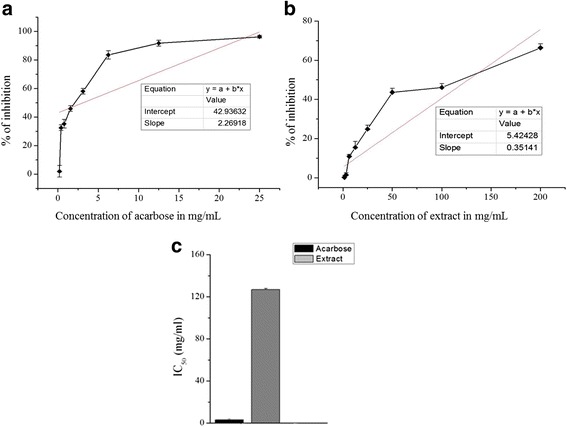
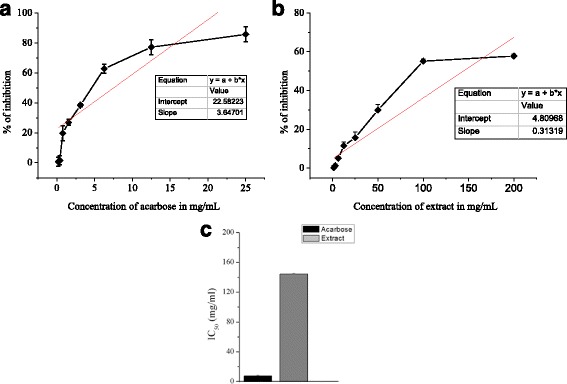
The in-vitro study was conducted by the pancreatic β-cell culture and α-amylase inhibition technique which includes two methods, namely starch-iodine method and 3,5-dinitrosalicylic acid (DNSA) method. On the other hand, the in-vivo study was performed by oral glucose tolerance test (OGTT) method and alloxan-induced diabetes method by using Wistar albino rat. At the end pancreatic specimens were removed and processed for histopathological study.
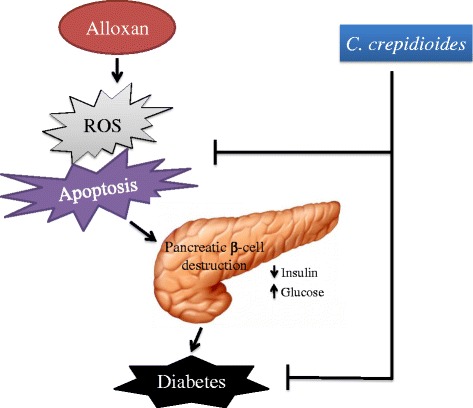
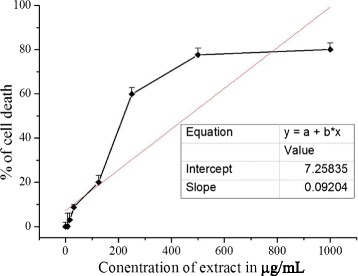
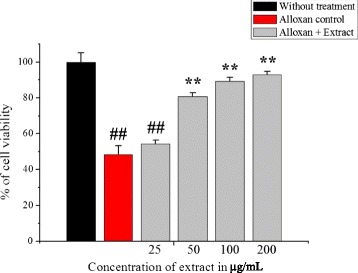
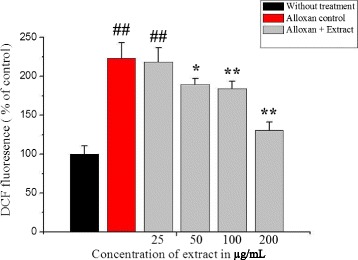
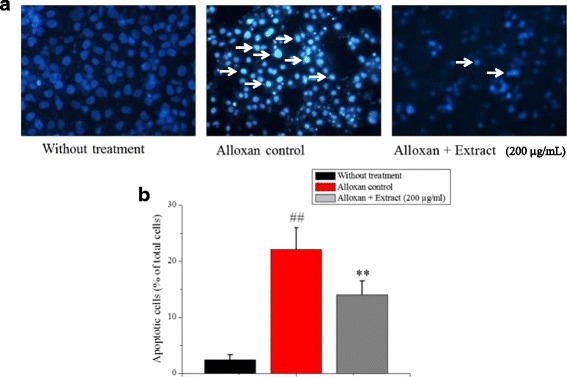
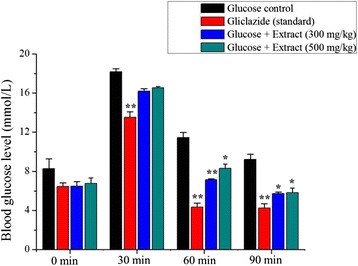
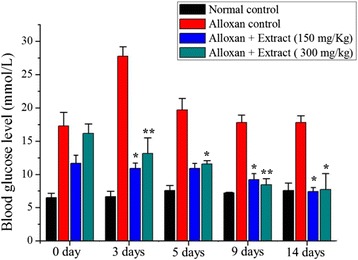
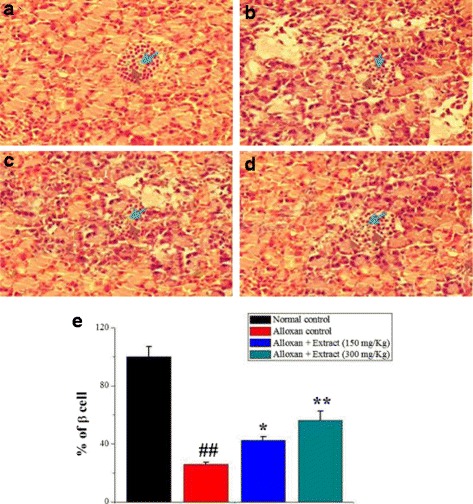
The plant extract showed significant (*p < 0.05, **p < 0.01) effect on hyperglycemia as compared to standard (Gliclazide) in OGTT. The plant extract showed efficient protection activity of pancreatic β-cell from cell death in INS-1 cell line by significantly reduced (*p < 0.05, **p < 0.01) the levels alloxan-induced apoptosis and intracellular reactive oxygen species (ROS) accumulation. In addition, the plant extract showed a significant (*p < 0.05, **p < 0.01) effect on hyperglycemia by increases in percent of β-cells present in each islet (45% - 60%) compared to the diabetic group.
The result showed that C. crepidioides had β-cell protection and antidiabetic activities in pancreatic β-cell culture and Wistar albino rat.
由于当前疗法存在不良反应,药用植物在各种疾病的治疗中越来越受欢迎,尤其是抗氧化植物成分,如酚类和黄酮类,对氧化应激诱导的退行性疾病(如糖尿病)具有保护作用。因此,本研究的目的是调查白凤菜(菊科)的β细胞保护作用和抗糖尿病活性。
体外研究通过胰腺β细胞培养和α淀粉酶抑制技术进行,该技术包括两种方法,即淀粉碘法和3,5 - 二硝基水杨酸(DNSA)法。另一方面,体内研究通过口服葡萄糖耐量试验(OGTT)法和使用Wistar白化大鼠的四氧嘧啶诱导糖尿病法进行。最后取出胰腺标本并进行组织病理学研究。
与标准药物(格列齐特)相比,该植物提取物在OGTT中对高血糖具有显著(*p < 0.05,**p < 0.01)影响。该植物提取物通过显著降低(*p < 0.05,**p < 0.01)四氧嘧啶诱导的凋亡水平和细胞内活性氧(ROS)积累,对INS - 1细胞系中的胰腺β细胞具有有效的保护作用,使其免受细胞死亡。此外,与糖尿病组相比,该植物提取物通过增加每个胰岛中β细胞的百分比(45% - 60%)对高血糖具有显著(*p < 0.05,**p < 0.01)影响。
结果表明,白凤菜在胰腺β细胞培养和Wistar白化大鼠中具有β细胞保护作用和抗糖尿病活性。