Chen Shuai, Jiang Shichao, Zheng Wei, Tu Bing, Liu Shen, Ruan Hongjiang, Fan Cunyi
Department of Orthopaedics, Shanghai Jiao Tong University Affiliated Sixth People's Hospital, 600 Yishan Road, Shanghai 200233, People's Republic of China.
Department of Orthopaedics, Shandong Provincial Hospital Affiliated to Shandong University, No. 324 Jingwu Road, Jinan 250021, Shandong, People's Republic of China.
Cell Death Dis. 2017 Mar 30;8(3):e2710. doi: 10.1038/cddis.2017.135.
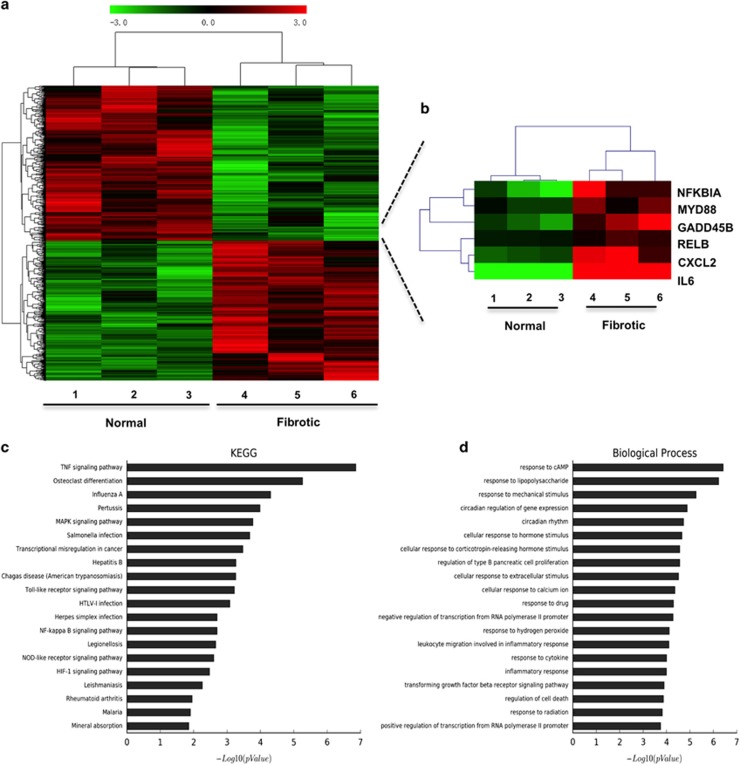
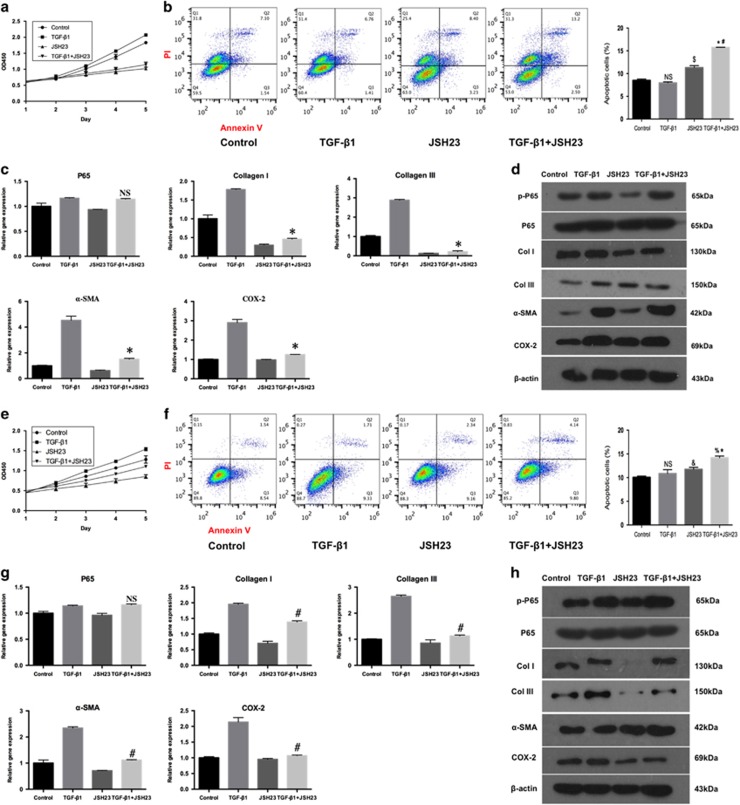
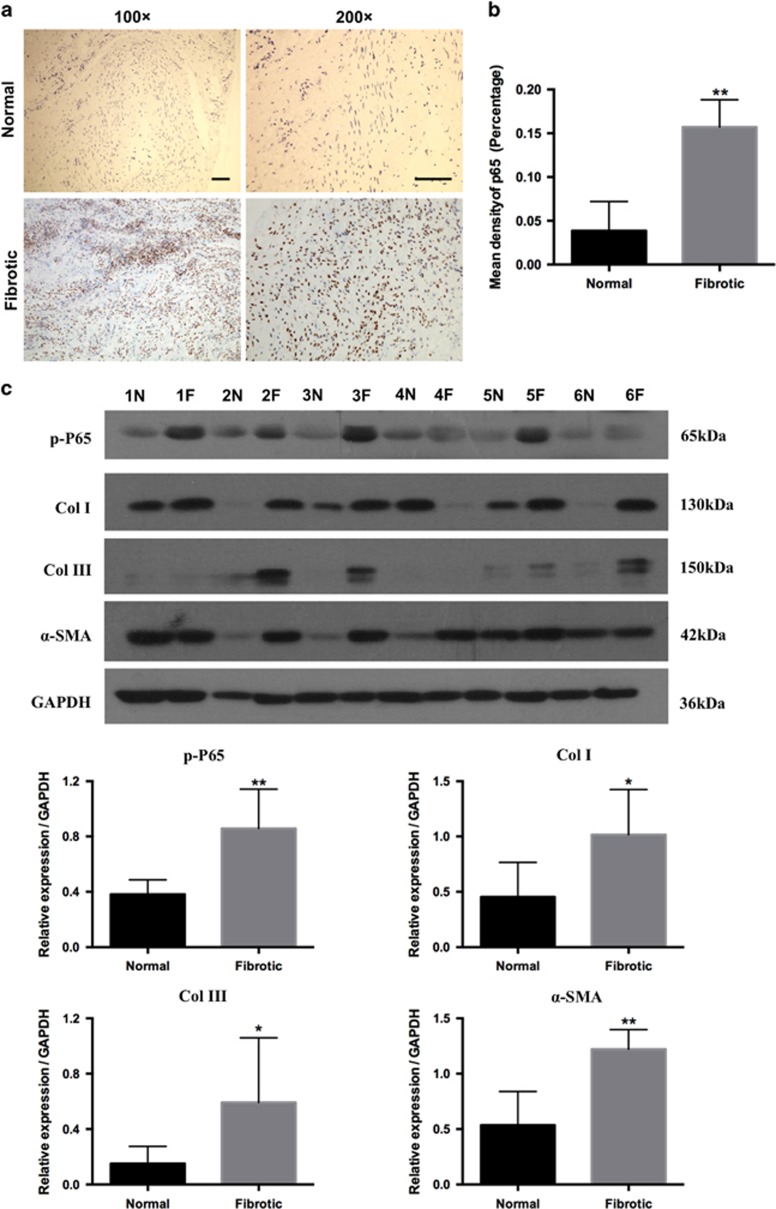
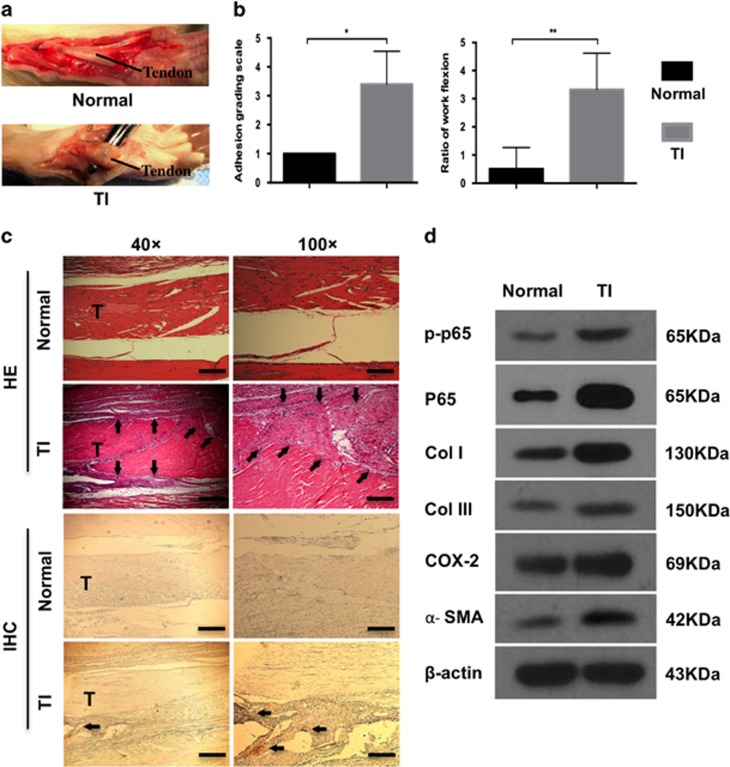
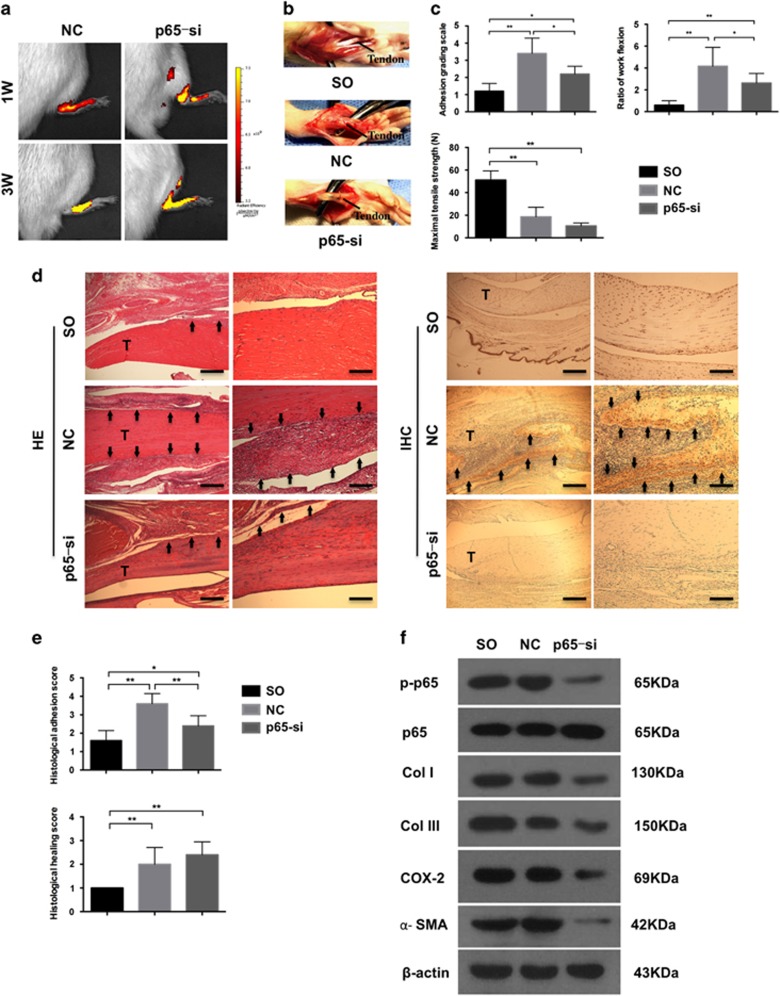
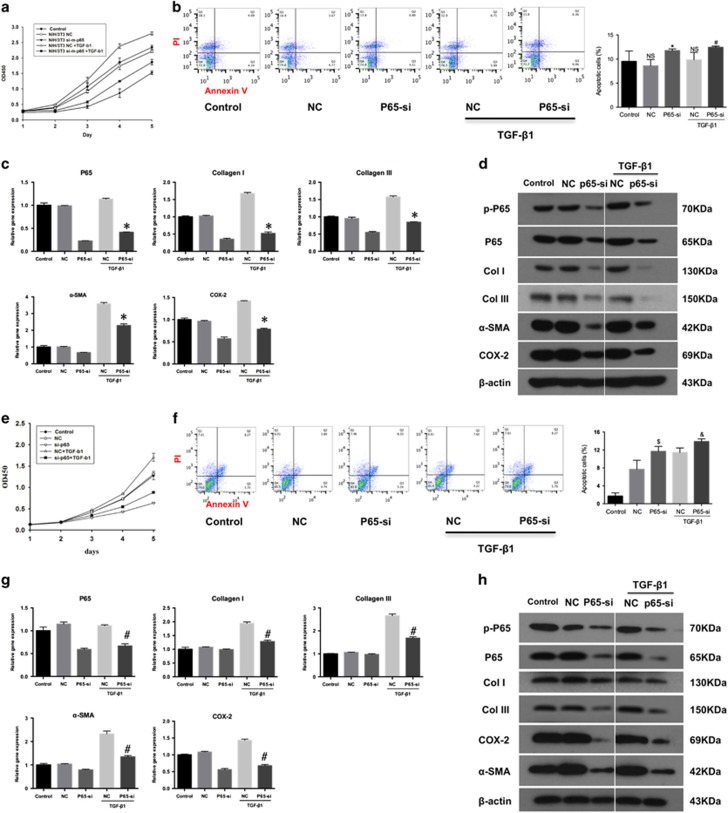
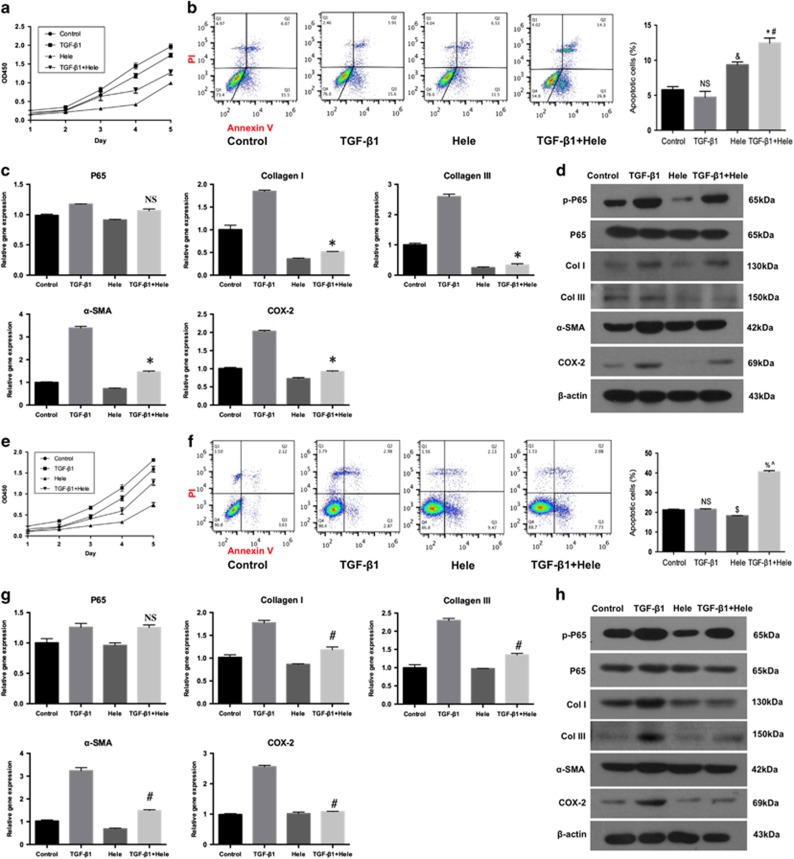
Peritendinous tissue fibrosis which leads to poor tendon function is a worldwide clinical problem; however, its mechanism remains unclear. Transcription factor RelA/p65, an important subunit in the NF-κB complex, is known to have a critical role in many fibrotic diseases. Here, we show that RelA/p65 functions as a core fibrogenic regulator in tendon adhesion and that its inhibition exerts an anti-fibrogenic effect on peritendinous adhesion. We detected the upregulation of the NF-κB pathway in human tendon adhesion using a gene chip microarray assay and revealed the overexpression of p65 and extracellular matrix (ECM) proteins Collagen I, Collagen III, and α-smooth muscle actin (α-SMA) in human fibrotic tissues by immunohistochemistry and western blotting. We also found that in a rat model of tendon injury, p65 expression correlated with tendon adhesion, whereas its inhibition by small interfering (si)RNA prevented fibrous tissue formation and inflammatory reaction as evidenced by macroscopic, biomechanical, histological, immunohistochemical, and western blotting analyses. Furthermore, in cultured fibroblasts, p65-siRNA, p65-specific inhibitor, Helenalin and JSH23 suppressed cell proliferation and promoted apoptosis, whereas inhibiting the mRNA and protein expression of ECM components and cyclo-oxygenase-2, an inflammatory factor involved in tendon adhesion. Our findings indicate that p65 has a critical role in peritendinous tissue fibrosis and suggest that p65 knockdown may be a promising therapeutic approach to prevent tendon adhesion.
导致肌腱功能不良的腱周组织纤维化是一个全球性的临床问题;然而,其机制仍不清楚。转录因子RelA/p65是核因子κB(NF-κB)复合物中的一个重要亚基,已知在许多纤维化疾病中起关键作用。在此,我们表明RelA/p65在肌腱粘连中作为核心促纤维化调节因子发挥作用,并且对其抑制可对腱周粘连产生抗纤维化作用。我们使用基因芯片微阵列分析检测了人肌腱粘连中NF-κB通路的上调,并通过免疫组织化学和蛋白质印迹法揭示了人纤维化组织中p65以及细胞外基质(ECM)蛋白Ⅰ型胶原、Ⅲ型胶原和α平滑肌肌动蛋白(α-SMA)的过表达。我们还发现,在大鼠肌腱损伤模型中,p65表达与肌腱粘连相关,而小干扰(si)RNA对其的抑制可防止纤维组织形成和炎症反应,宏观、生物力学、组织学、免疫组织化学和蛋白质印迹分析均证实了这一点。此外,在培养的成纤维细胞中,p65-siRNA、p65特异性抑制剂海伦alin和JSH23抑制细胞增殖并促进细胞凋亡,同时抑制ECM成分以及参与肌腱粘连的炎症因子环氧合酶-2的mRNA和蛋白表达。我们的研究结果表明,p65在腱周组织纤维化中起关键作用,并提示敲低p65可能是预防肌腱粘连的一种有前景的治疗方法。