Shen Li, Han Bing, Geng Yuan, Wang Jinhua, Wang Zhengmin, Wang Mingwei
Clinical Laboratory, The First Hospital of Hebei Medical University, Shijiazhuang, Hebei Province, China.
Department of Neurology, The First Hospital of Hebei Medical University, Shijiazhuang, Hebei Province, China.
PLoS One. 2017 Mar 30;12(3):e0174763. doi: 10.1371/journal.pone.0174763. eCollection 2017.
Total salvianolic acid (TSA) is extracted from salvia miltiorrhiza; however, to date, there has been limited characterization of its effects on metabolites in Alzheimer's disease model-APPswe/PS1dE9 mice. The main objective of this study was to investigate the metabolic changes in 7-month-old APPswe/PS1dE9 mice treated with TSA, which protects against learning and memory impairment.
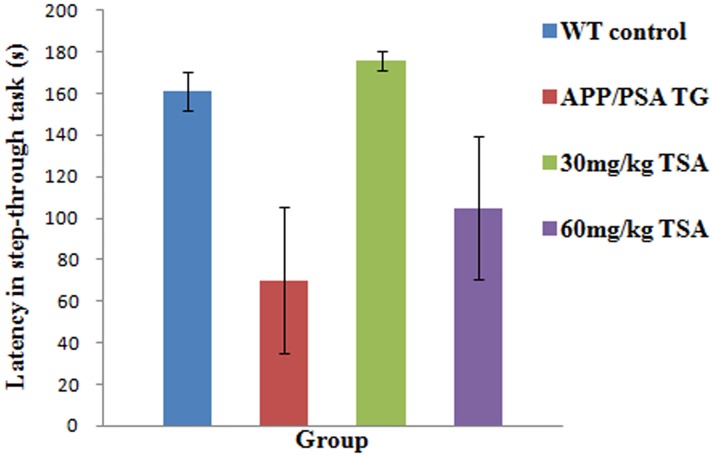
APPswe/PS1dE9 mice were treated with TSA (30 mg/kg·d and 60 mg/kg·d, i.p.) and saline (i.p.) daily from 3.5 months old for 14 weeks; saline-treated (i.p.) WT mice were included as the controls. The effects of TSA on learning and memory were assessed by a series of behavioral tests, including the NOR, MWM and step-through tasks. The FBG and plasma lipid levels were subsequently assessed using the GOPOD and enzymatic color methods, respectively. Finally, the concentrations of Aβ42, Aβ40 and metabolites in the hippocampus of the mice were detected via ELISA and GC-TOF-MS, respectively.
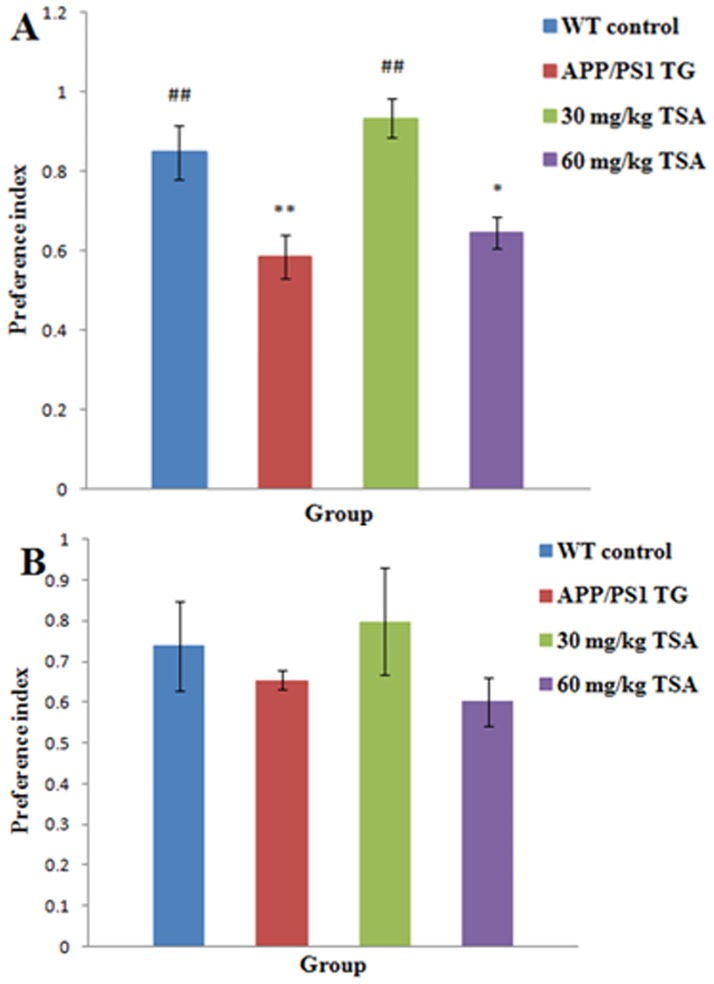
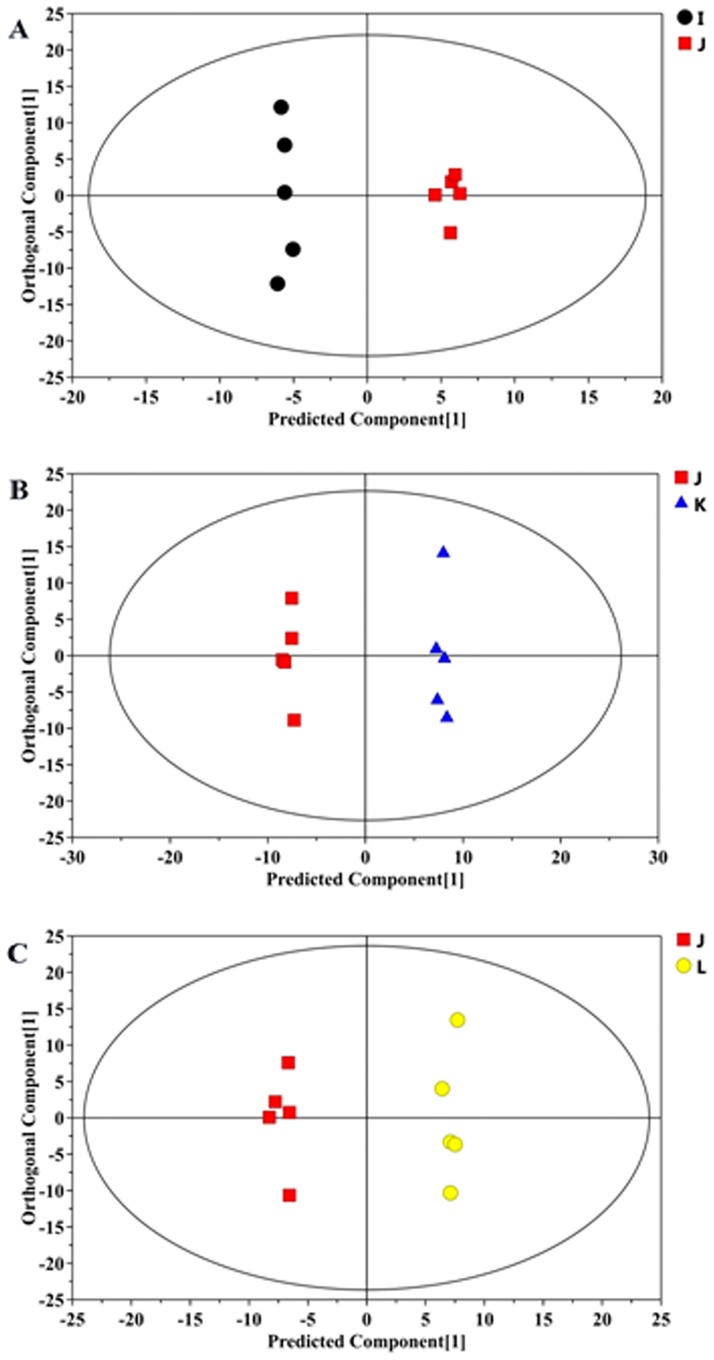
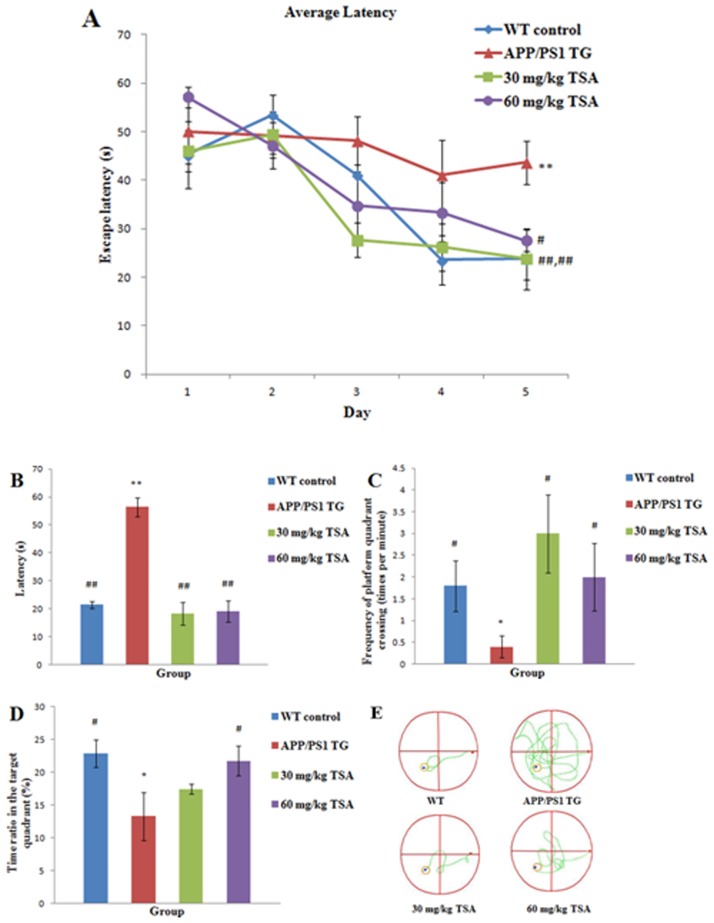
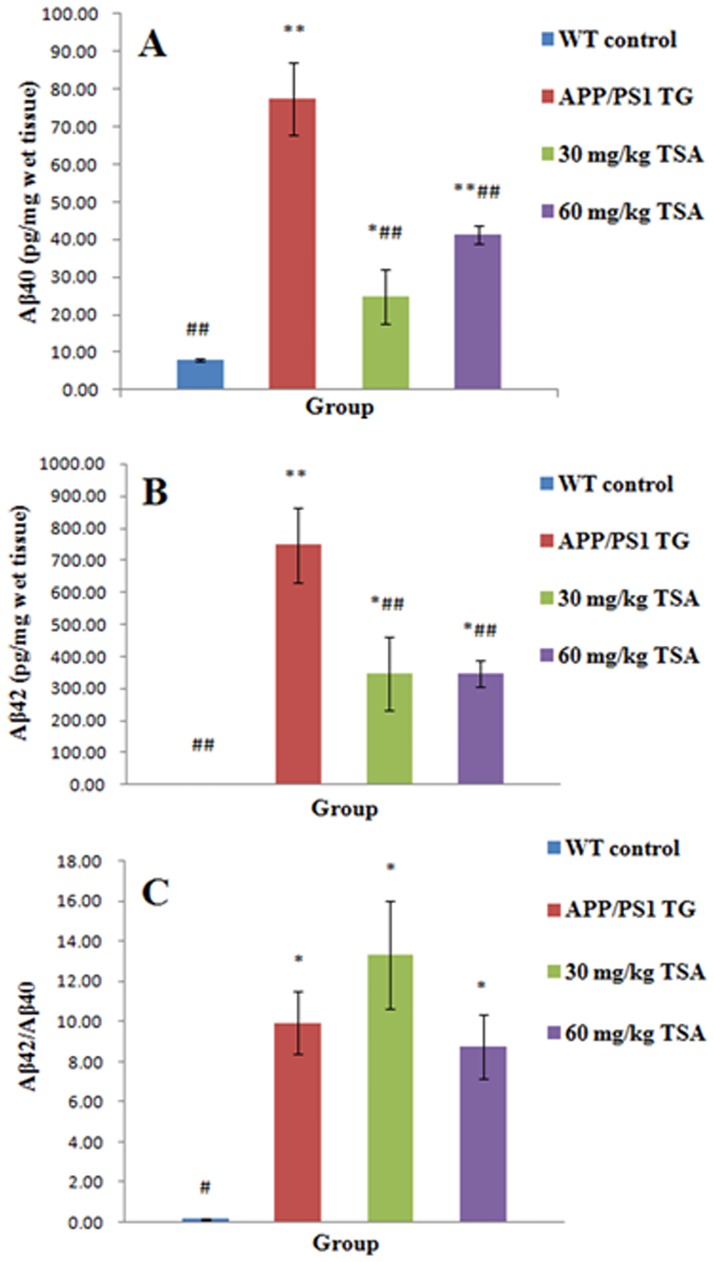
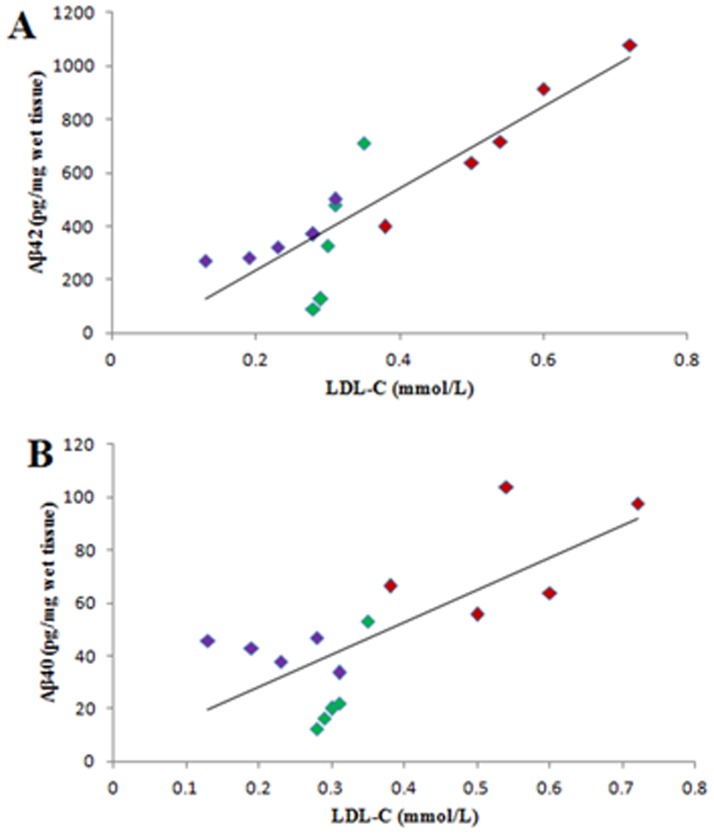
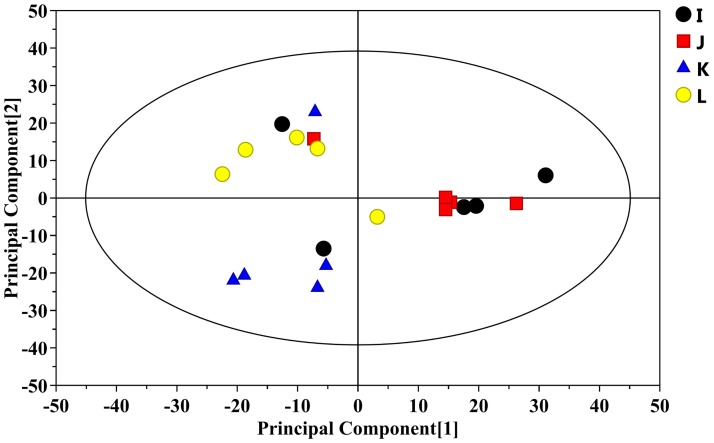
At 7 months of age, the APPswe/PS1dE9 mice treated with TSA exhibited an improvement in the preference index (PI) one hour after the acquisition phase in the NOR and the preservation of spatial learning and memory in the MWM. Treatment with TSA substantially decreased the LDL-C level, and 60 mg/kg TSA decreased the CHOL level compared with the plasma level of the APPswe/PS1dE9 group. The Aβ42 and Aβ40 levels in the hippocampus were decreased in the TSA-treated group compared with the saline-treated APPswe/PS1dE9 group. The regulation of metabolic pathways relevant to TSA predominantly included carbohydrate metabolism, such as sorbitol, glucose-6-phosphate, sucrose-6-phosphate and galactose, vitamin metabolism involved in cholecalciferol and ascorbate in the hippocampus.
TSA induced a remarkable amelioration of learning and memory impairments in APPswe/PS1dE9 mice through the regulation of Aβ42, Aβ40, carbohydrate and vitamin metabolites in the hippocampus and LDL-C and CHOL in the plasma.
总丹参酚酸(TSA)是从丹参中提取的;然而,迄今为止,其对阿尔茨海默病模型APPswe/PS1dE9小鼠体内代谢物影响的特征描述有限。本研究的主要目的是研究用TSA治疗的7月龄APPswe/PS1dE9小鼠的代谢变化,TSA可预防学习和记忆障碍。
从3.5月龄开始,APPswe/PS1dE9小鼠每天腹腔注射TSA(30mg/kg·d和60mg/kg·d)和生理盐水;腹腔注射生理盐水的野生型(WT)小鼠作为对照。通过一系列行为测试评估TSA对学习和记忆的影响,包括新奇物体识别试验(NOR)、 Morris水迷宫试验(MWM)和穿梭箱试验。随后分别使用葡萄糖氧化酶-过氧化物酶法(GOPOD)和酶比色法评估空腹血糖(FBG)和血脂水平。最后,分别通过酶联免疫吸附测定(ELISA)和气相色谱-飞行时间质谱(GC-TOF-MS)检测小鼠海马中β淀粉样蛋白42(Aβ42)、β淀粉样蛋白40(Aβ40)和代谢物的浓度。
7月龄时,用TSA治疗的APPswe/PS1dE9小鼠在NOR获取阶段后1小时的偏好指数(PI)有所改善,并且在MWM中保留了空间学习和记忆能力。与APPswe/PS1dE9组血浆水平相比,TSA治疗显著降低了低密度脂蛋白胆固醇(LDL-C)水平,60mg/kg TSA降低了胆固醇(CHOL)水平。与生理盐水处理的APPswe/PS1dE9组相比,TSA处理组海马中的Aβ42和Aβ40水平降低。与TSA相关的代谢途径调节主要包括碳水化合物代谢,如海马中的山梨醇、6-磷酸葡萄糖、6-磷酸蔗糖和半乳糖,以及涉及胆钙化醇和抗坏血酸的维生素代谢。
TSA通过调节海马中的Aβ42、Aβ40、碳水化合物和维生素代谢物以及血浆中的LDL-C和CHOL,显著改善了APPswe/PS1dE9小鼠的学习和记忆障碍。