Wu Bin, Jiang Mali, Peng Qi, Li Gang, Hou Zhipeng, Milne Ginger L, Mori Susumu, Alonso Robert, Geisler John G, Duan Wenzhen
Division of Neurobiology, Department of Psychiatry and Behavioral Sciences, Johns Hopkins University School of Medicine, Baltimore, MD, United States; Department of General Practice, The First hospital of China Medical University, Shenyang, Liaoning Province, China.
Division of Neurobiology, Department of Psychiatry and Behavioral Sciences, Johns Hopkins University School of Medicine, Baltimore, MD, United States.
Exp Neurol. 2017 Jul;293:83-90. doi: 10.1016/j.expneurol.2017.03.020. Epub 2017 Mar 28.
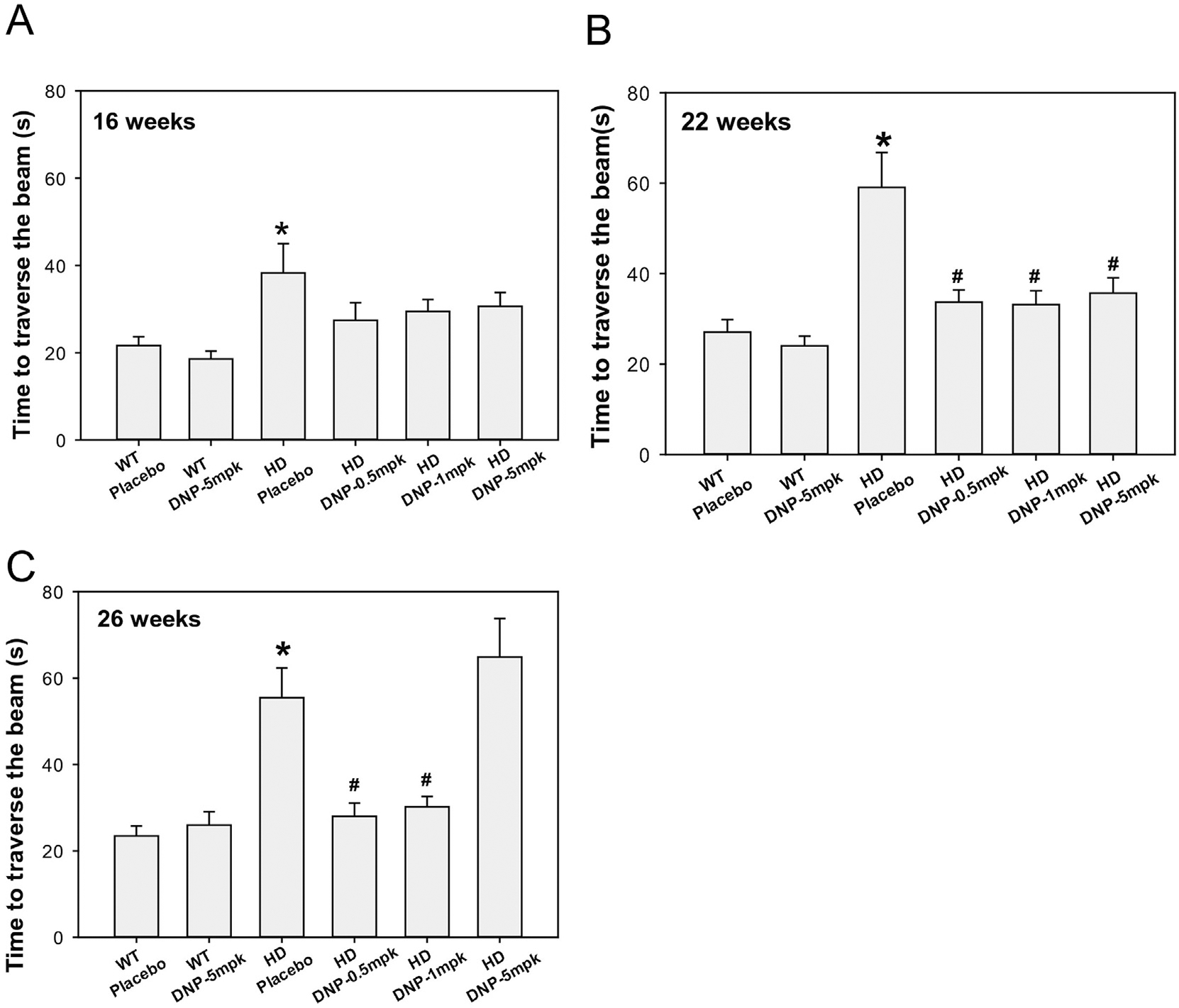
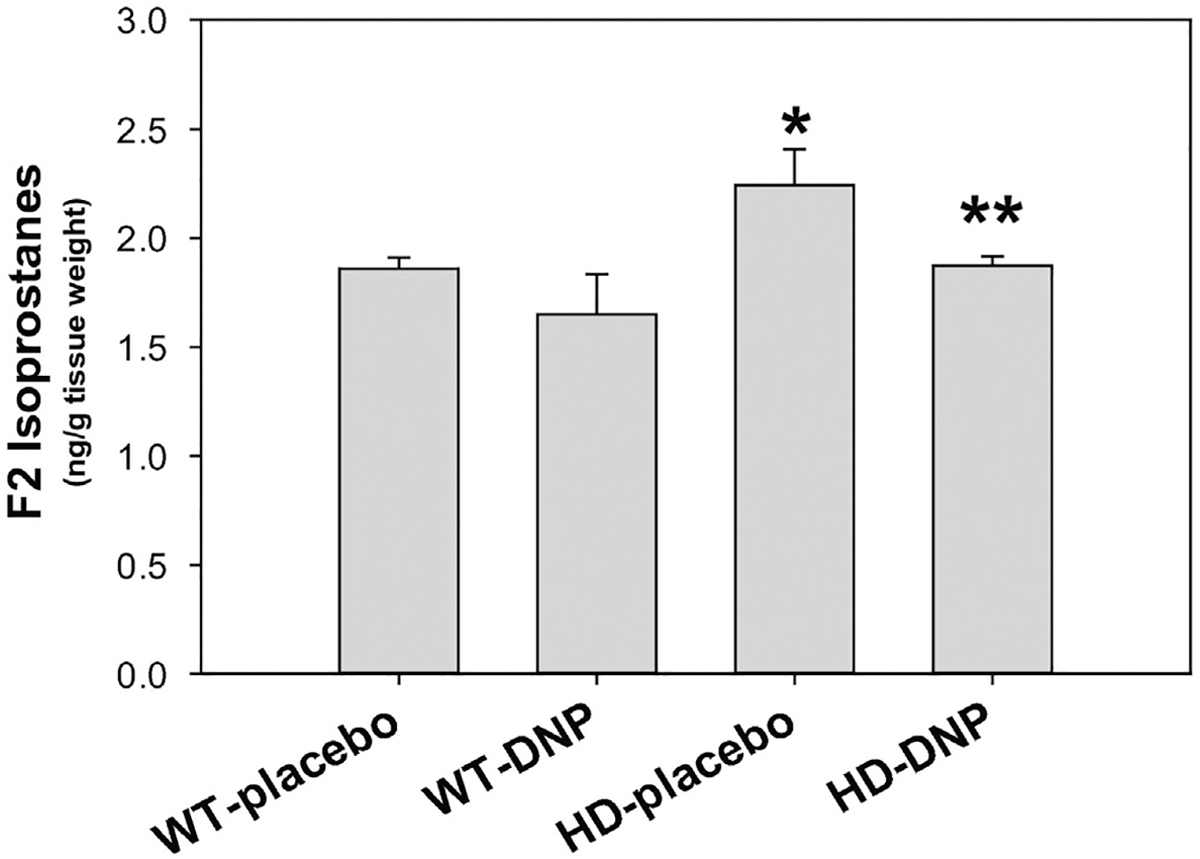
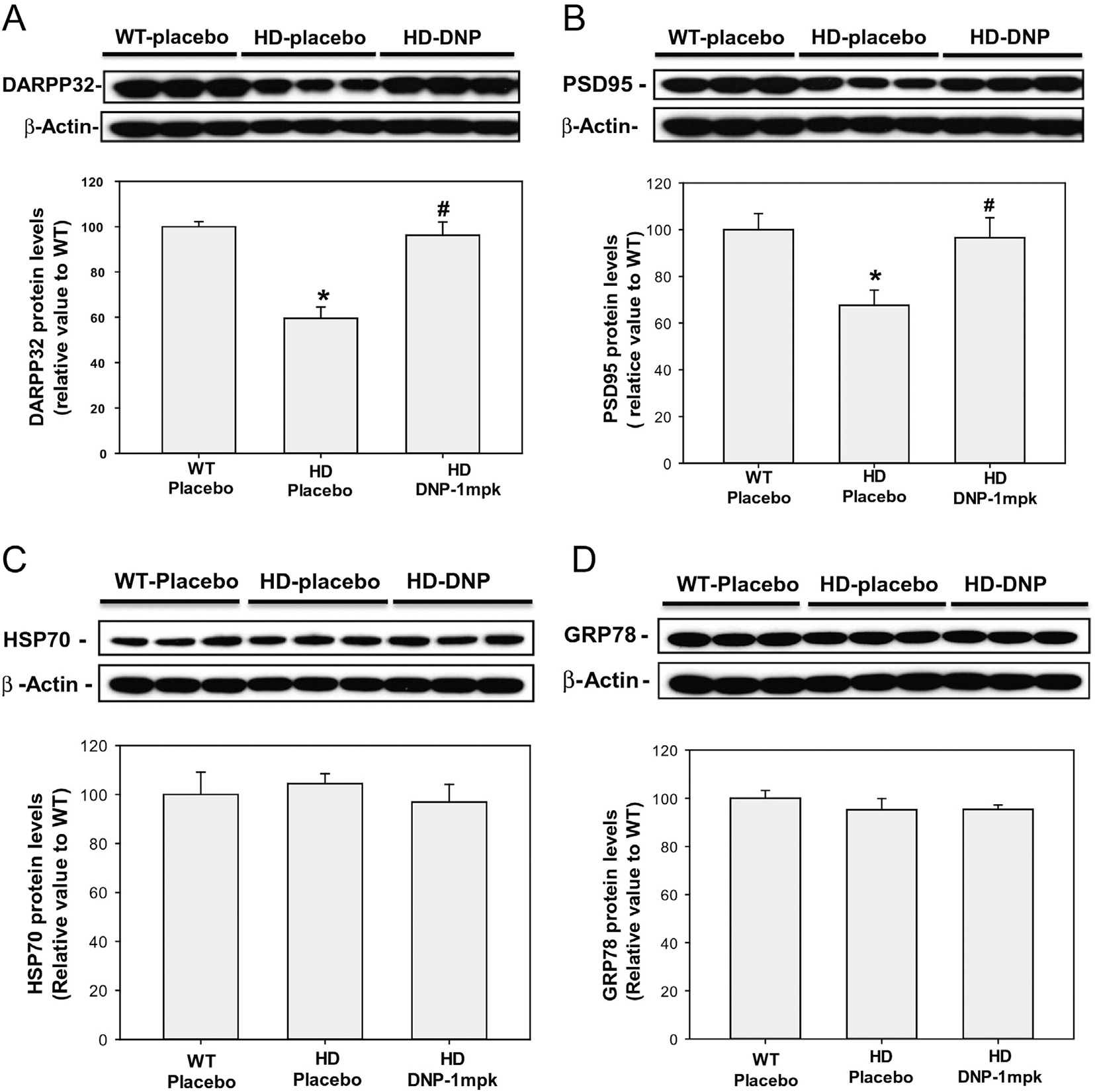
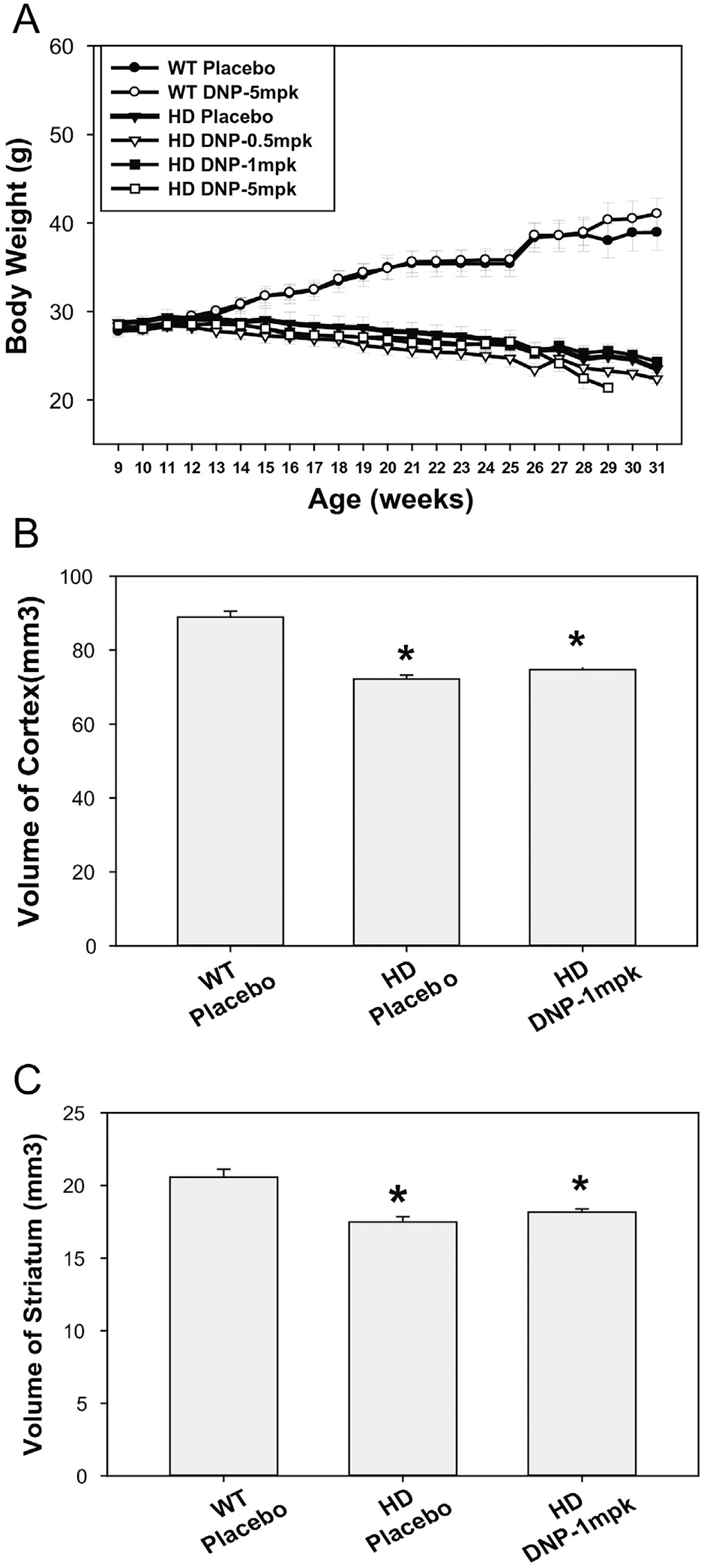
Huntington's disease (HD) is a neurodegenerative disorder caused by a CAG repeat expansion in the first exon of the gene huntingtin. There is no treatment to prevent or delay the disease course of HD currently. Oxidative stress and mitochondrial dysfunction have emerged as key determinants of the disease progression in HD. Therefore, counteracting mutant huntingtin (mHtt)-induced oxidative stress and mitochondrial dysfunction appears as a new approach to treat this devastating disease. Interestingly, mild mitochondrial uncoupling improves neuronal resistance to stress and facilitates neuronal survival. Mild mitochondrial uncoupling can be induced by the proper dose of 2,4-dinitrophenol (DNP), a proton ionophore that was previously used for weight loss. In this study, we evaluated the effects of chronic administration of DNP at three doses (0.5, 1, 5mg/kg/day) on mHtt-induced behavioral deficits and cellular abnormalities in the N171-82Q HD mouse model. DNP at a low dose (1mg/kg/day) significantly improved motor function and preserved medium spiny neuronal marker DARPP32 and postsynaptic protein PSD95 in the striatum of HD mice. Further mechanistic study suggests that DNP at this dose reduced oxidative stress in HD mice, which was indicated by reduced levels of F2-isoprostanes in the brain of HD mice treated with DNP. Our data indicated that DNP provided behavioral benefit and neuroprotective effect at a weight neutral dose in HD mice, suggesting that the potential value of repositioning DNP to HD treatment is warranted in well-controlled clinical trials in HD.
亨廷顿舞蹈症(HD)是一种神经退行性疾病,由亨廷顿基因第一外显子中的CAG重复序列扩增引起。目前尚无预防或延缓HD病程的治疗方法。氧化应激和线粒体功能障碍已成为HD疾病进展的关键决定因素。因此,对抗突变亨廷顿蛋白(mHtt)诱导的氧化应激和线粒体功能障碍似乎是治疗这种毁灭性疾病的新方法。有趣的是,轻度线粒体解偶联可提高神经元对压力的抵抗力并促进神经元存活。适当剂量的2,4-二硝基苯酚(DNP)可诱导轻度线粒体解偶联,DNP是一种质子载体,曾被用于减肥。在本研究中,我们评估了三种剂量(0.5、1、5mg/kg/天)的DNP慢性给药对N171-82Q HD小鼠模型中mHtt诱导的行为缺陷和细胞异常的影响。低剂量(1mg/kg/天)的DNP显著改善了HD小鼠的运动功能,并保留了纹状体中中等棘状神经元标志物DARPP32和突触后蛋白PSD95。进一步的机制研究表明,该剂量的DNP降低了HD小鼠的氧化应激,这在接受DNP治疗的HD小鼠大脑中F2-异前列腺素水平降低中得到体现。我们的数据表明,DNP在HD小鼠中以体重中性剂量提供了行为益处和神经保护作用,这表明在HD的严格控制的临床试验中重新定位DNP用于HD治疗具有潜在价值。