Clement N D, MacDonald D J, Hamilton D F, Burnett R
Department of Orthopaedics, Royal Infirmary of Edinburgh, Little France Crescent, Edinburgh, EH16 4SA, UK
Department of Orthopaedics, University of Edinburgh, FU413, Chancellor's Building, 49 Little France Crescent, Edinburgh, EH164SB, UK.
Bone Joint Res. 2017 Mar;6(3):172-178. doi: 10.1302/2046-3758.63.BJR-2015-0021.R1.
Preservation of posterior condylar offset (PCO) has been shown to correlate with improved functional results after primary total knee arthroplasty (TKA). Whether this is also the case for revision TKA, remains unknown. The aim of this study was to assess the independent effect of PCO on early functional outcome after revision TKA.
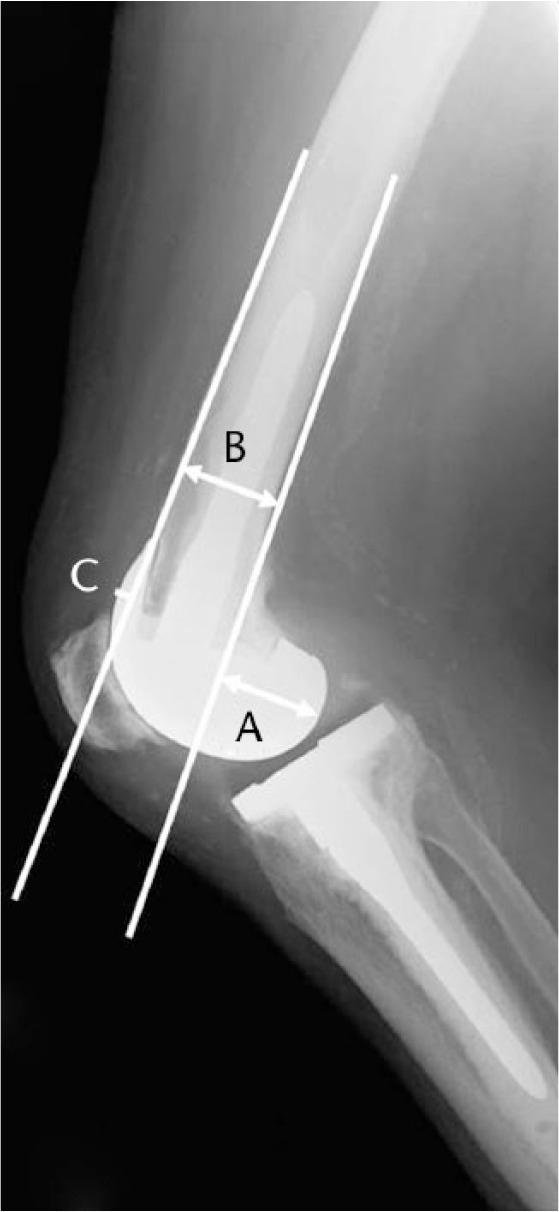
A total of 107 consecutive aseptic revision TKAs were performed by a single surgeon during an eight-year period. The mean age was 69.4 years (39 to 85) and there were 59 female patients and 48 male patients. The Oxford Knee Score (OKS) and Short-form (SF)-12 score were assessed pre-operatively and one year post-operatively. Patient satisfaction was also assessed at one year. Joint line and PCO were assessed radiographically at one year.
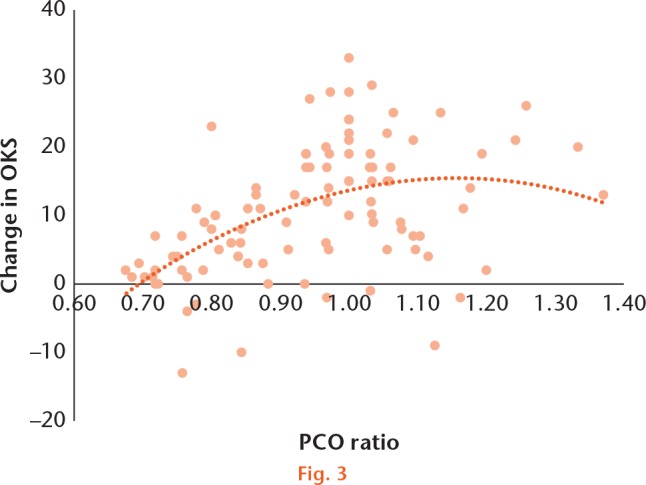
There was a significant improvement in the OKS (10.6 points, 95% confidence interval (CI) 8.8 to 12.3) and the SF-12 physical component score (5.9, 95% CI 4.1 to 7.8). PCO directly correlated with change in OKS (p < 0.001). Linear regression analysis confirmed the independent effect of PCO on the OKS (p < 0.001) and the SF-12 physical score (p = 0.02). The overall rate of satisfaction was 85% and on logistic regression analysis improvement in the OKS (p = 0.002) was a significant predictor of patient satisfaction, which is related to PCO; although this was not independently associated with satisfaction.
Preservation of PCO should be a major consideration when undertaking revision TKA. The option of increasing PCO to balance the flexion gap while maintaining the joint line should be assessed intra-operatively. N. D. Clement, D. J. MacDonald, D. F. Hamilton, R. Burnett. Posterior condylar offset is an independent predictor of functional outcome after revision total knee arthroplasty. 2017;6:172-178. DOI: 10.1302/2046-3758.63.BJR-2015-0021.R1.
在初次全膝关节置换术(TKA)后,后髁偏移(PCO)的保留已被证明与功能改善结果相关。在翻修TKA中是否也是如此仍不清楚。本研究的目的是评估PCO对翻修TKA术后早期功能结局的独立影响。
在八年期间,由一名外科医生连续进行了107例无菌性翻修TKA。平均年龄为69.4岁(39至85岁),其中女性患者59例,男性患者48例。术前和术后一年评估牛津膝关节评分(OKS)和简短健康调查问卷(SF)-12评分。术后一年还评估了患者满意度。术后一年通过影像学评估关节线和PCO。
OKS(10.6分,95%置信区间(CI)8.8至12.3)和SF-12身体成分评分(5.9,95%CI 4.1至7.8)有显著改善。PCO与OKS的变化直接相关(p<0.001)。线性回归分析证实了PCO对OKS(p<0.001)和SF-12身体评分(p = 0.02)的独立影响。总体满意度为85%,逻辑回归分析显示OKS的改善(p = 0.002)是患者满意度的重要预测因素,这与PCO有关;尽管这与满意度并非独立相关。
在进行翻修TKA时,保留PCO应是一个主要考虑因素。术中应评估增加PCO以平衡屈曲间隙同时保持关节线的选择。N.D.克莱门特、D.J.麦克唐纳、D.F.汉密尔顿、R.伯内特。后髁偏移是翻修全膝关节置换术后功能结局的独立预测因素。2017;6:172 - 178。DOI:10.1302/2046 - 3758.63.BJR - 2015 - 0021.R1。