Dworkis Daniel A, Taylor Lauren A, Peak David A, Bearnot Benjamin
Harvard Medical School, Department of Emergency Medicine, Boston, Massachusetts, United States of America.
Massachusetts General Hospital, Department of Emergency Medicine, Boston, Massachusetts, United States of America.
PLoS One. 2017 Mar 31;12(3):e0175115. doi: 10.1371/journal.pone.0175115. eCollection 2017.
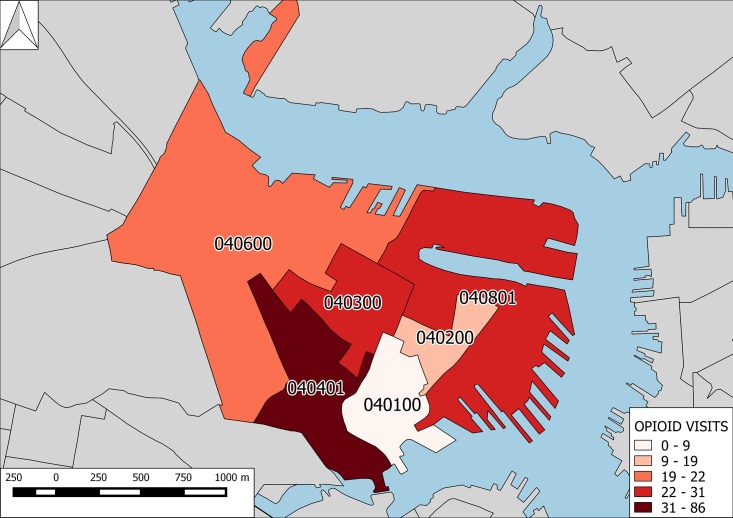
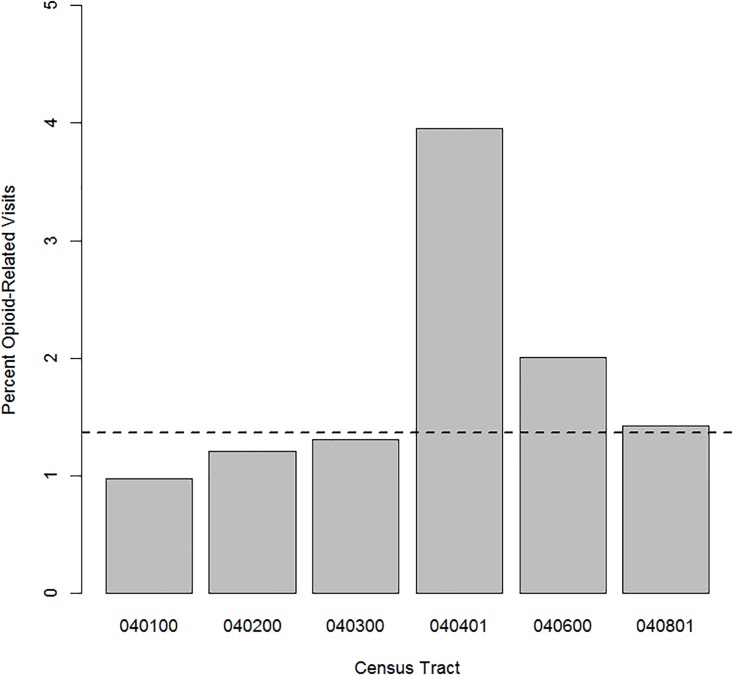
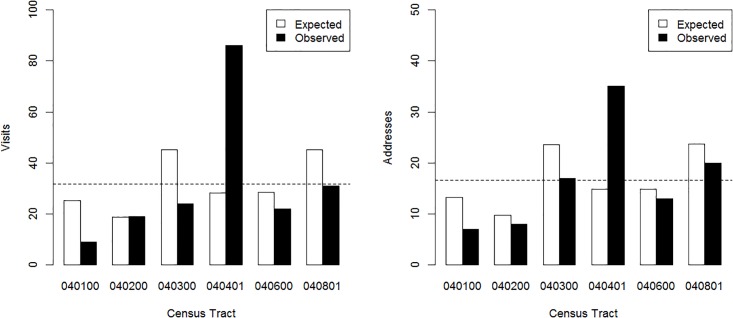
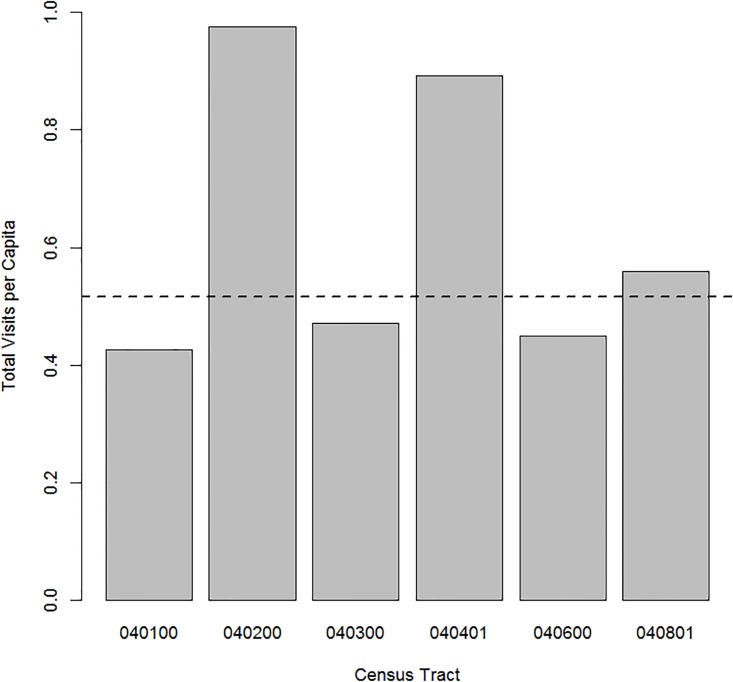
The opioid epidemic in the United States carries significant morbidity and mortality and requires a coordinated response among emergency providers, outpatient providers, public health departments, and communities. Anecdotally, providers across the spectrum of care at Massachusetts General Hospital (MGH) in Boston, MA have noticed that Charlestown, a community in northeast Boston, has been particularly impacted by the opioid epidemic and needs both emergency and longer-term resources. We hypothesized that geospatial analysis of the home addresses of patients presenting to the MGH emergency department (ED) with opioid-related emergencies might identify "hot spots" of opioid-related healthcare needs within Charlestown that could then be targeted for further investigation and resource deployment. Here, we present a geospatial analysis at the United States census tract level of the home addresses of all patients who presented to the MGH ED for opioid-related emergency visits between 7/1/2012 and 6/30/2015, including 191 visits from 100 addresses in Charlestown, MA. Among the six census tracts that comprise Charlestown, we find a 9.5-fold difference in opioid-related ED visits, with 45% of all opioid-related visits from Charlestown originating in tract 040401. The signal from this census tract remains strong after adjusting for population differences between census tracts, and while this tract is one of the higher utilizing census tracts in Charlestown of the MGH ED for all cause visits, it also has a 2.9-fold higher rate of opioid-related visits than the remainder of Charlestown. Identifying this hot spot of opioid-related emergency needs within Charlestown may help re-distribute existing resources efficiently, empower community and ED-based physicians to advocate for their patients, and serve as a catalyst for partnerships between MGH and local community groups. More broadly, this analysis demonstrates that EDs can use geospatial analysis to address the emergency and longer-term health needs of the communities they are designed to serve.
美国的阿片类药物泛滥造成了严重的发病和死亡情况,需要急救人员、门诊医护人员、公共卫生部门和社区共同协调应对。据传闻,马萨诸塞州波士顿市麻省总医院(MGH)各护理领域的医护人员注意到,波士顿东北部的社区查尔斯敦受阿片类药物泛滥影响尤为严重,既需要急救资源,也需要长期资源。我们推测,对因阿片类药物相关急症前往MGH急诊科(ED)就诊患者的家庭住址进行地理空间分析,可能会确定查尔斯敦内阿片类药物相关医疗需求的“热点地区”,进而针对这些地区进行进一步调查和资源调配。在此,我们呈现了在2012年7月1日至2015年6月30日期间,对所有因阿片类药物相关急症前往MGH急诊科就诊患者的家庭住址,在美国人口普查区层面进行的地理空间分析,其中包括来自马萨诸塞州查尔斯敦100个住址的191次就诊。在构成查尔斯敦的六个普查区中,我们发现与阿片类药物相关的急诊科就诊次数相差9.5倍,查尔斯敦所有与阿片类药物相关就诊中有45%来自040401普查区。在对普查区之间的人口差异进行调整后,该普查区的信号依然强劲,虽然该普查区是查尔斯敦内MGH急诊科所有病因就诊中利用率较高的普查区之一,但与阿片类药物相关的就诊率比查尔斯敦的其他地区高出2.9倍。确定查尔斯敦内这一阿片类药物相关急症需求的热点地区,可能有助于高效重新分配现有资源,使社区和急诊科医生能够为患者争取权益,并促进MGH与当地社区团体之间建立伙伴关系。更广泛地说,这一分析表明,急诊科可以利用地理空间分析来满足其旨在服务的社区的急症和长期健康需求。