Buzzacott Peter, Dolen William K, Chimiak James
Divers Alert Network, Durham, North Carolina
School of Sports Science, Exercise and Health University of Western Australia, Crawley, Western Australia, Australia.
Physiol Rep. 2017 Apr;5(7). doi: 10.14814/phy2.13240.
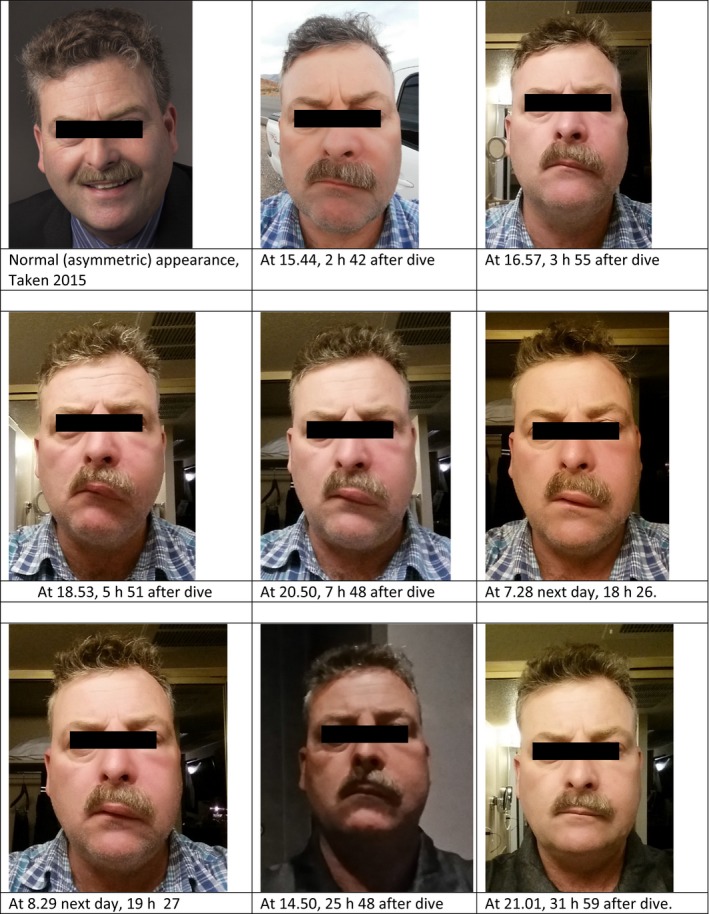
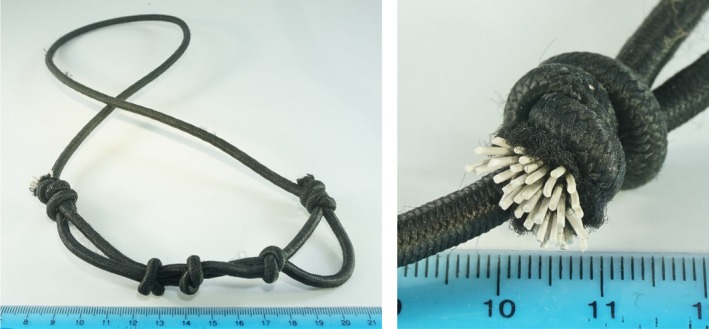
A recreational scuba diver wore a second scuba regulator against his face during a scuba dive, attached by an elastic rubber cord necklace. After surfacing, the diver's left face became swollen. Through a process of elimination all other items of scuba equipment were excluded as potential causes. A dive with the same equipment minus the necklace confirmed the involvement of the necklace in the pathogenesis of the hypersensitive reaction. In vitro ImmunoCap IgE assay was positive to latex (1.30 kUa/L), subsequent patch testing for contact dermatitis provoked a reaction for benzophenone-4, (a UV stabalizer) and Fourier Transform Infra Red spectroscopy identified the elastic as ethylene propylene rubber, containing additional unidentified compounds. Allergy to natural rubber latex occurs in as many as 6% of Americans and Australians. Around three million American residents are thought to scuba dive each year. Recreational divers are, therefore, advised to check such necklaces, which are typically worn around the throat, for frayed ends and exposed rubber filaments.
一名休闲水肺潜水员在水肺潜水时,用一根弹性橡胶绳项链将第二个水肺调节器贴在脸上。浮出水面后,潜水员的左脸肿胀。通过排除过程,所有其他水肺设备项目都被排除为潜在原因。使用相同设备但不戴项链进行潜水证实了项链与过敏反应发病机制有关。体外免疫捕获免疫球蛋白E检测对乳胶呈阳性(1.30 kUa/L),随后针对接触性皮炎的斑贴试验对二苯甲酮-4(一种紫外线稳定剂)引发了反应,傅里叶变换红外光谱确定该弹性材料为乙丙橡胶,含有其他未鉴定的化合物。多达6%的美国人和澳大利亚人对天然橡胶乳胶过敏。据估计,每年约有300万美国居民进行水肺潜水。因此,建议休闲潜水员检查此类通常戴在脖子上的项链是否有磨损的末端和暴露在外的橡胶细丝。