Hiebert S W, Richardson C D, Lamb R A
Department of Biochemistry, Molecular Biology and Cell Biology, Northwestern University, Evanston, Illinois 60208.
J Virol. 1988 Jul;62(7):2347-57. doi: 10.1128/JVI.62.7.2347-2357.1988.
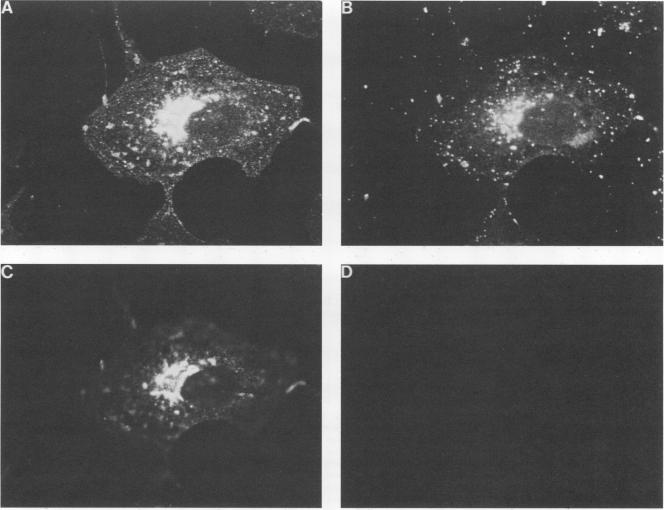
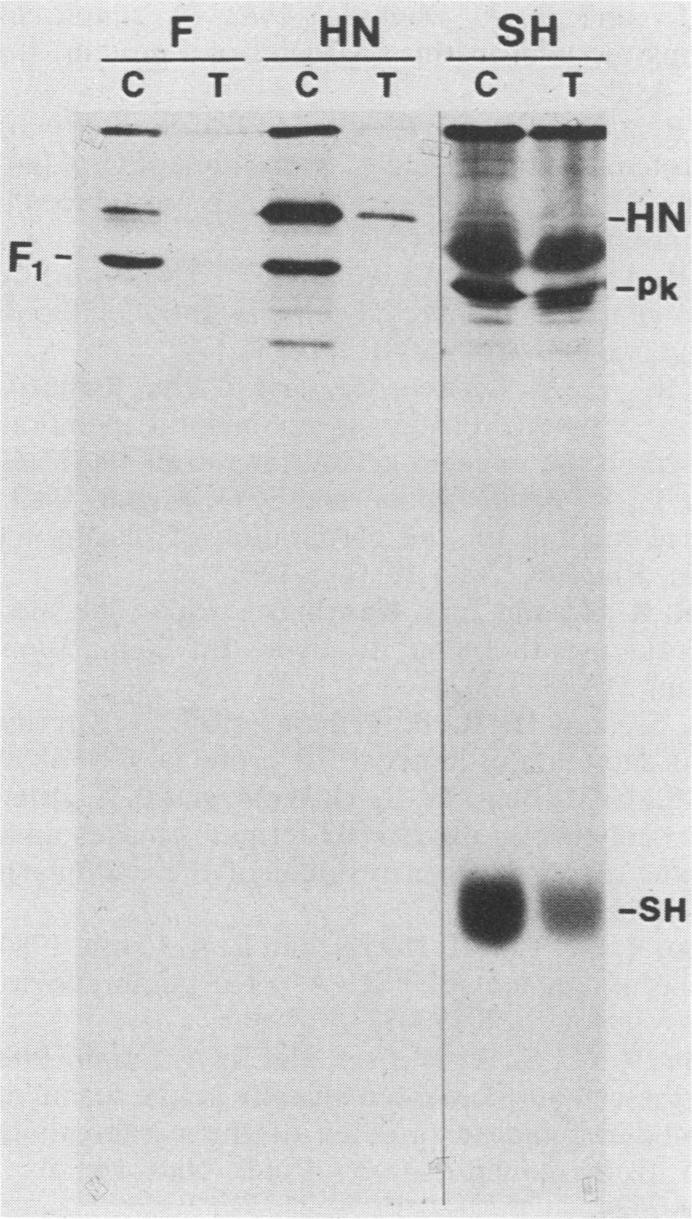
Antiserum was raised against a synthetic peptide containing the N-terminal hydrophilic domain of the small hydrophobic protein (SH) of simian virus 5 (SV5) and used to characterize properties of the SH protein. SH demonstrated properties of an integral membrane protein. Indirect immunofluorescence experiments showed that the protein is involved in the exocytotic pathway, and isolation of plasma membranes from SV5-infected cells showed an enrichment of SH, indicating that SH is transported to the infected-cell surface. Biochemical analysis of the orientation of SH in membranes by proteolysis of intact SV5-infected cell surfaces and intracellular microsomal vesicles indicated that SH is oriented in membranes with its N-terminal hydrophilic domain exposed on the cytoplasmic face of the plasma membrane and the C terminus of approximately five amino acid residues exposed at the cell surface. These data are discussed with respect to positive-acting signals being necessary in the ectodomain of SH for cell surface expression.
制备了针对含有猿猴病毒5(SV5)小疏水蛋白(SH)N端亲水区的合成肽的抗血清,并用于表征SH蛋白的特性。SH表现出整合膜蛋白的特性。间接免疫荧光实验表明该蛋白参与胞吐途径,从感染SV5的细胞中分离质膜显示SH富集,表明SH被转运到感染细胞表面。通过对完整的感染SV5的细胞表面和细胞内微粒体囊泡进行蛋白水解对SH在膜中的方向进行生化分析,结果表明SH在膜中的方向是其N端亲水区暴露在质膜的胞质面,约五个氨基酸残基的C端暴露在细胞表面。针对SH胞外域中细胞表面表达所需的正向作用信号对这些数据进行了讨论。