Li Tongtong, Long Meng, Li Huan, Gatesoupe François-Joël, Zhang Xujie, Zhang Qianqian, Feng Dongyue, Li Aihua
State Key Laboratory of Freshwater Ecology and Biotechnology, Institute of Hydrobiology, Chinese Academy of SciencesWuhan, China; Key Laboratory of Environmental and Applied Microbiology, and Environmental Microbiology Key Laboratory of Sichuan Province, Chengdu Institute of Biology, Chinese Academy of SciencesChengdu, China.
State Key Laboratory of Freshwater Ecology and Biotechnology, Institute of Hydrobiology, Chinese Academy of Sciences Wuhan, China.
Front Microbiol. 2017 Mar 17;8:454. doi: 10.3389/fmicb.2017.00454. eCollection 2017.
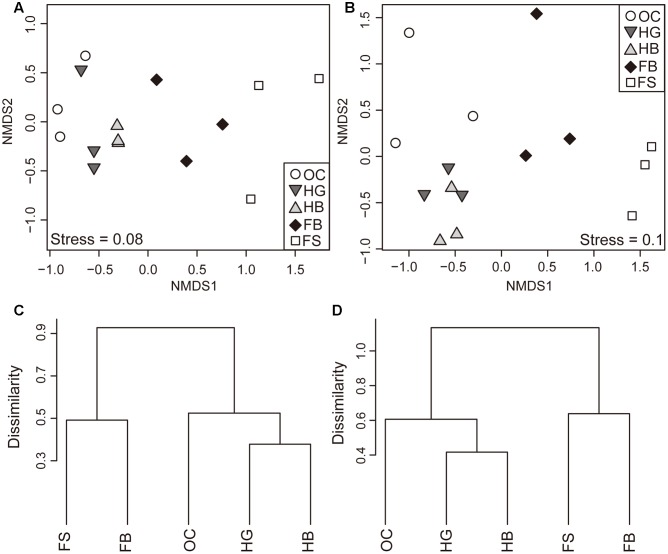
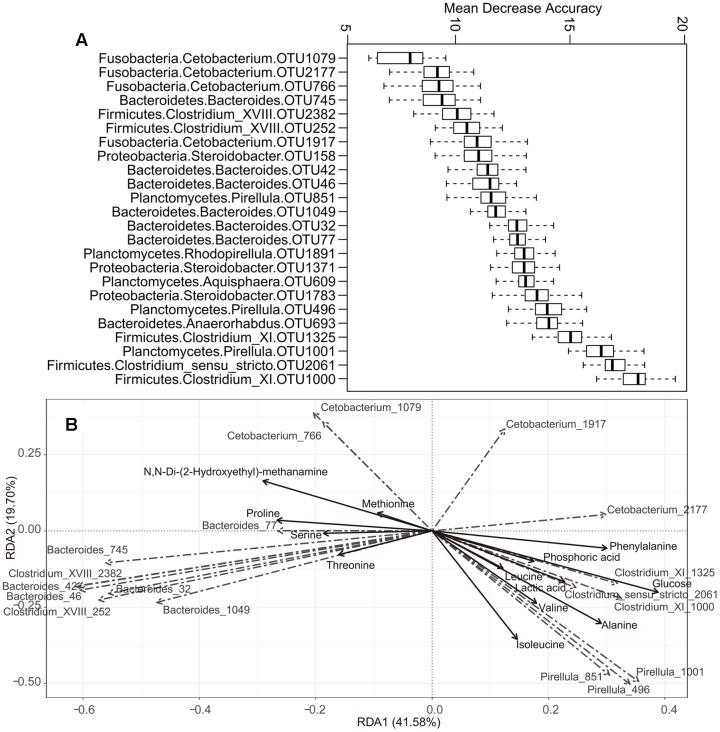
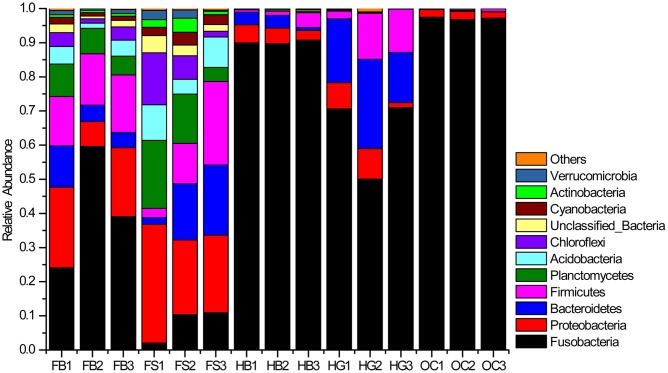
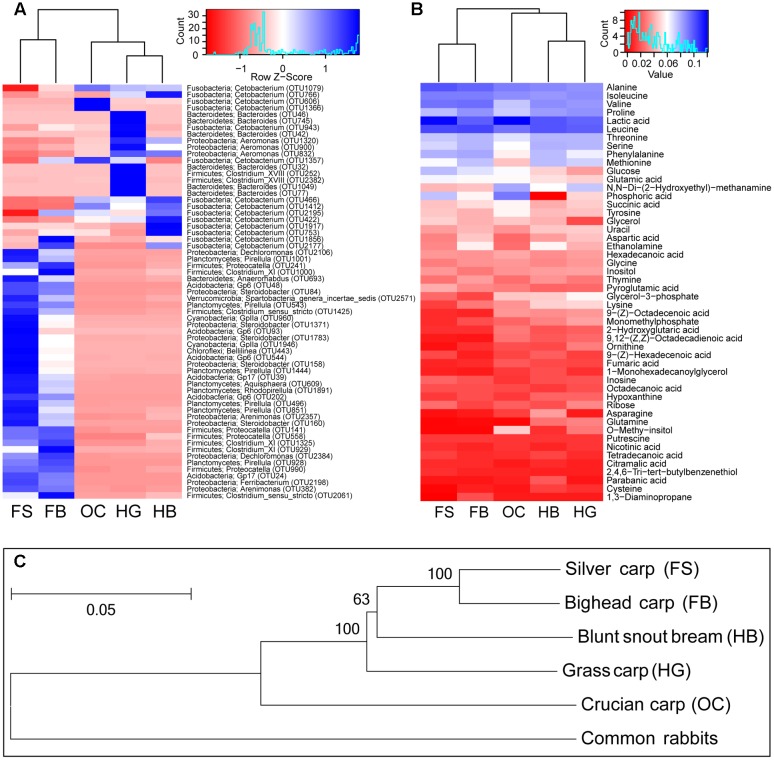
Gut microbiota play key roles in host nutrition and metabolism. However, little is known about the relationship between host genetics, gut microbiota and metabolic profiles. Here, we used high-throughput sequencing and gas chromatography/mass spectrometry approaches to characterize the microbiota composition and the metabolite profiles in the gut of five cyprinid fish species with three different feeding habits raised under identical husbandry conditions. Our results showed that host species and feeding habits significantly affect not only gut microbiota composition but also metabolite profiles (ANOSIM, ≤ 0.05). Mantel test demonstrated that host phylogeny, gut microbiota, and metabolite profiles were significantly related to each other ( ≤ 0.05). Additionally, the carps with the same feeding habits had more similarity in gut microbiota composition and metabolite profiles. Various metabolites were correlated positively with bacterial taxa involved in food degradation. Our results shed new light on the microbiome and metabolite profiles in the gut content of cyprinid fishes, and highlighted the correlations between host genotype, fish gut microbiome and putative functions, and gut metabolite profiles.
肠道微生物群在宿主营养和代谢中发挥着关键作用。然而,关于宿主遗传学、肠道微生物群和代谢谱之间的关系,我们知之甚少。在这里,我们使用高通量测序和气相色谱/质谱方法,对在相同养殖条件下饲养的具有三种不同摄食习性的五种鲤科鱼类肠道中的微生物群组成和代谢物谱进行了表征。我们的结果表明,宿主物种和摄食习性不仅显著影响肠道微生物群组成,还显著影响代谢物谱(ANOSIM,P≤0.05)。Mantel检验表明,宿主系统发育、肠道微生物群和代谢物谱彼此之间显著相关(P≤0.05)。此外,具有相同摄食习性的鲤鱼在肠道微生物群组成和代谢物谱上具有更多相似性。各种代谢物与参与食物降解的细菌类群呈正相关。我们的结果为鲤科鱼类肠道内容物中的微生物组和代谢物谱提供了新的见解,并突出了宿主基因型、鱼类肠道微生物组和推定功能以及肠道代谢物谱之间的相关性。