Luo Judong, Wang Wenjie, Tang Yiting, Zhou Dandan, Gao Yi, Zhang Qi, Zhou Xifa, Zhu Hui, Xing Ligang, Yu Jinming
Medical college of Shandong University, Jinan, Shandong, China.
School of Radiation Medicine and Protection and Jiangsu Provincial Key Laboratory of Radiation Medicine and Protection, Medical College of Soochow University, Suzhou, Jiangsu,China.
J Cancer. 2017 Feb 25;8(4):646-656. doi: 10.7150/jca.15652. eCollection 2017.
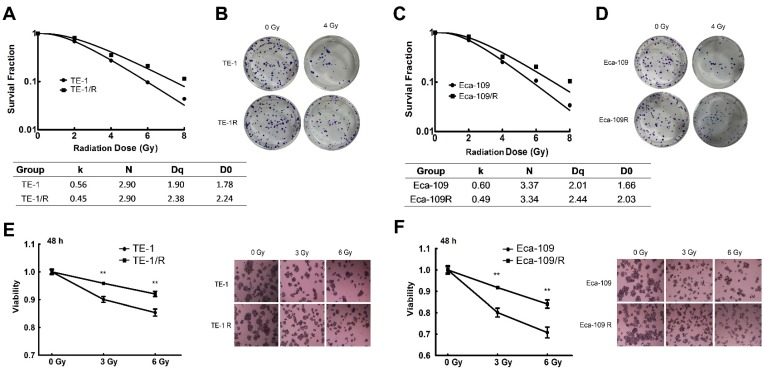
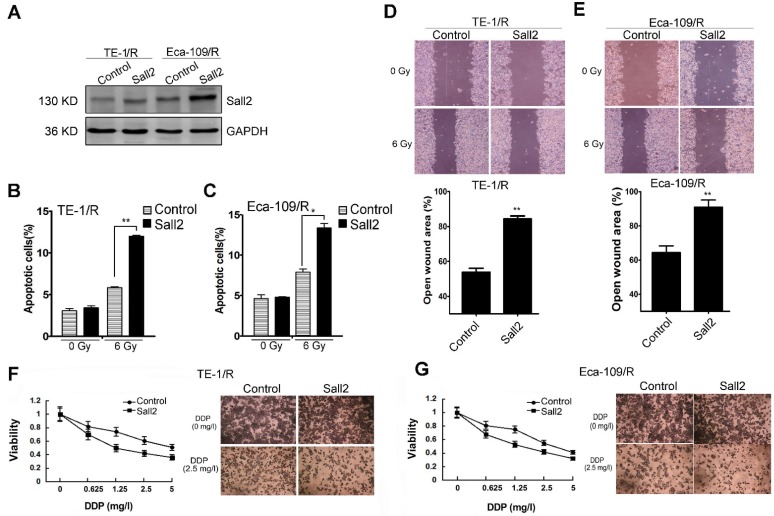
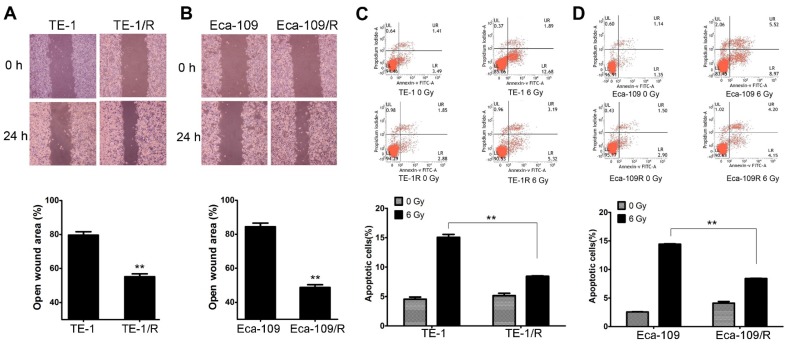
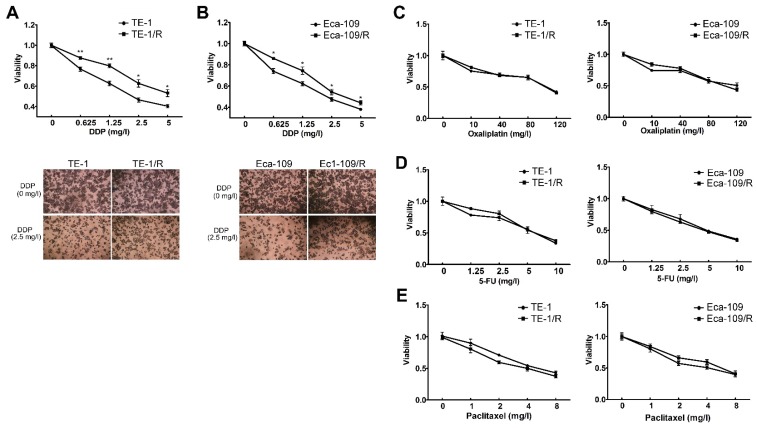
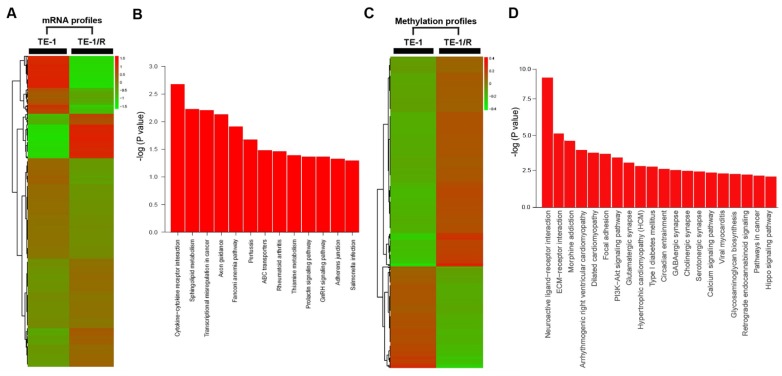
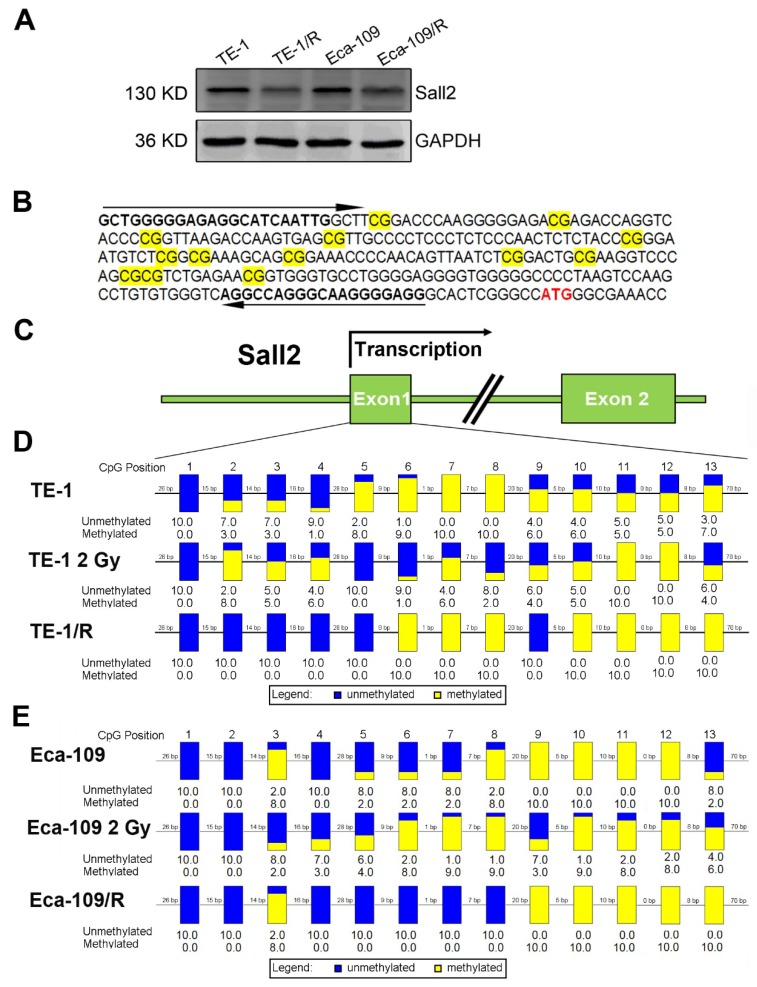
Esophageal squamous cell carcinoma (ESCC) is one of the deadliest malignancies worldwide. Radiotherapy plays a critical role in the curative management of inoperable ESCC patients. However, radioresistance restricts the efficacy of radiotherapy for ESCC patients. The molecules involved in radioresistance remain largely unknown, and new approaches to sensitize cells to irradiation are in demand. Technical advances in analysis of mRNA and methylation have enabled the exploration of the etiology of diseases and have the potential to broaden our understanding of the molecular pathways of ESCC radioresistance. In this study, we constructed radioresistant TE-1 and Eca-109 cell lines (TE-1/R and Eca-109/R, respectively). The radioresistant cells showed an increased migration ability but reduced apoptosis and cisplatin sensitivity compared with their parent cells. mRNA and methylation profiling by microarray revealed 1192 preferentially expressed mRNAs and 8841 aberrantly methylated regions between TE-1/R and TE-1 cells. By integrating the mRNA and methylation profiles, we related the decreased expression of transcription factor Sall2 with a corresponding increase in its methylation in TE-1/R cells, indicating its involvement in radioresistance. Upregulation of Sall2 decreased the growth and migration advantage of radioresistant ESCC cells. Taken together, our present findings illustrate the mRNA and DNA methylation changes during the radioresistance of ESCC and the important role of Sall2 in esophageal cancer malignancy.
食管鳞状细胞癌(ESCC)是全球最致命的恶性肿瘤之一。放疗在不可手术的ESCC患者的根治性治疗中起着关键作用。然而,放射抗性限制了放疗对ESCC患者的疗效。参与放射抗性的分子在很大程度上仍然未知,因此需要新的方法来使细胞对辐射敏感。mRNA和甲基化分析技术的进步使得探索疾病病因成为可能,并且有潜力拓宽我们对ESCC放射抗性分子途径的理解。在本研究中,我们构建了放射抗性的TE-1和Eca-109细胞系(分别为TE-1/R和Eca-109/R)。与亲代细胞相比,放射抗性细胞的迁移能力增强,但凋亡减少且对顺铂的敏感性降低。通过微阵列进行的mRNA和甲基化谱分析揭示了TE-1/R和TE-1细胞之间有1192个优先表达的mRNA和8841个异常甲基化区域。通过整合mRNA和甲基化谱,我们发现转录因子Sall2在TE-1/R细胞中的表达降低与其甲基化相应增加有关,表明其参与放射抗性。Sall2的上调降低了放射抗性ESCC细胞的生长和迁移优势。综上所述,我们目前的研究结果阐明了ESCC放射抗性过程中的mRNA和DNA甲基化变化以及Sall2在食管癌恶性肿瘤中的重要作用。