Robinson Robert, Hudali Tamer
Department of Internal Medicine, Southern Illinois University School of Medicine , Springfield , IL , United States.
PeerJ. 2017 Mar 29;5:e3137. doi: 10.7717/peerj.3137. eCollection 2017.
Hospital readmissions are common, expensive, and a key target of the Medicare Value Based Purchasing (VBP) program. Validated risk assessment tools such as the HOSPITAL score and LACE index have been developed to identify patients at high risk of hospital readmission so they can be targeted for interventions aimed at reducing the rate of readmission. This study aims to evaluate the utility of HOSPITAL score and LACE index for predicting hospital readmission within 30 days in a moderate-sized university affiliated hospital in the midwestern United States.
All adult medical patients who underwent one or more ICD-10 defined procedures discharged from the SIU-SOM Hospitalist service from Memorial Medical Center (MMC) from October 15, 2015 to March 16, 2016, were studied retrospectively to determine if the HOSPITAL score and LACE index were a significant predictors of hospital readmission within 30 days.
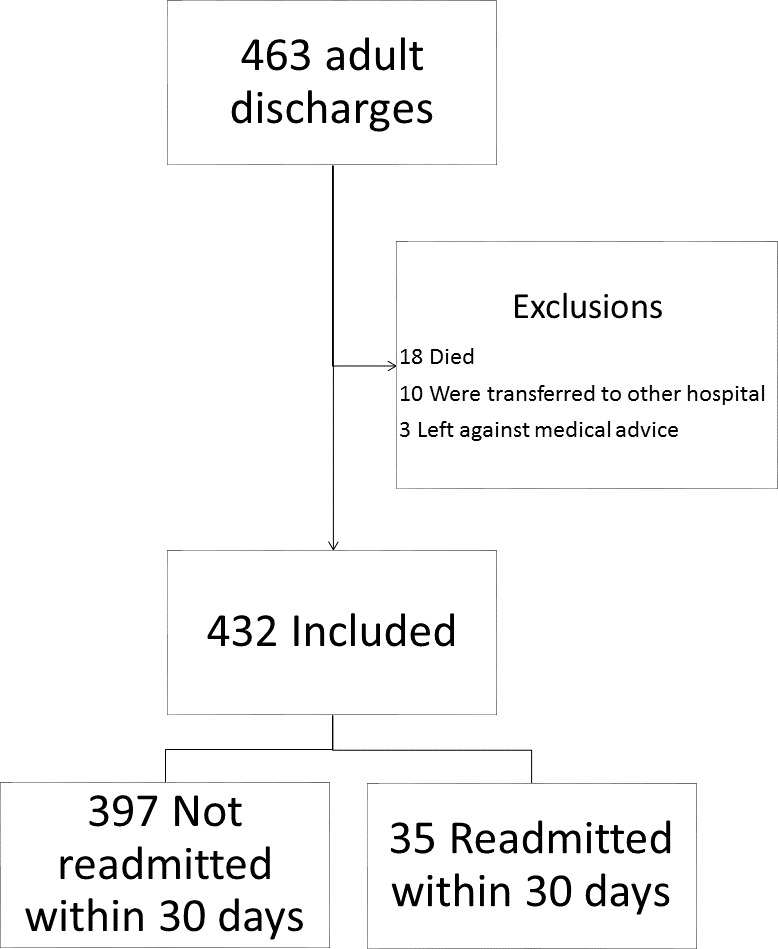
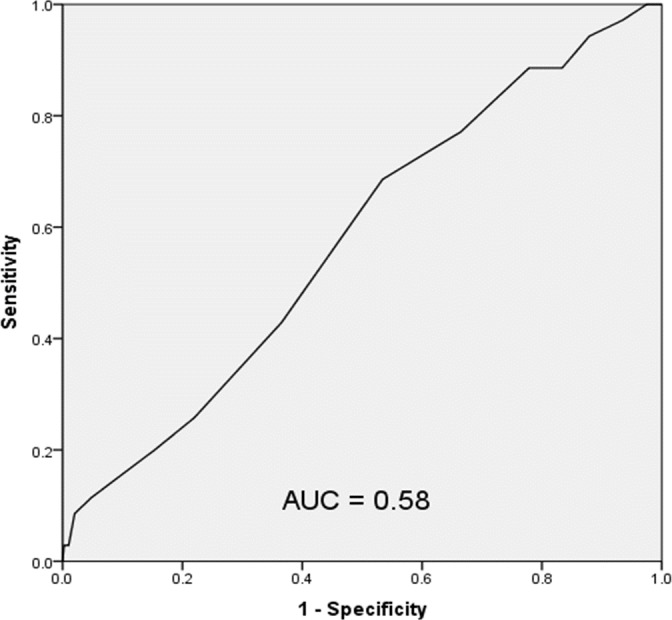
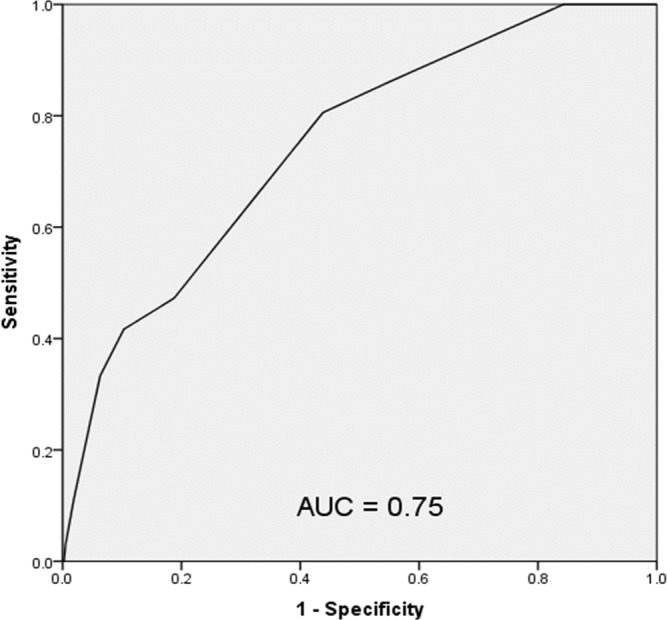
During the study period, 463 discharges were recorded for the hospitalist service. The analysis includes data for the 432 discharges. Patients who died during the hospital stay, were transferred to another hospital, or left against medical advice were excluded. Of these patients, 35 (8%) were readmitted to the same hospital within 30 days. A receiver operating characteristic evaluation of the HOSPITAL score for this patient population shows a C statistic of 0.75 (95% CI [0.67-0.83]), indicating good discrimination for hospital readmission. The Brier score for the HOSPITAL score in this setting was 0.069, indicating good overall performance. The Hosmer-Lemeshow goodness of fit test shows a χ value of 3.71 with a value of 0.59. A receiver operating characteristic evaluation of the LACE index for this patient population shows a C statistic of 0.58 (95% CI [0.48-0.68]), indicating poor discrimination for hospital readmission. The Brier score for the LACE index in this setting was 0.082, indicating good overall performance. The Hosmer-Lemeshow goodness of fit test shows a χ value of 4.97 with a value of 0.66.
This single center retrospective study indicates that the HOSPITAL score has superior discriminatory ability when compared to the LACE index as a predictor of hospital readmission within 30 days at a medium-sized university-affiliated teaching hospital.
The internationally validated HOSPITAL score may be superior to the LACE index in moderate-sized community hospitals to identify patients at high risk of hospital readmission within 30 days.
医院再入院情况常见且费用高昂,是医疗保险基于价值的采购(VBP)计划的关键目标。已开发出如HOSPITAL评分和LACE指数等经过验证的风险评估工具,以识别有高医院再入院风险的患者,从而针对他们进行旨在降低再入院率的干预措施。本研究旨在评估HOSPITAL评分和LACE指数在美国中西部一家中等规模大学附属医院中预测30天内医院再入院情况的效用。
对2015年10月15日至2016年3月16日从纪念医疗中心(MMC)的南伊利诺伊大学医学院住院医师服务部门出院且接受了一项或多项国际疾病分类第十版(ICD - 10)定义程序的所有成年内科患者进行回顾性研究,以确定HOSPITAL评分和LACE指数是否是30天内医院再入院的显著预测指标。
在研究期间,住院医师服务部门记录了463例出院病例。分析纳入了432例出院病例的数据。住院期间死亡、转至其他医院或自行出院的患者被排除。在这些患者中,35例(8%)在30天内再次入住同一家医院。对该患者群体的HOSPITAL评分进行的受试者工作特征评估显示C统计量为0.75(95%置信区间[0.67 - 0.83]),表明对医院再入院有良好的区分能力。在此情况下,HOSPITAL评分的Brier评分为0.069,表明总体表现良好。Hosmer - Lemeshow拟合优度检验显示χ值为3.71且P值为0.59。对该患者群体的LACE指数进行的受试者工作特征评估显示C统计量为0.58(95%置信区间[0.48 - 0.68]),表明对医院再入院的区分能力较差。在此情况下,LACE指数的Brier评分为0.082,表明总体表现良好。Hosmer - Lemeshow拟合优度检验显示χ值为4.97且P值为0.66。
这项单中心回顾性研究表明,在一家中等规模大学附属教学医院中,作为30天内医院再入院的预测指标,HOSPITAL评分与LACE指数相比具有更强的区分能力。
在中等规模社区医院中,经过国际验证的HOSPITAL评分在识别30天内有高医院再入院风险的患者方面可能优于LACE指数。