College of Life and Health Sciences, Northeastern University, Shenyang 110819, China.
School of Pharmaceutical Engineering, Shenyang Pharmaceutical University, Shenyang 110016, China.
Sci Rep. 2017 Apr 3;7:45705. doi: 10.1038/srep45705.
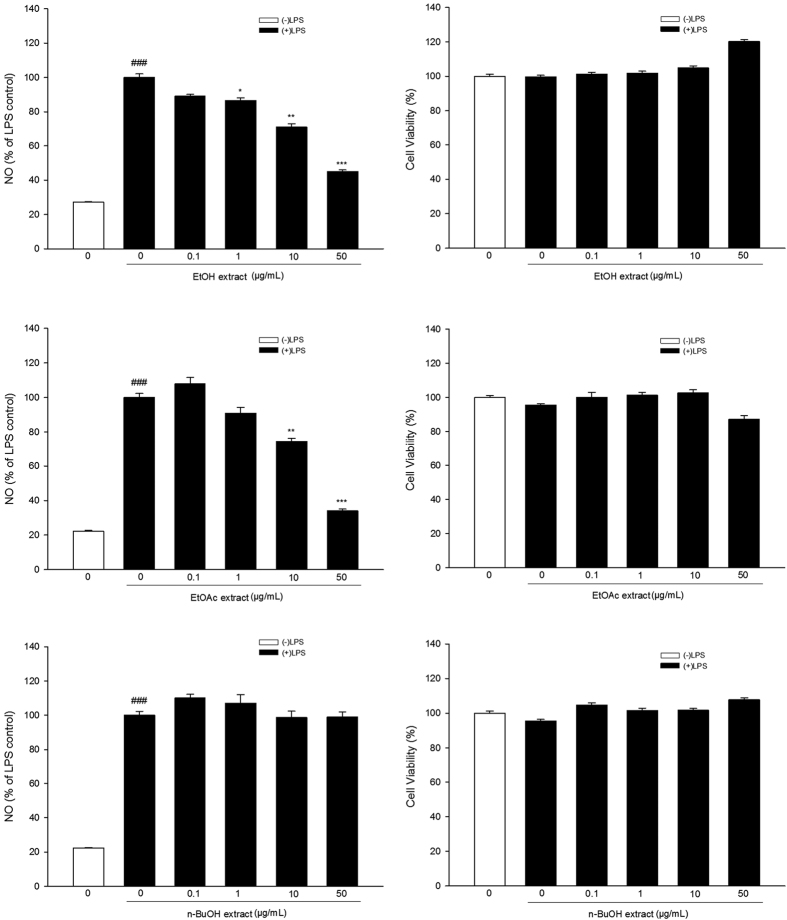
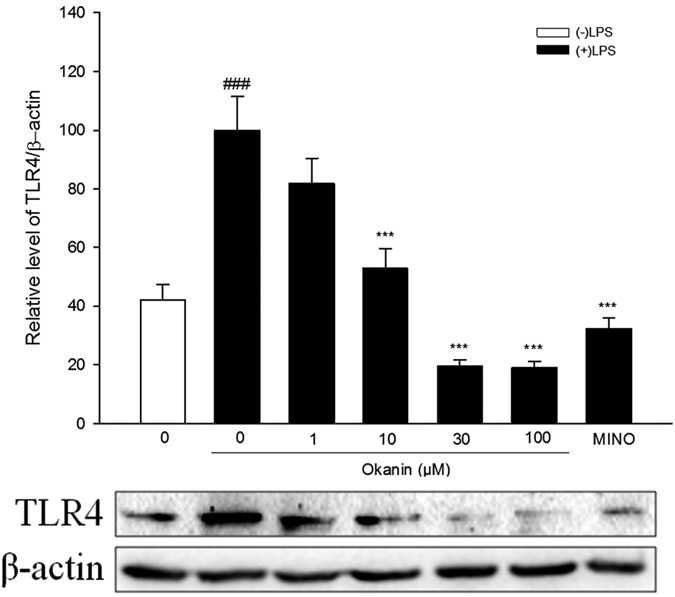
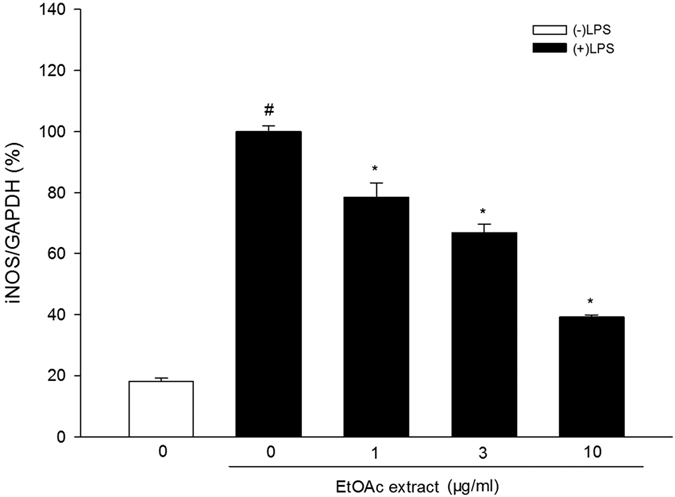
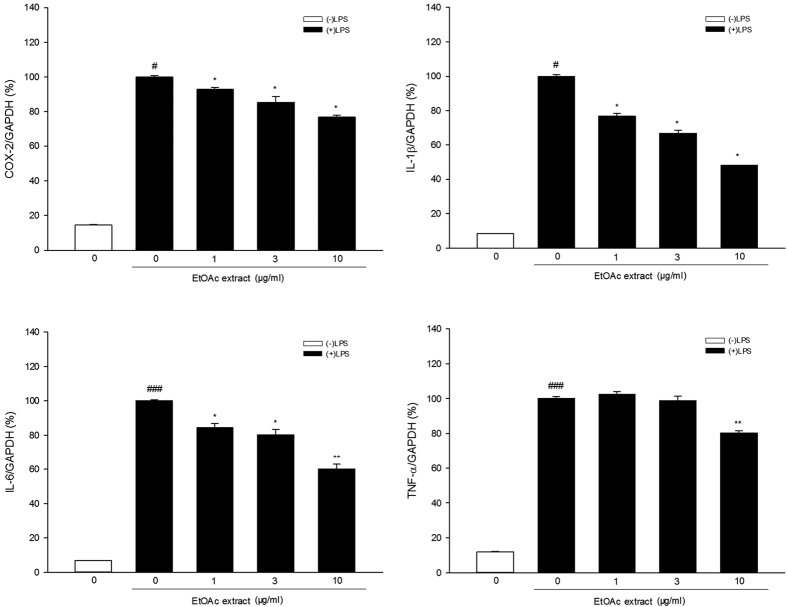
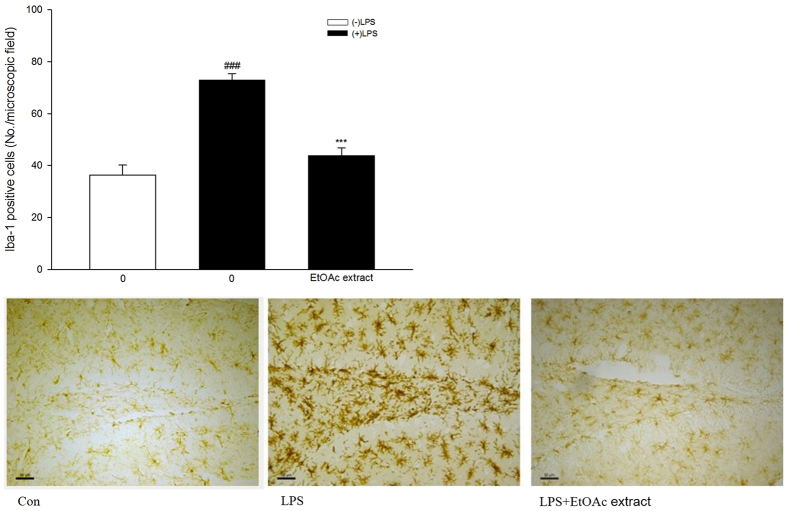
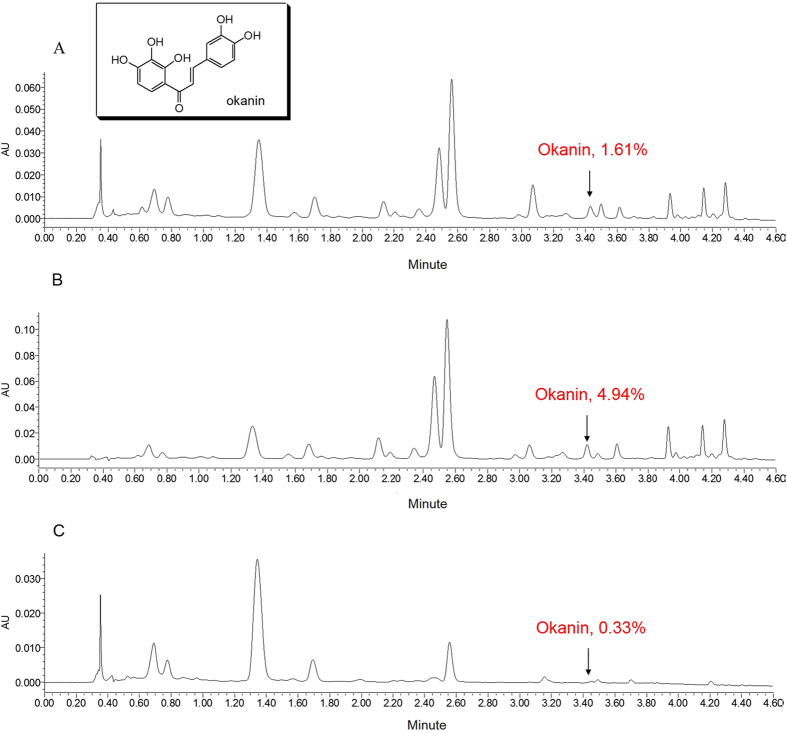
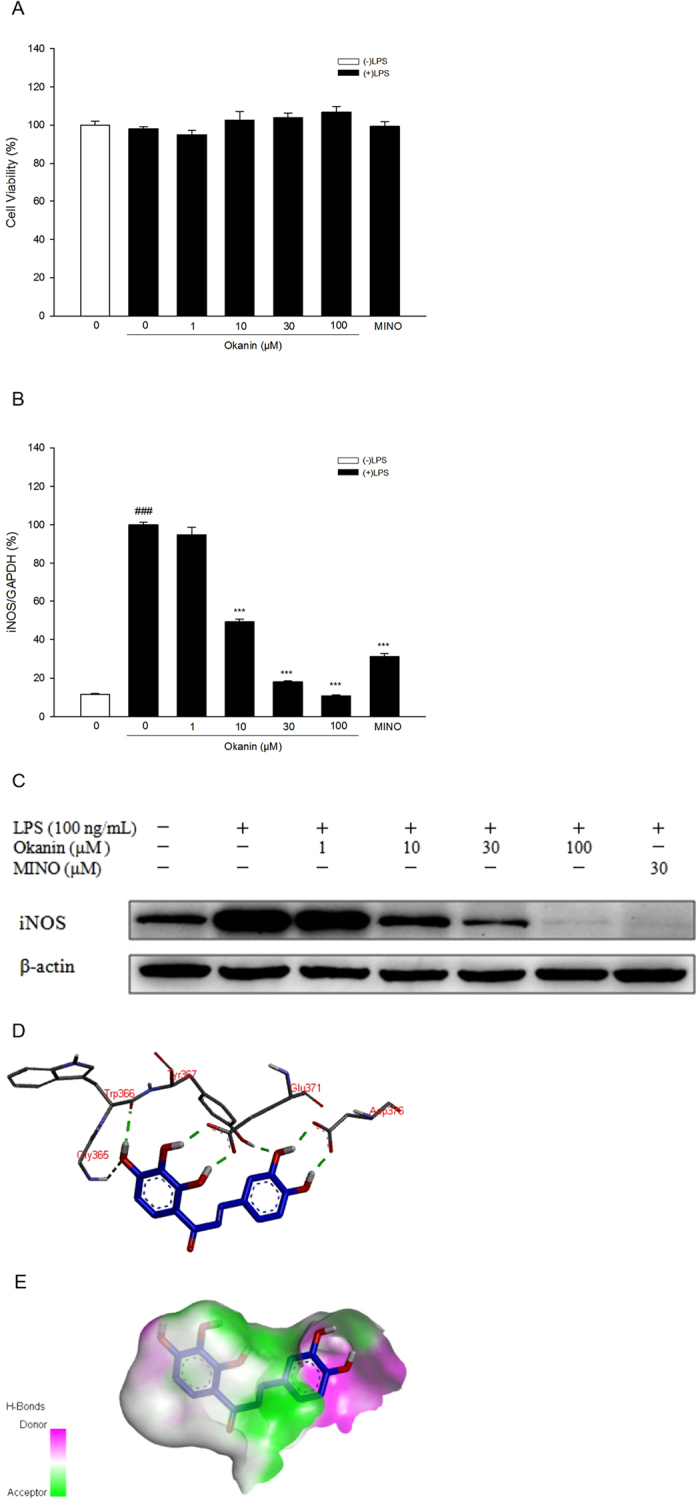
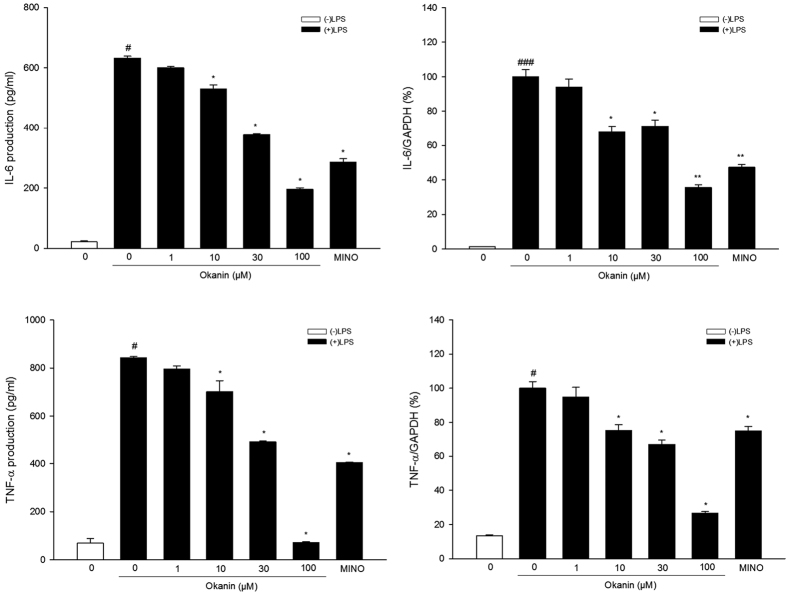
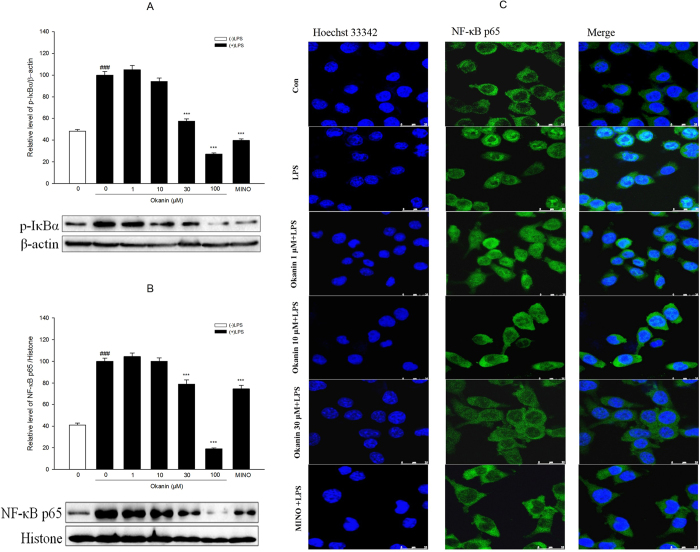
The EtOAc extract of Coreopsis tinctoria Nutt. significantly inhibited LPS-induced nitric oxide (NO) production, as judged by the Griess reaction, and attenuated the LPS-induced elevation in iNOS, COX-2, IL-1β, IL-6 and TNF-α mRNA levels, as determined by quantitative real-time PCR, when incubated with BV-2 microglial cells. Immunohistochemical results showed that the EtOAc extract significantly decreased the number of Iba-1-positive cells in the hippocampal region of LPS-treated mouse brains. The major effective constituent of the EtOAc extract, okanin, was further investigated. Okanin significantly suppressed LPS-induced iNOS expression and also inhibited IL-6 and TNF-α production and mRNA expression in LPS-stimulated BV-2 cells. Western blot analysis indicated that okanin suppressed LPS-induced activation of the NF-κB signaling pathway by inhibiting the phosphorylation of IκBα and decreasing the level of nuclear NF-κB p65 after LPS treatment. Immunofluorescence staining results showed that okanin inhibited the translocation of the NF-κB p65 subunit from the cytosol to the nucleus. Moreover, okanin significantly inhibited LPS-induced TLR4 expression in BV-2 cells. In summary, okanin attenuates LPS-induced activation of microglia. This effect may be associated with its capacity to inhibit the TLR4/NF-κB signaling pathways. These results suggest that okanin may have potential as a nutritional preventive strategy for neurodegenerative disorders.
金鸡菊的乙酸乙酯提取物通过格里氏反应显著抑制 LPS 诱导的一氧化氮(NO)的产生,并且通过定量实时 PCR 测定,当与 BV-2 小胶质细胞孵育时,它还可以减弱 LPS 诱导的 iNOS、COX-2、IL-1β、IL-6 和 TNF-α mRNA 水平的升高。免疫组织化学结果表明,乙酸乙酯提取物显著减少了 LPS 处理的小鼠大脑海马区中 Iba-1 阳性细胞的数量。进一步研究了乙酸乙酯提取物的主要有效成分,即奥卡宁。奥卡宁显著抑制 LPS 诱导的 iNOS 表达,并抑制 LPS 刺激的 BV-2 细胞中 IL-6 和 TNF-α的产生和 mRNA 表达。Western blot 分析表明,奥卡宁通过抑制 LPS 处理后 IκBα 的磷酸化和降低核 NF-κB p65 的水平,抑制 LPS 诱导的 NF-κB 信号通路的激活。免疫荧光染色结果表明,奥卡宁抑制了 NF-κB p65 亚基从细胞质向细胞核的易位。此外,奥卡宁显著抑制 LPS 诱导的 BV-2 细胞中 TLR4 的表达。总之,奥卡宁减弱 LPS 诱导的小胶质细胞激活。这种作用可能与其抑制 TLR4/NF-κB 信号通路的能力有关。这些结果表明,奥卡宁可能作为神经退行性疾病的营养预防策略具有潜力。