Department of Engineering Mechanics, State Key Laboratory for Strength and Vibration of Mechanical Structures, Xi'an Jiaotong University, Xi'an 710049, China.
International Center for Applied Mechanics, State Key Laboratory for Strength and Vibration of Mechanical Structures, Xi'an Jiaotong University, Xi'an 710049, China.
Sci Rep. 2017 Apr 3;7:45575. doi: 10.1038/srep45575.
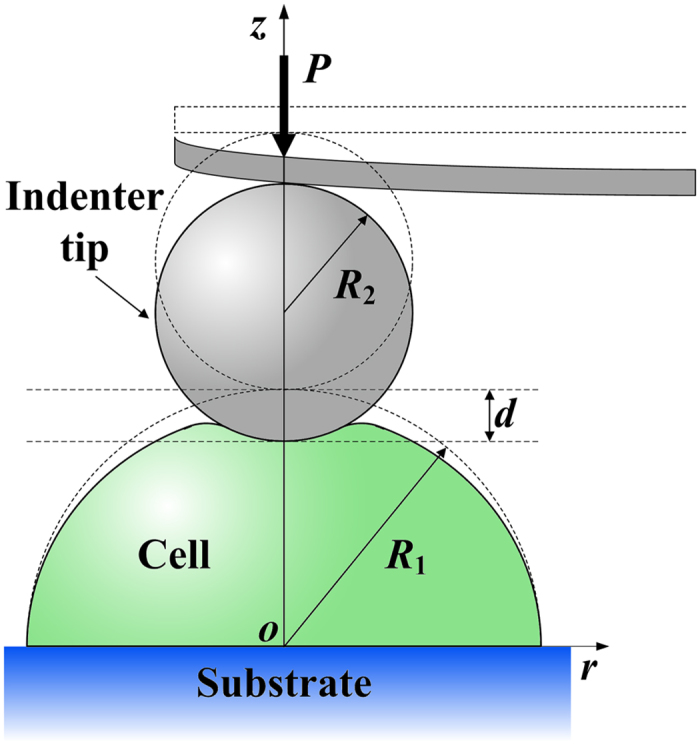
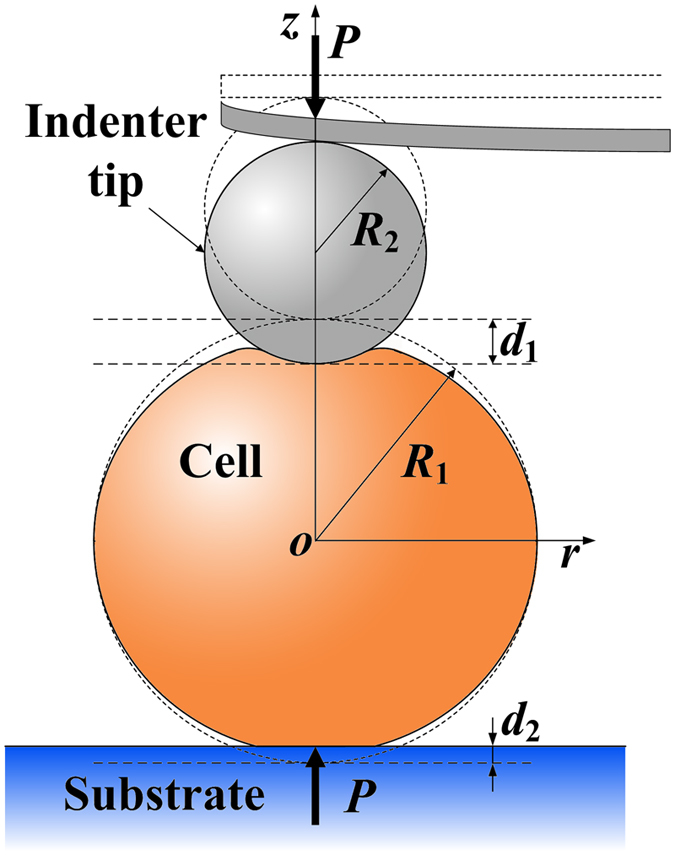
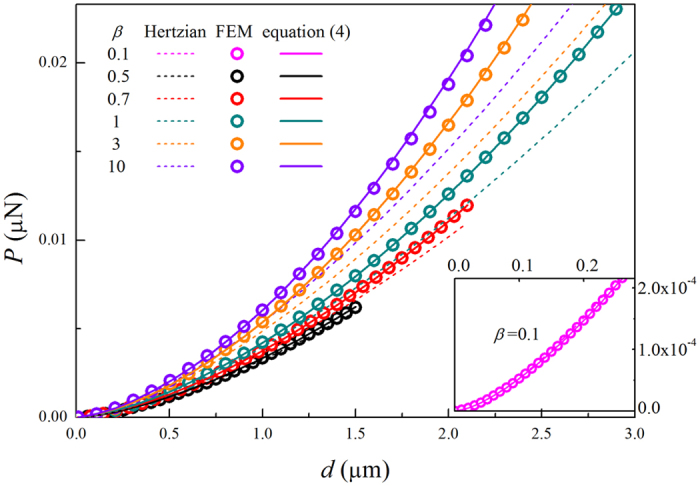
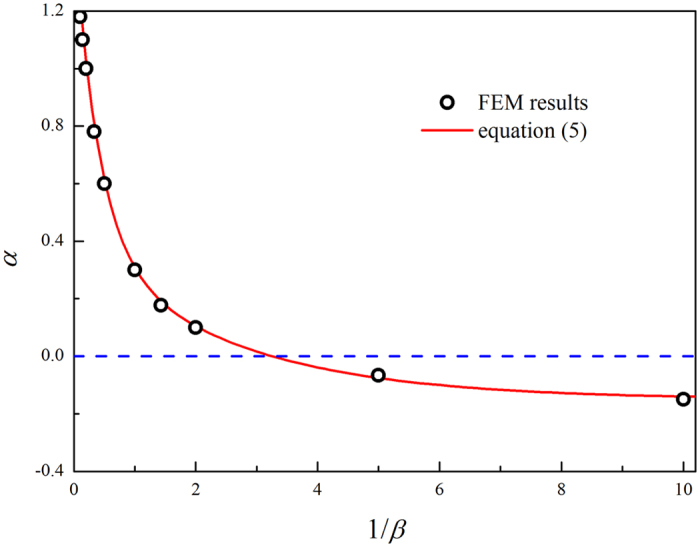
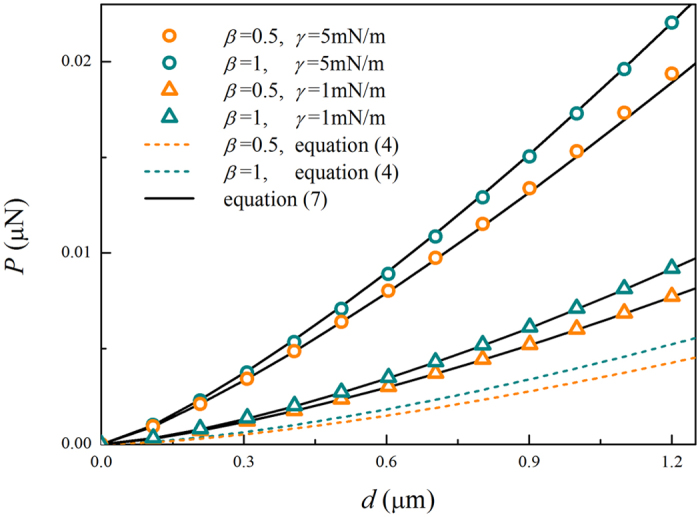
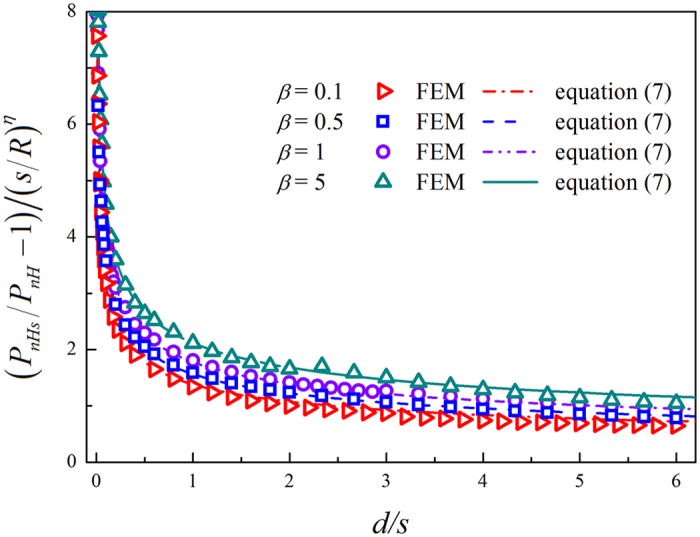
The atomic force microscopy (AFM) has been widely used to measure the mechanical properties of biological cells through indentations. In most of existing studies, the cell is supposed to be linear elastic within the small strain regime when analyzing the AFM indentation data. However, in experimental situations, the roles of large deformation and surface tension of cells should be taken into consideration. Here, we use the neo-Hookean model to describe the hyperelastic behavior of cells and investigate the influence of surface tension through finite element simulations. At large deformation, a correction factor, depending on the geometric ratio of indenter radius to cell radius, is introduced to modify the force-indent depth relation of classical Hertzian model. Moreover, when the indent depth is comparable with an intrinsic length defined as the ratio of surface tension to elastic modulus, the surface tension evidently affects the indentation response, indicating an overestimation of elastic modulus by the Hertzian model. The dimensionless-analysis-based theoretical predictions, which include both large deformation and surface tension, are in good agreement with our finite element simulation data. This study provides a novel method to more accurately measure the mechanical properties of biological cells and soft materials in AFM indentation experiments.
原子力显微镜(AFM)已广泛用于通过压痕测量生物细胞的机械性能。在大多数现有研究中,在分析 AFM 压痕数据时,假设细胞在小应变范围内是线性弹性的。然而,在实验情况下,应考虑细胞的大变形和表面张力的作用。在这里,我们使用 neo-Hookean 模型来描述细胞的超弹性行为,并通过有限元模拟研究表面张力的影响。在大变形时,引入一个修正因子,该因子取决于压头半径与细胞半径的几何比,以修正经典 Hertzian 模型的力-压痕深度关系。此外,当压痕深度与定义为表面张力与弹性模量之比的固有长度相当时,表面张力明显影响压痕响应,表明 Hertzian 模型对弹性模量的高估。基于无量纲分析的理论预测,包括大变形和表面张力,与我们的有限元模拟数据吻合较好。本研究为更准确地测量 AFM 压痕实验中生物细胞和软材料的机械性能提供了一种新方法。