Sharpe Melissa J, Chang Chun Yun, Liu Melissa A, Batchelor Hannah M, Mueller Lauren E, Jones Joshua L, Niv Yael, Schoenbaum Geoffrey
NIDA Intramural Research Program, Baltimore, Maryland, USA.
Department of Psychology and Neuroscience Institute, Princeton University, Princeton, New Jersey, USA.
Nat Neurosci. 2017 May;20(5):735-742. doi: 10.1038/nn.4538. Epub 2017 Apr 3.
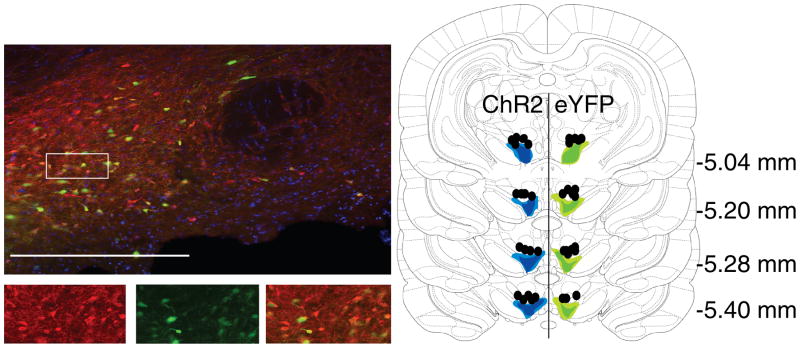
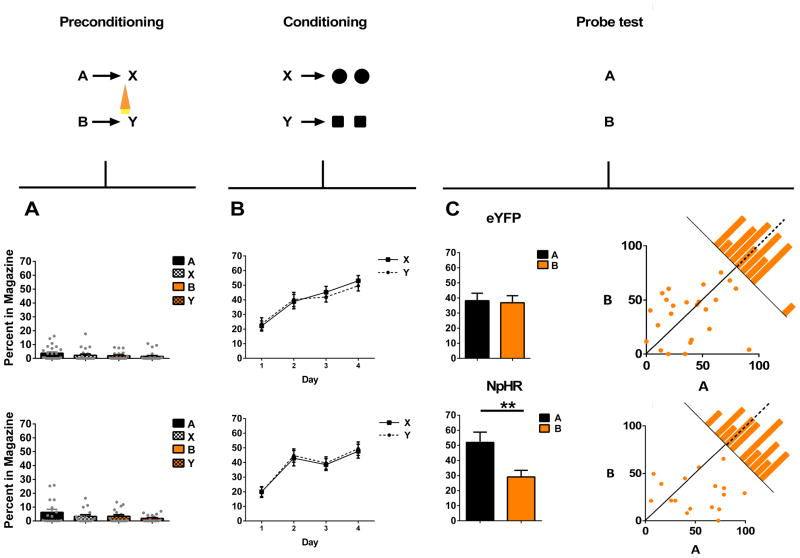
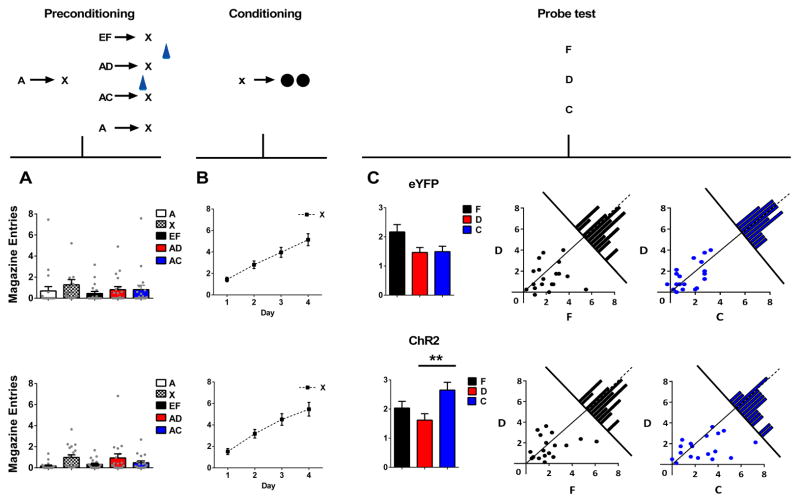
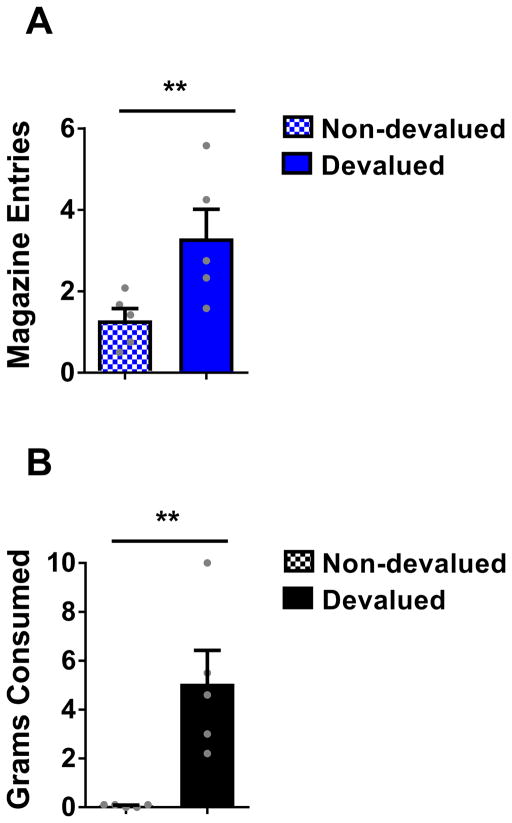
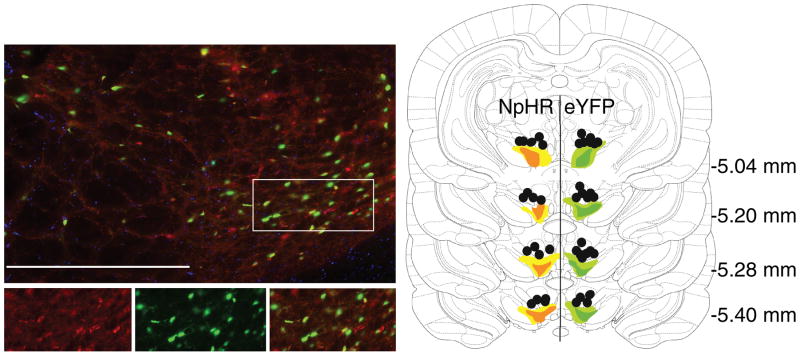
Associative learning is driven by prediction errors. Dopamine transients correlate with these errors, which current interpretations limit to endowing cues with a scalar quantity reflecting the value of future rewards. We tested whether dopamine might act more broadly to support learning of an associative model of the environment. Using sensory preconditioning, we show that prediction errors underlying stimulus-stimulus learning can be blocked behaviorally and reinstated by optogenetically activating dopamine neurons. We further show that suppressing the firing of these neurons across the transition prevents normal stimulus-stimulus learning. These results establish that the acquisition of model-based information about transitions between nonrewarding events is also driven by prediction errors and that, contrary to existing canon, dopamine transients are both sufficient and necessary to support this type of learning. Our findings open new possibilities for how these biological signals might support associative learning in the mammalian brain in these and other contexts.
联想学习由预测误差驱动。多巴胺瞬变与这些误差相关,目前的解释将其局限于赋予线索一个反映未来奖励价值的标量。我们测试了多巴胺是否可能更广泛地发挥作用以支持对环境关联模型的学习。通过感觉预适应,我们表明刺激-刺激学习背后的预测误差可以通过行为阻断,并通过光遗传学激活多巴胺神经元而恢复。我们进一步表明,在转换过程中抑制这些神经元的放电会阻止正常的刺激-刺激学习。这些结果表明,关于无奖励事件之间转换的基于模型的信息的获取也由预测误差驱动,并且与现有准则相反,多巴胺瞬变对于支持这类学习既是充分的也是必要的。我们的发现为这些生物信号如何在这些及其他情境下支持哺乳动物大脑中的联想学习开辟了新的可能性。