Littlewood D, Kyle S D, Pratt D, Peters S, Gooding P
Division of Psychology & Mental Health, School of Health Sciences, University of Manchester, UK; Manchester Academic Health Science Centre, University of Manchester, UK.
Sleep and Circadian Neuroscience Institute, Nuffield Department of Clinical Neurosciences, University of Oxford, UK.
Clin Psychol Rev. 2017 Jun;54:1-16. doi: 10.1016/j.cpr.2017.03.009. Epub 2017 Mar 28.
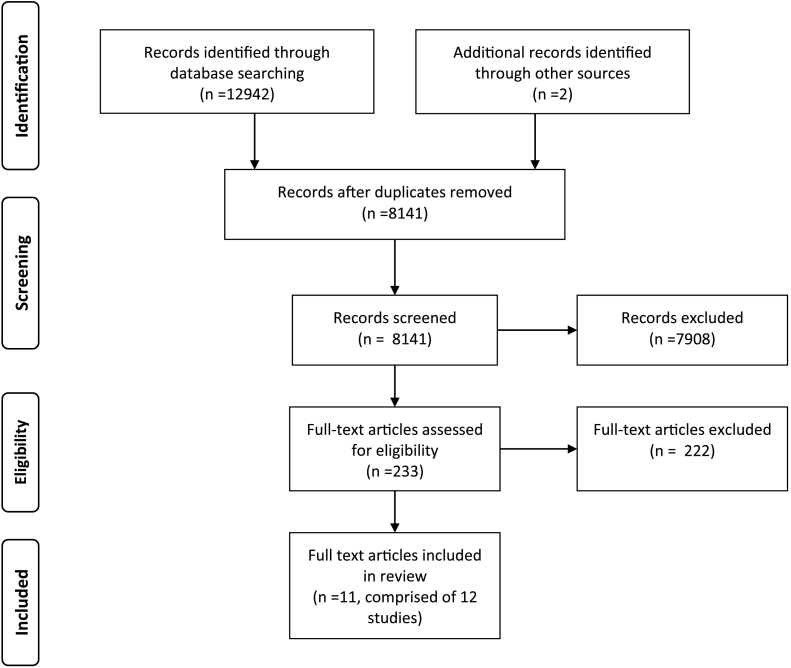
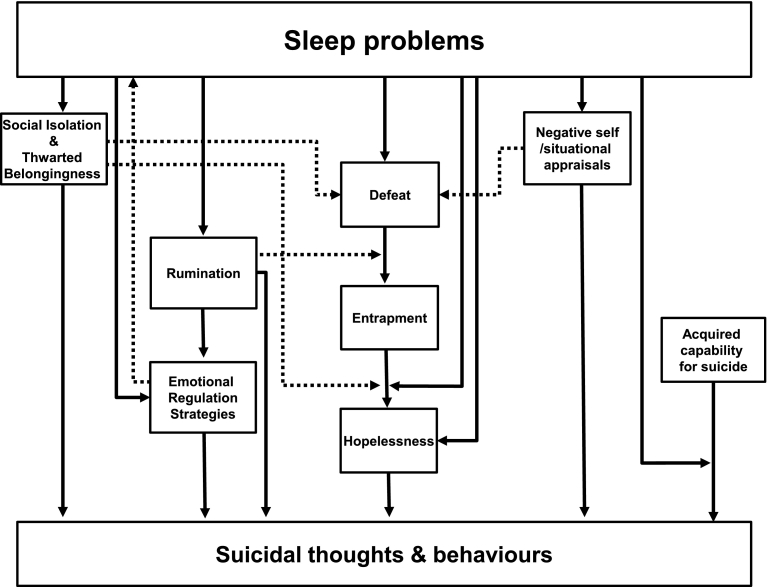
We sought to conduct the first systematic review of empirical evidence investigating the role of psychological factors in the relationship between sleep problems and suicidal thoughts and behaviours. Twelve studies were identified which examined psychological factors grouped into four categories of cognitive appraisals, psychosocial factors, emotion regulation strategies, and risk behaviours. Although there was substantial heterogeneity across studies with respect to measurement, sampling, and analysis, preliminary evidence indicated that negative cognitive appraisals, perceived social isolation, and unhelpful emotion regulation strategies may contribute to the association between sleep problems and suicidal thoughts and behaviours. Given that findings in this area are currently restricted to studies with cross-sectional designs, the directionality of the interrelationships between these psychological factors, sleep problems and suicidality, remains unclear. We integrate the findings of our review with contemporary psychological models of suicidal behaviour to develop a clear research agenda. Identified pathways should now be tested with longitudinal and experimental designs. In addition, a more thorough investigation of the complexities of sleep, psychological factors, and suicidal thoughts and behaviours is crucial for the development of targeted psychological interventions.
我们试图对实证证据进行首次系统综述,以研究心理因素在睡眠问题与自杀念头及行为之间的关系中所起的作用。我们确定了12项研究,这些研究考察了心理因素,这些因素分为认知评估、心理社会因素、情绪调节策略和风险行为四类。尽管在测量、抽样和分析方面,各研究之间存在很大的异质性,但初步证据表明,消极的认知评估、感知到的社会孤立以及无益的情绪调节策略可能导致睡眠问题与自杀念头及行为之间的关联。鉴于该领域的研究结果目前仅限于横断面设计的研究,这些心理因素、睡眠问题和自杀倾向之间相互关系的方向性仍不明确。我们将综述的结果与当代自杀行为心理模型相结合,以制定一个明确的研究议程。现在应该通过纵向和实验设计来检验已确定的途径。此外,对睡眠、心理因素以及自杀念头和行为的复杂性进行更全面的调查,对于制定有针对性的心理干预措施至关重要。